 Share:

When a digital avatar of Lionel Messi appeared on broadcast screens during the Argentina-Algeria match to explain an offside call, it offered a glimpse of how deeply artificial intelligence has embedded itself in the 2026 FIFA World Cup.
For most viewers, the offside replay was simply another broadcast graphic. Behind it, however, is a large-scale digital human system developed by Lenovo capable of generating highly accurate virtual replicas of all 1,263 participating players.
The system converts player positioning data into three-dimensional visualizations, giving audiences a clearer picture of referee decisions as they happen.
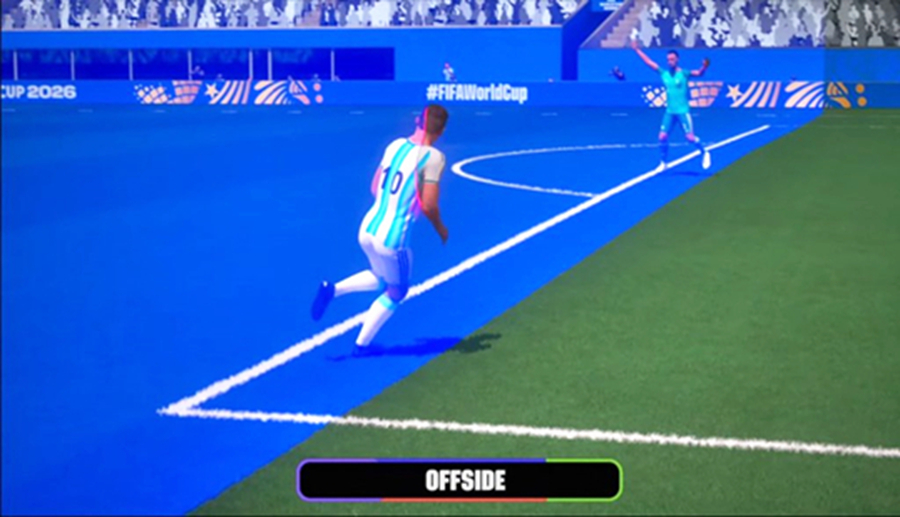
A 3D digital avatar of Lionel Messi appears on screen during the Argentina–Algeria match to illustrate an offside decision. [Photo courtesy of Lenovo Group]
According to the development team, each player underwent detailed body scanning, with technicians fine-tuning posture, hand positions and arm angles to ensure accuracy across all teams.
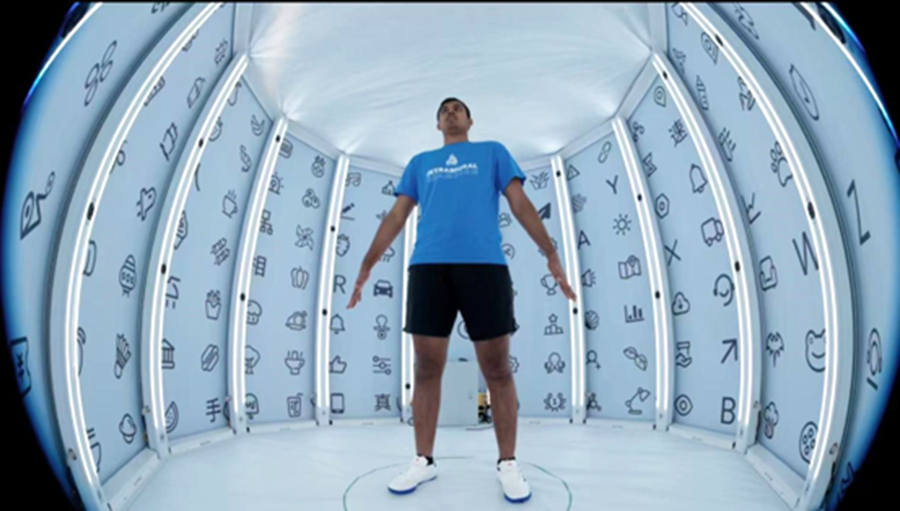
A staff member assists a player during a 3D body scanning session used to build digital avatars for broadcast and officiating systems. [Photo courtesy of Lenovo Group]
The technology is part of a broader effort to make football officiating more transparent and accessible. By making referee decisions easier to follow visually, AI helps bridge the gap between officials and global audiences.
"Seeing the offside replay appear on live broadcast was a moment that is difficult to fully describe," said Zhang Xiaoyan, technical strategy and innovation director at Lenovo Group SSG and project lead of the 3D Digital Human Visualization Solution. "It reflects years of work in making football more understandable and visually accessible."
She added that the system underwent multiple rounds of testing at earlier FIFA events before being formally deployed at the World Cup.
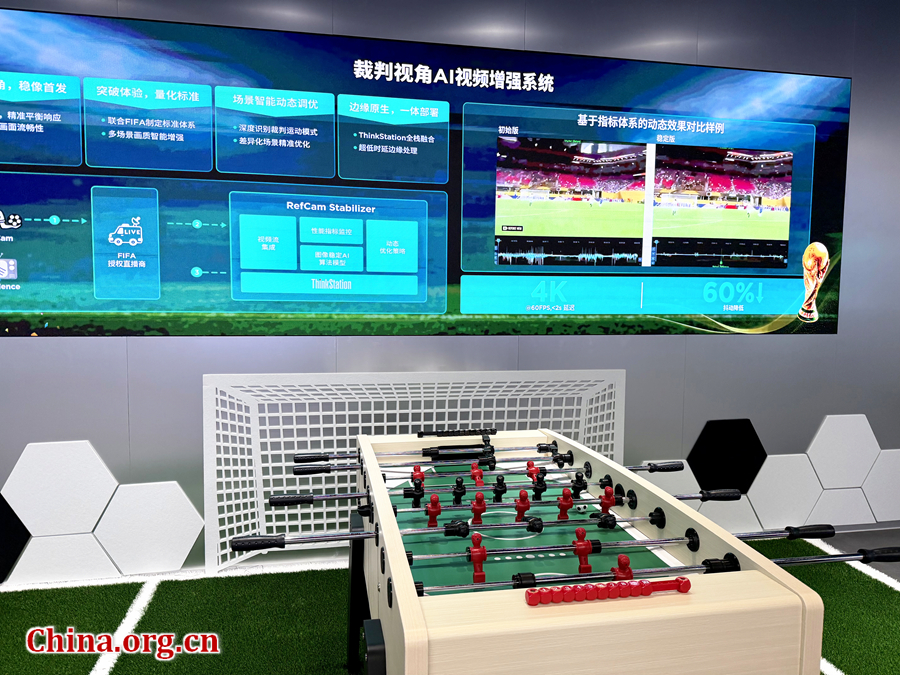
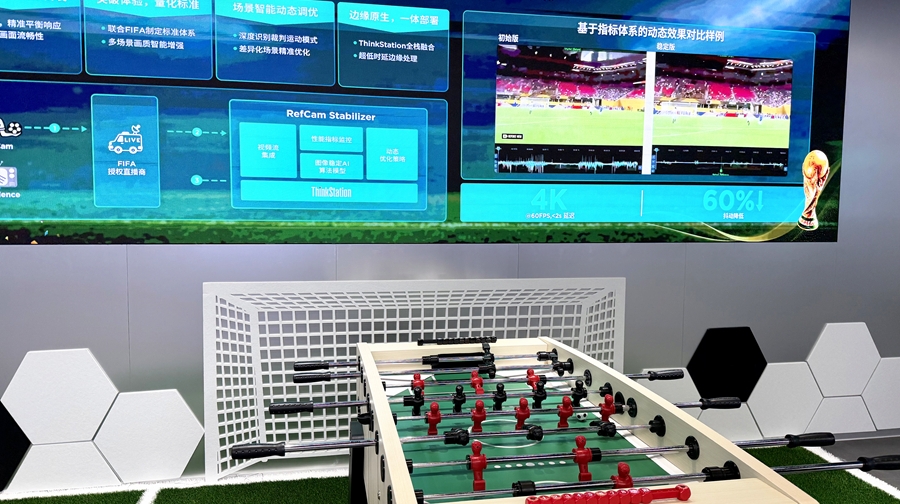
A screen displays Lenovo's AI-powered referee-camera stabilization system at an industry demonstration, June 16, 2026. [Photo by Liu Caiyi/China.org.cn]
Beyond officiating, AI is also being applied to match analysis and prediction. At a recent industry demonstration, an AI-powered football agent was shown processing match statistics and large-scale datasets to predict outcomes for all 48 participating teams.
AI is also changing what viewers see on screen. A referee-perspective camera system using Lenovo's image stabilization technology can reduce camera shake by around 60%, giving audiences a steadier, more immersive view of key moments from the pitch.
Industry participants said the developments reflect a wider shift in sports technology, with AI moving from data processing into live broadcast and fan engagement.
Supporting that shift requires significant computing power, and industry representatives said infrastructure investment continues to grow to meet demand.
As the World Cup integrates more advanced technologies, AI is no longer confined to analysis rooms or technical systems. It is becoming part of the viewing experience itself, offering a more transparent, data-driven and immersive way to enjoy the world's most popular sport.


 京公网安备 11010802027341号