 Share:

Wuxi Maxrex Robotic Exoskeleton displayed its two core exoskeleton lines at the fourth China International Supply Chain Expo (CISCE) in Beijing, which ran from June 22 to 26.
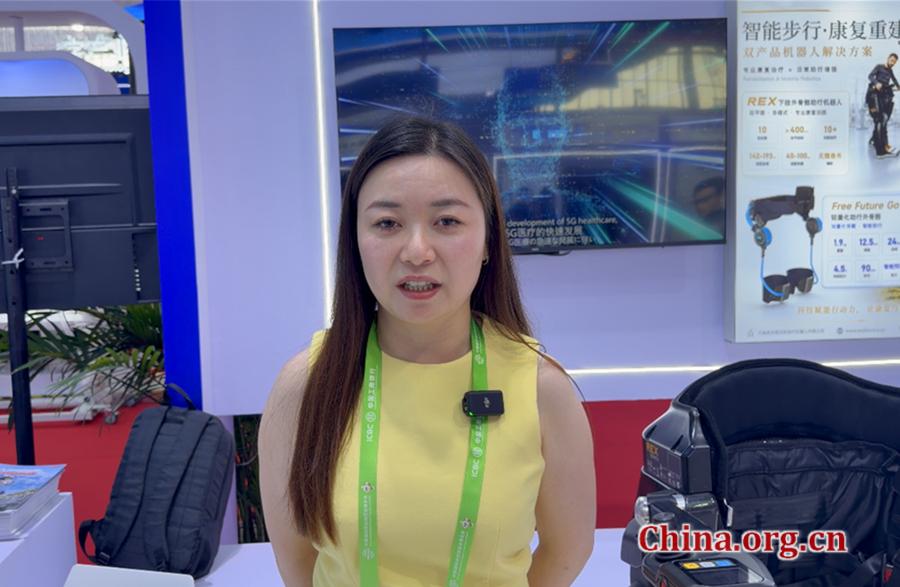
Stephanie Zhang, senior director of corporate strategy and international business at Wuxi Maxrex Robotic Exoskeleton, speaks to a China.org.cn reporter during the fourth China International Supply Chain Expo in Beijing, June 26, 2026. [Photo/China.org.cn]
The company, which has been building the Rex Bionics brand, is a subsidiary of Maxhealth Medical Group that operates a 65,000-square-meter life science park and maintains four research and development centers in Wuxi, Hangzhou and overseas.
The company employs more than 200 people worldwide, a quarter of them in R&D, and has invested more than 100 million yuan ($14.7 million) in the area over the past two years. It holds 47 patents and software copyright registrations.
"It's our first time participating in CISCE, and we are very excited to connect closely with our upstream and downstream partners at the expo, and to address more R&D challenges, equipment and raw material procurement," said Stephanie Zhang, senior director of corporate strategy and international business at Wuxi Maxrex Robotic Exoskeleton.
Zhang said the company used the expo to find material suppliers for its medical-grade and consumer-grade exoskeletons, connect with partners in China's health care sector, observe industry trends and build peer connections.
"We see the expo as a great window for the world to see the advanced manufacturing of China. At the same time, it opens the door for us to connect with more excellent overseas suppliers, which will ultimately help us bring our products from R&D and production to the patients who need them," she said.
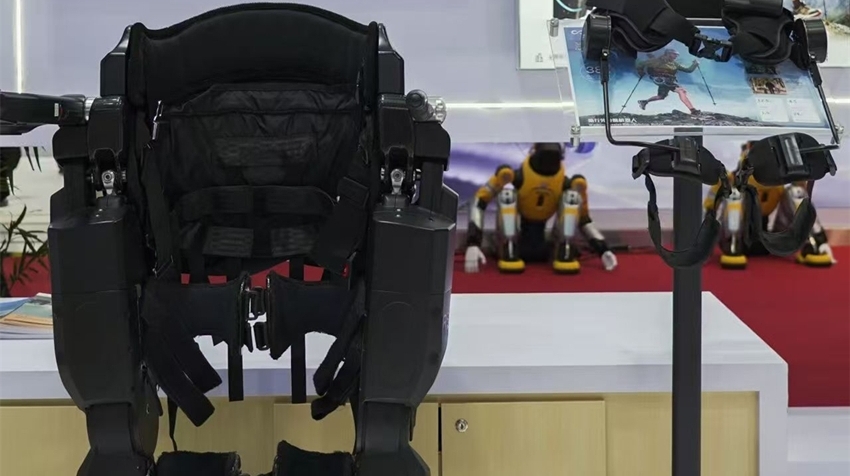
Maxrex exhibited two product lines. The first, the Rex Bionic Self-Balancing Rehabilitation Exoskeleton, is what the company calls the world's first self-balancing exoskeleton robot. It allows stroke and spinal cord injury patients to perform hands-free, multi-joint 3D gait training without crutches or suspension.
The device has undergone clinical studies at Huashan and Xuanwu hospitals, and the company has carried out brain-computer interface research with universities. Its pipeline includes upper-limb robots launching this year, bedside robots and brain-computer interface hand robots.
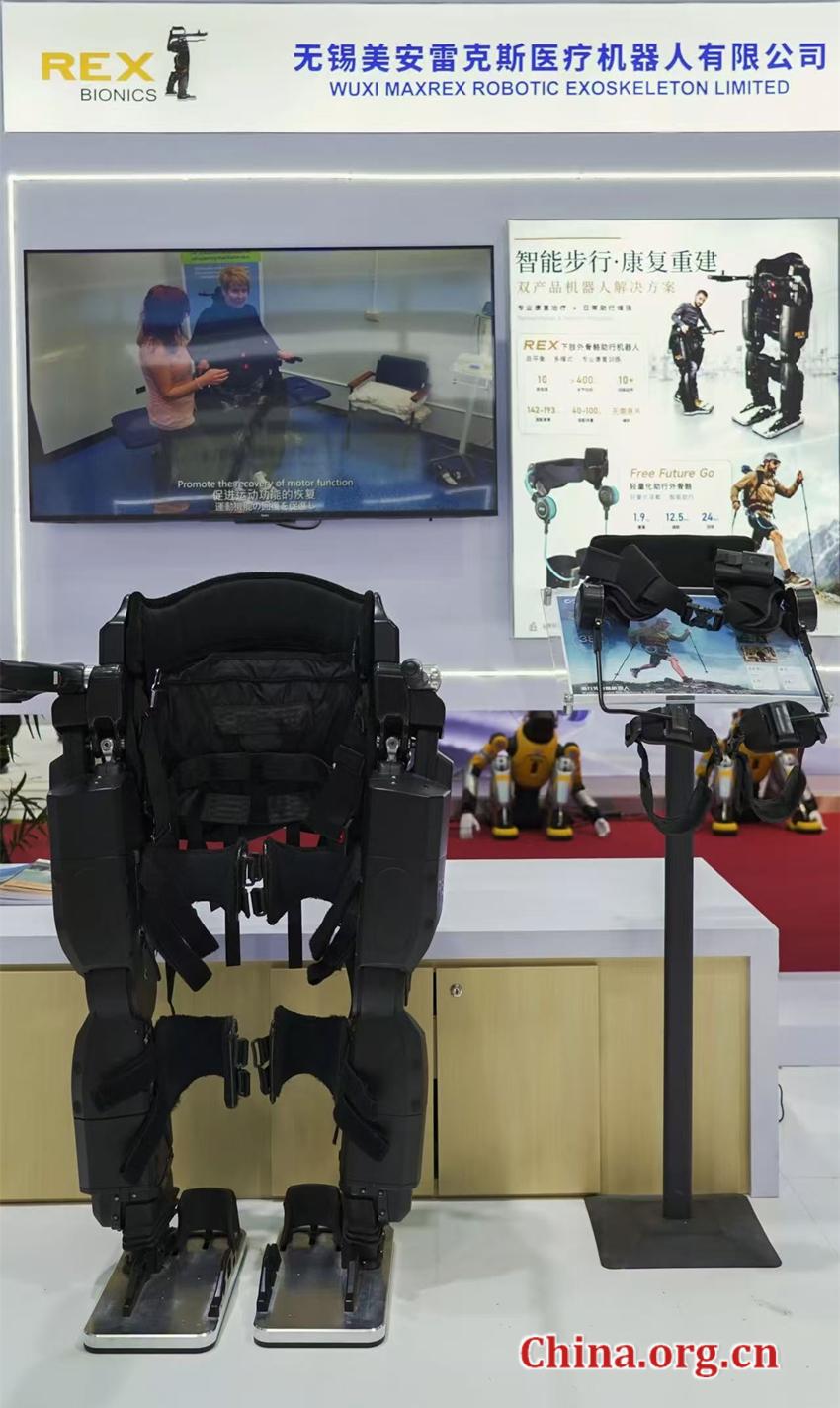
Robotic exoskeletons displayed at the Wuxi Maxrex Robotic Exoskeleton booth during the fourth China International Supply Chain Expo in Beijing, June 26, 2026. [Photo/China.org.cn]
Zhang said the robot enables patients to perform rehabilitation movements including standing, walking, squatting, lateral bending and knee flexion.
"The main users are stroke patients, spinal cord injury patients and paraplegic patients, primarily those in post-surgery recovery in hospitals," she said.
The second product line, the Free Future Go Lightweight Walking Assist Exoskeleton Robot, is a 1.9-kilogram device for daily mobility. It uses high-precision sensors and AI-powered adaptive assistance across three modes to support walking, stair climbing, home rehabilitation, hiking and fitness.
The company said the device draws on its medical-grade technology to combine safety with consumer convenience, targeting stroke patients preparing for discharge, elderly people with mobility issues and outdoor enthusiasts.
Zhang said Rex Bionics aims to deliver "medical-grade safety with consumer-grade convenience" to users worldwide.
"We invite partners to join us in exploring the trillion-dollar mobility enhancement market," she said.


 京公网安备 11010802027341号