 Share:

For generations, China's traditional villages have preserved not only old houses and winding lanes, but also the living memory of the country's farming civilization. Today, as rapid urbanization reshapes the countryside, protecting these communities has become about more than preserving buildings — it is about keeping cultural traditions alive, sustaining rural life and passing on a shared heritage.
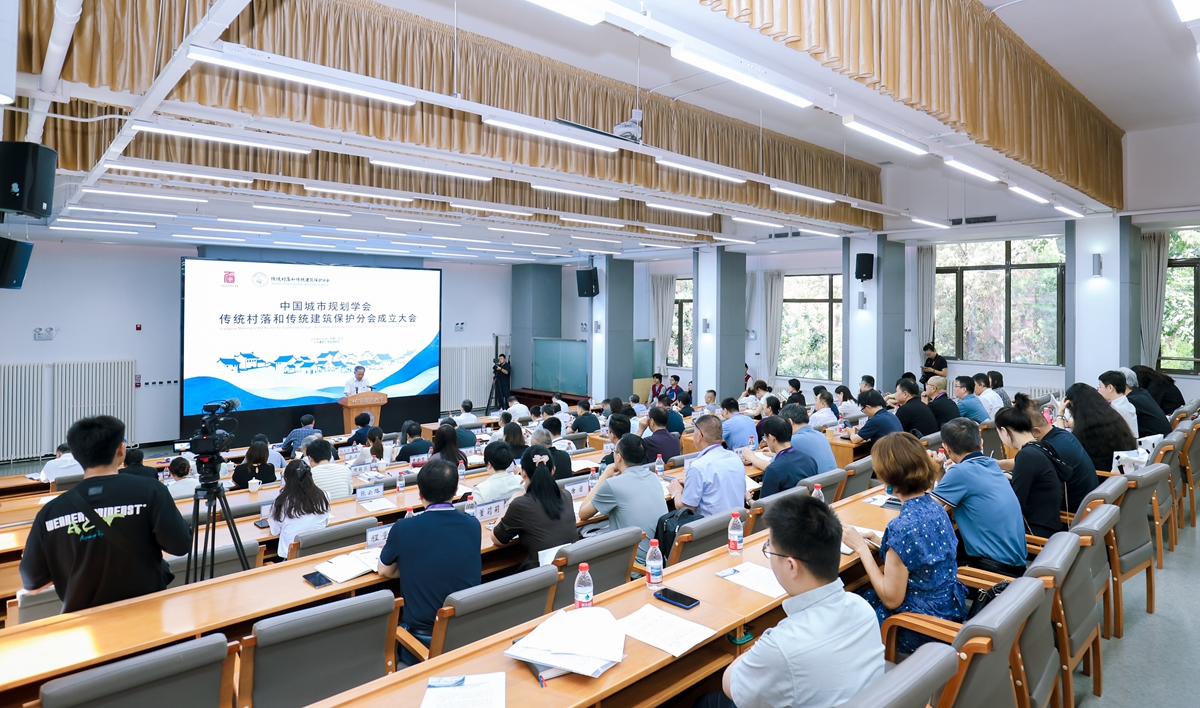
The inaugural meeting of the Branch for Traditional Villages and Traditional Architecture Conservation under the Urban Planning Society of China is held in Beijing, June 28, 2026. [Photo provided to China.org.cn]
That mission received fresh momentum on June 28 with the establishment of the Branch for Traditional Villages and Traditional Architecture Conservation under the Urban Planning Society of China (UPSC). The inaugural meeting, held at Beijing University of Civil Engineering and Architecture, brought together government officials, planners, architects and cultural heritage experts to chart the future of conservation.
Addressing the event, Qin Haixiang, vice minister of housing and urban-rural development, called for improving standards and technical guidelines covering the protection, restoration, repair, renewal and adaptive reuse of traditional villages and buildings, warning against one-sided or oversimplified approaches and urging stronger technical support for higher-quality protection and utilization. He called on local authorities to systematically study traditional construction philosophies and summarize practical conservation experience so that the wisdom embedded in traditional Chinese architecture can continue to inspire contemporary development.
According to the Ministry of Housing and Urban-Rural Development, a total of 8,155 villages have been placed on the state protection list of traditional villages, while more than 5,000 villages have also been included on provincial-level protection lists. Over the next two years, central government funding will support selected counties in establishing themed conservation zones for traditional villages, with the aim of creating national-level cultural landmarks.
Technology is also becoming an important conservation tool. Launched in 2018, the Traditional Chinese Village Digital Museum has evolved into a comprehensive digital platform showcasing China's traditional villages. By June this year, it had expanded to cover the basic information of all 8,155 traditional villages on the state protection list and featured dedicated online exhibits for 2,291 villages, presenting the country's rich rural heritage and agricultural civilization in a panoramic and encyclopedic format.
Across China, provinces are experimenting with different approaches to make conservation compatible with economic development. In Zhejiang province, local governments have integrated heritage preservation with tourism and rural industries. Zhiyan village in Lanxi city has built an agritourism brand around its rapeseed flower fields, while Jiande city has connected more than a dozen historic villages into cross-regional tourism routes. Meanwhile, Xikeng village in Songyang county has developed boutique homestays that support cultural and creative businesses, and Longquan city has revitalized traditional industries centered on its renowned celadon and sword-making crafts.
In Shanxi province, home to 619 traditional villages on the state protection list, authorities have introduced dedicated conservation regulations, carried out extensive field surveys, established a comprehensive protection inventory and strengthened expert support to build a province-wide conservation framework.
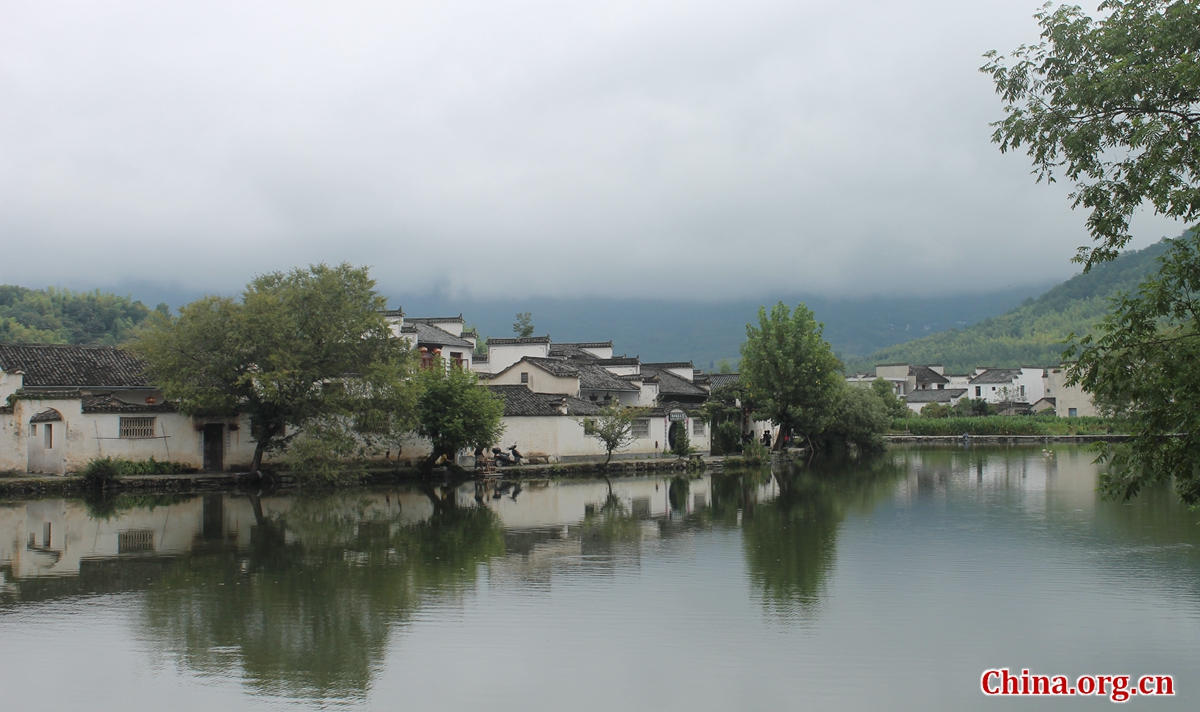
Hongcun village in Yixian county of Huangshan city, Anhui province. [Photo by Mi Xingang/China.org.cn]
Meanwhile, home to 310 traditional villages on the state protection list, Huangshan city in Anhui province has encouraged private investment in the adaptive reuse of vacant rural homes and traditional buildings, while harnessing the creativity of rural designers, artists and other professionals to bring new life into historic villages.
Yang Baojun, president of the UPSC, urged conservation efforts to avoid the pitfalls of large-scale demolition, imitation reconstruction and homogeneous development. Instead, he said, traditional villages should remain places where daily rural life continues to unfold rather than becoming static museum exhibits. Successful conservation, he added, should ensure that "green mountains remain, old houses stand, and nostalgia lives on."
Zhou Lan, vice president of the UPSC, said protecting traditional villages is not only about preserving nostalgia, collective memories and a shared cultural identity, but also about advancing rural revitalization and urban-rural integration through the flow of talent, capital and other resources.
Experts attending the inaugural meeting also stressed that conservation should go beyond preserving physical structures. Wang Kai, president of the China Association of City Planning, described traditional villages as vital carriers of China's farming civilization, saying that protecting them is essentially about protecting Chinese culture itself. He also called for protecting and revitalizing traditional villages from a broader regional perspective, emphasizing the relationship between human settlements and their natural environment.
Architect Liu Yanhui of China Architecture Design & Research Group highlighted the importance of interdisciplinary collaboration, saying the newly established branch would bring together expertise from architecture, urban planning, cultural heritage, art and other fields. He also stressed that digital and information technologies should play a greater role in traditional village conservation while helping raise public awareness of heritage protection.
The meeting also unveiled the "Design Goes Rural" Initiative, calling on planners, architects, designers and scholars to work more closely with rural communities and apply their professional expertise to the conservation and revitalization of traditional villages.
As China continues to balance modernization with cultural preservation, the newly established branch represents more than a new academic platform. It reflects a broader recognition that traditional villages are not relics of the past, but living spaces where history, culture and community continue to shape the country's future.


 京公网安备 11010802027341号