Share:

For the final leg, the group traveled northwest to Tacheng, near China's border with Kazakhstan. The short flight marked a shift from historic ruins and cultural heritage to regional trade. If Turpan's ruins and karez tunnels are an older lattice of survival, Tacheng suggests the modern equivalent: a network made not of earthen shafts but of roads and rails.
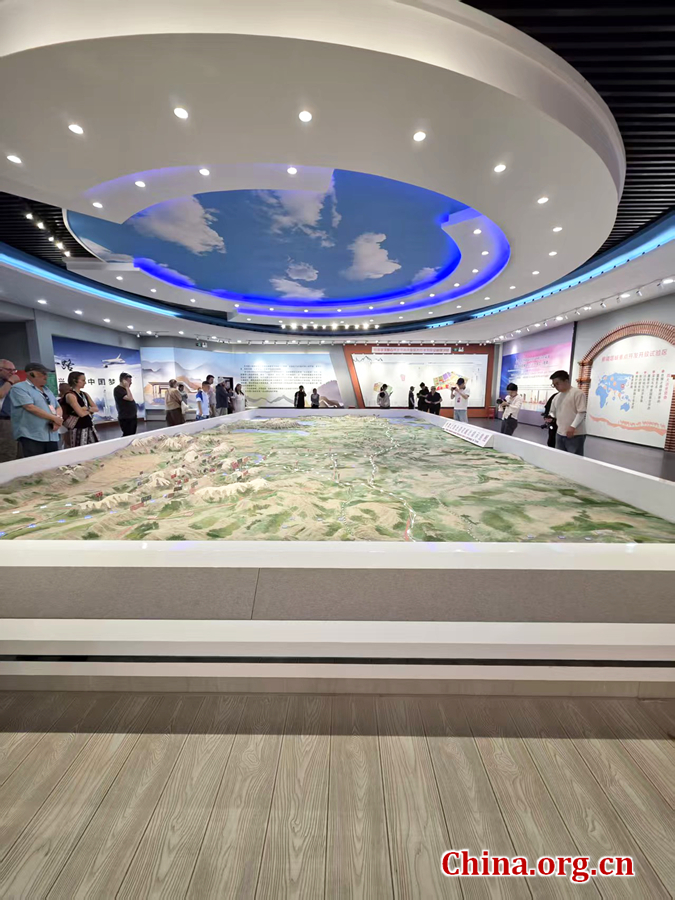
A scale model of the trade routes within Baktu Port at the Tacheng Key Development and Opening-Up Pilot Zone Planning Exhibition Hall in Tacheng, Xinjiang, June 14, 2026. [Photo by Tudor Finneran/China.org.cn]
Tacheng feels different from both Urumqi and Turpan. Its low rise neighborhoods, Russian influenced facades and a mixture of languages reflect a frontier town shaped by waves of cross border contact.
Its Baktu Port is a key hub on the ancient Silk Road. Long lines of trucks carrying grain, machinery and consumer goods now move along routes that once served caravans.
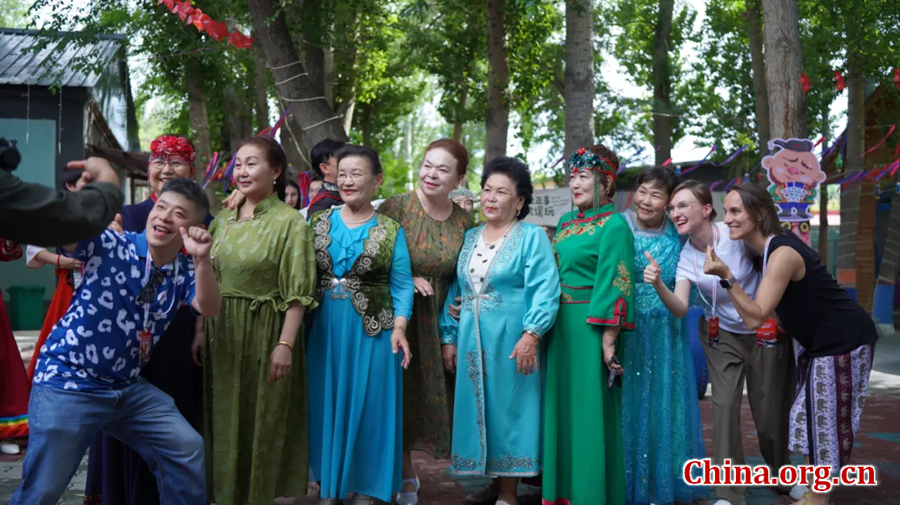
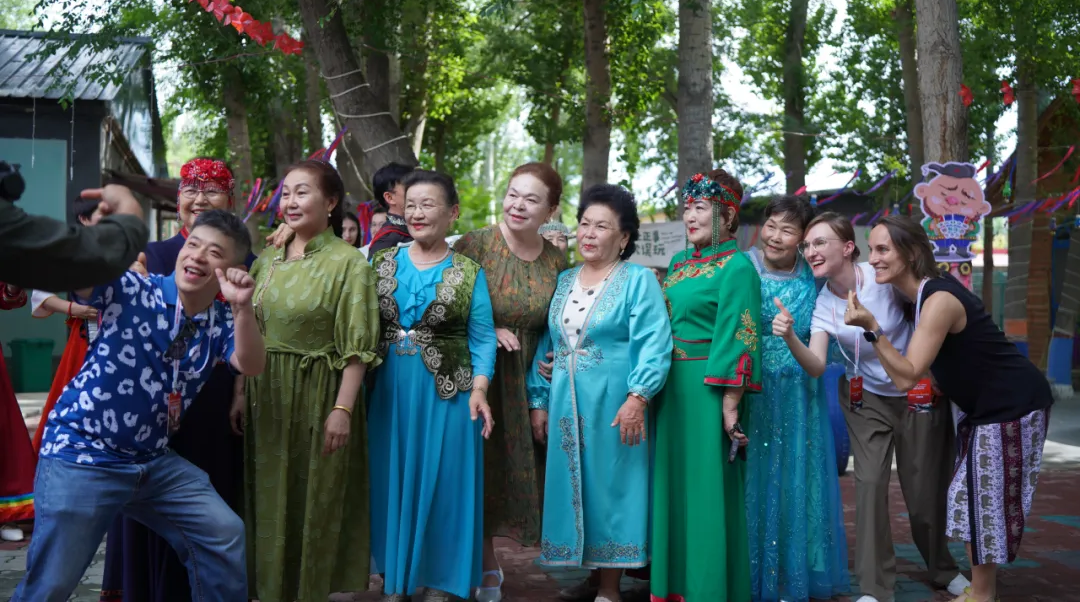
People in costumes pose for a picture in a community in Tacheng, Xinjiang, June 15, 2026. [Photo provided to China.org.cn]
The journey ended back in Urumqi, with a discussion panel allowing participants to share their impressions of the trip. For them, Xinjiang is a land of dynamism — shaped by the legacy of past caravans and the momentum of modern development. Its infrastructure has been built not only on centuries of frontier trade, but also through the recent influx of visitors, who continue in the long-standing tradition of cultural exchange, shared progress, and evolving identity.


 京公网安备 11010802027341号