 Share:

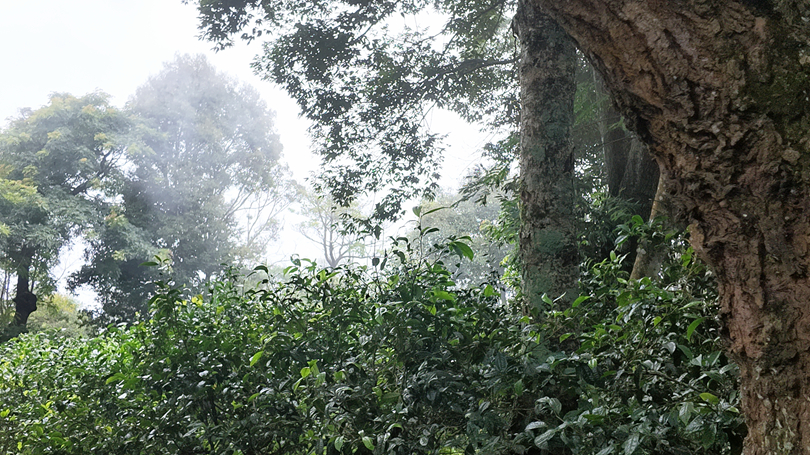
For more than a thousand years, tea trees have grown beneath the rainforest canopy of Nannuo Mountain in southwest China's Yunnan province.
Here, tea is not planted in isolation. Towering ancient tea trees grow together with surrounding forest vegetation, forming a unique ecosystem where tea and nature coexist. Nannuo Mountain is located in Menghai county of Xishuangbanna Dai autonomous prefecture, which is home to the world's largest contiguous ancient tea forest, covering more than 560,000 mu (about 37,300 hectares), with a tea-growing history dating back over a millennium.
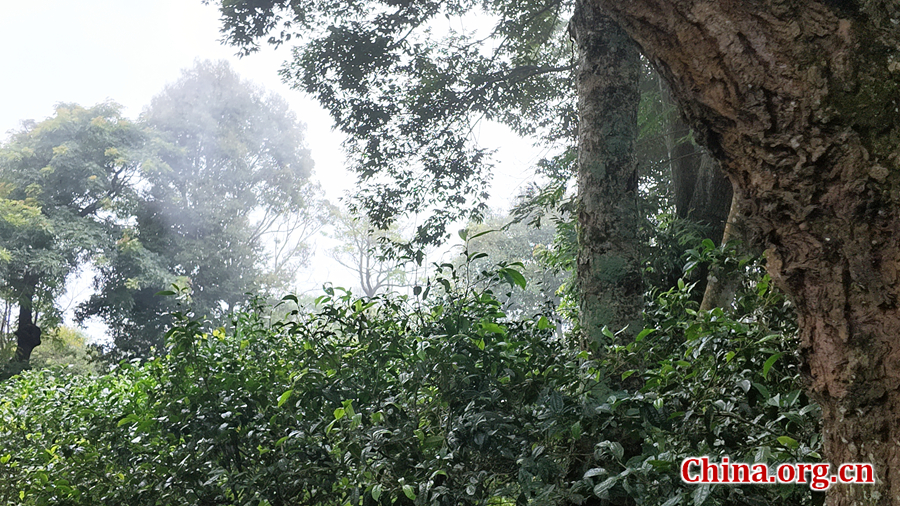
Ancient tea trees grow within the rainforest on Nannuo Mountain in Xishuangbanna Dai autonomous prefecture, Yunnan province, July 13, 2026. [Photo by Zhang Yuxin/China.org.cn]
Today, these ancient tea trees are producing more than tea. They are creating new opportunities for cultural tourism, technological innovation and rural development.
Unlike modern tea plantations that are often planted in uniform rows, the tea trees of Nannuo Mountain grow in harmony with the surrounding ecosystem. For generations, local communities have cultivated Pu'er tea while protecting the natural environment that sustains it. The result is a distinctive landscape where tea trees, rainforest vegetation and local communities coexist.
For villagers, the ancient tea forests are not only a cultural heritage passed down through generations, but also an important source of income. In recent years, the value of these forests has expanded beyond tea production, as more visitors come to experience the landscape, traditional culture and tea-making practices.
Nannuo village received more than 300,000 visitors last year, generating around 200 million yuan (about $28 million) in tourism revenue, according to local figures.
"Our villagers have seen clear increases in their incomes," said Gu Xia, a Nannuo native and owner of a tea garden. "We call our Pu'er tea our 'golden leaf.'"
For Gu Xia, tea is also a way for visitors to connect with the land and local culture. After recognizing the potential of the ancient tea trees and rainforest ecology, Gu developed a themed tourism project that combines tea gardens, cultural experiences and rural stays.
Visitors to her tea garden do not simply come to drink. They can put on traditional tea-picking clothing, carry bamboo baskets into the forest, learn how to pick fresh leaves and experience the whole process of making tea. During the production season, they can roast tea, press their own tea cakes and design personalized packaging.
The experience also extends beyond tea itself. Visitors can enjoy Hani ethnic cuisine, join traditional long-table banquets and take part in evening cultural activities. The Hani people, one of China's ethnic groups that have lived in the region for generations, have developed traditions closely connected with the mountains, forests and tea-growing landscapes of Xishuangbanna.
"My tea garden has welcomed visitors from more than 10 countries and regions," Gu said. "Many come from Europe, while others are from South Asia."
While tea culture provides the foundation, technology is helping the industry develop in a more sustainable way.
Menghai Chensheng Tea Industry, a local Pu'er tea producer specializing in large-leaf ancient tree tea, has established purchasing bases and primary processing facilities in several major tea-growing areas in Xishuangbanna, including Nannuo Mountain.
In 2024, the company introduced "Simple Chill," a fast-moving consumer goods brand designed to offer Pu'er tea in more convenient and diversified forms. It is also planning intelligent warehousing and digital production lines to support the growing market for ready-to-drink and other fast-moving tea products. The move reflects a broader effort to bring one of China's oldest tea traditions to a new generation of consumers.
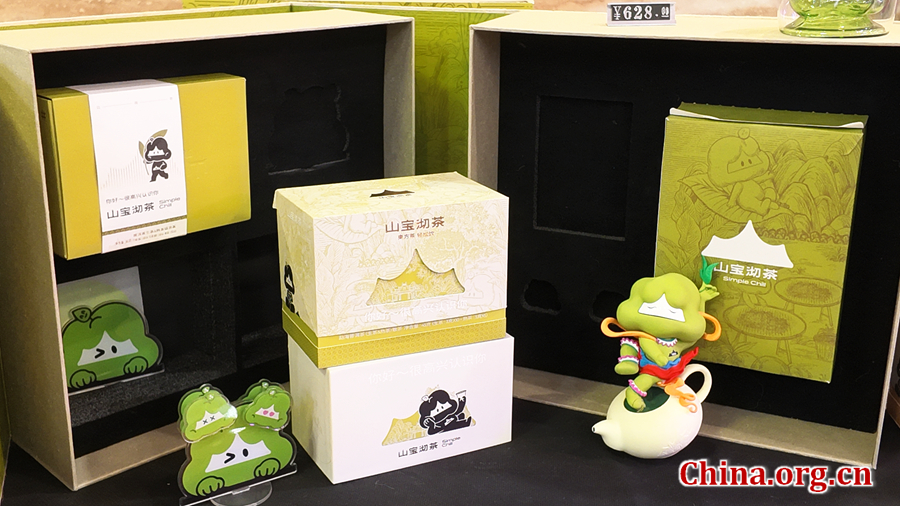
A selection of "Simple Chill" branded tea products from Menghai Chensheng Tea Industry on display in Xishuangbanna Dai autonomous prefecture, Yunnan province, July 13, 2026. [Photo by Zhang Yuxin/China.org.cn]
Beyond improving production, the company has also built long-term partnerships with local tea farmers. It has signed agreements with some farmers lasting 30 to 50 years, providing more stable income while encouraging the protection of ancient tea trees.
"We don't only teach tea farmers how to grow better tea, but also how to protect ancient tea trees," Wen said. "Regardless of market changes, we continue to honor our contracts and purchase tea leaves from farmers who work with us."
The transformation of Nannuo Mountain is also changing the ways in which local villages participate in development.
One example is Yexu Forest Tea Space, a tea and cultural tourism project located in the ancient tea forest area. The project combines forest tea pavilions, landscape restaurants and leisure spaces, creating a destination where visitors can experience tea, nature and local culture together.
"The idea behind the project is to create a place where people and the forest can coexist," said San Fa, Party secretary of Nannuo village.
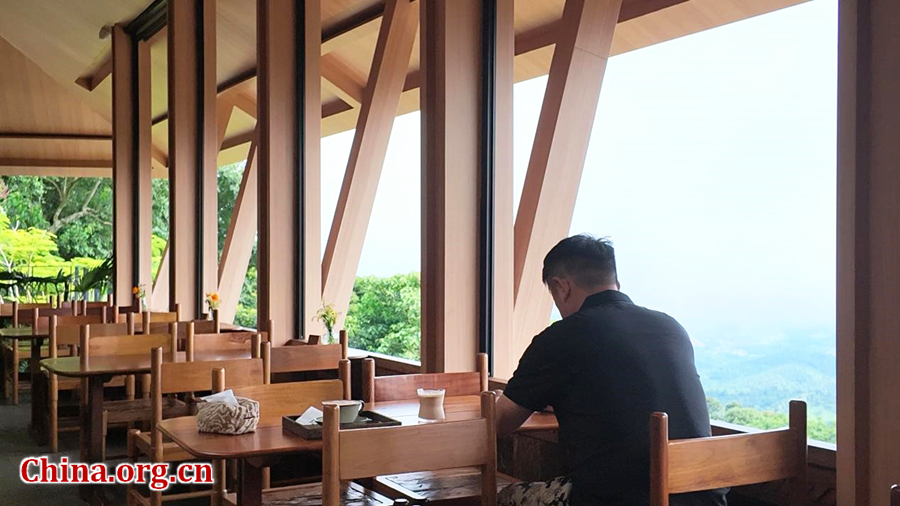
A customer sits in Yexu Forest Tea Space on Nannuo Mountain in Xishuangbanna Dai autonomous prefecture, Yunnan province, July 13, 2026. [Photo by Zhang Yuxin/China.org.cn]
The project reflects a cooperative approach involving government support, enterprise investment and village participation. With support from local governments, 200,000 yuan in initial village funding helped leverage 20 million yuan in enterprise investment. The village collective contributed land resources and now holds a 10% stake in the project, receiving dividends from its operation. More importantly, the project is creating employment opportunities for local residents.
"Most of the employees at the tea space are from our village," San said. "It allows people to find jobs close to home while continuing to live in their own community."
On Nannuo Mountain, the value of tea is no longer measured only by what grows on the trees, but also by the opportunities it creates for the people who live among them. It connects ancient forests with modern industries, traditional culture with global exchanges, and ecological protection with rural development.
As global city leaders gather in Xishuangbanna for the 2026 Global Mayors Dialogue, Nannuo Mountain offers a vivid example of how the principle that "lucid waters and lush mountains are invaluable assets" can be translated into local development, with ecological protection serving as a foundation for new industries and community livelihoods.


 京公网安备 11010802027341号