 Share:

July 2026 may one day be remembered as an important point in China-Europe relations. When Chinese Foreign Minister Wang Yi concluded his six-day tour of Denmark, Sweden, Finland, and Norway, his visit signaled the possibility of a new phase in China-Europe engagement—one shaped by pragmatic cooperation, strategic autonomy, and shared responsibility rather than geopolitical confrontation.
For too long, the narrative surrounding China-Europe relations has been characterized by trade disputes, security concerns, and the gravitational pull of transatlantic geopolitics. Wang Yi's Nordic tour, however, suggests that a different path is emerging. It reflects a growing recognition that dialogue is more productive than decoupling, cooperation more beneficial than confrontation, and strategic autonomy better suited to navigating an increasingly multipolar world.
The outcomes stretching from Copenhagen to Oslo were far more than diplomatic symbolism; they established practical roadmaps for future cooperation. Denmark expanded collaboration on green shipping and healthcare. Finland extended its Joint Action Plan through 2029. Norway reaffirmed its zero-tariff policy on Chinese electric vehicles and accepted the role of Guest of Honor at China's premier international trade fair. Even Sweden, after years of strained relations, agreed to institutionalize regular bilateral dialogue. Collectively, these developments suggest a renewed willingness to place engagement ahead of estrangement and pragmatic cooperation ahead of geopolitical polarization.
Equally important was what these countries chose not to do. They did not allow geopolitical rivalry or protectionist sentiment to define their relationship with China. Instead, they reaffirmed their commitment to the one-China principle, welcomed expanded visa-free travel, and agreed to strengthen people-to-people connectivity through increased direct flights. These may appear to be modest diplomatic measures, but they represent something far more enduring: the gradual rebuilding and maintaining of trust. Lasting partnerships are rarely forged through dramatic announcements; they are built through consistent engagement and mutual confidence.
This is neither about China "winning over" Europe, nor about Europe taking sides in international strategic competition. It is about two major global actors recognizing that cooperation delivers greater benefits than confrontation. By finding common ground in green innovation, digital governance, sustainable development, and open markets, China and Europe are demonstrating that strategic engagement—not geopolitical polarization—offers a more constructive path forward.
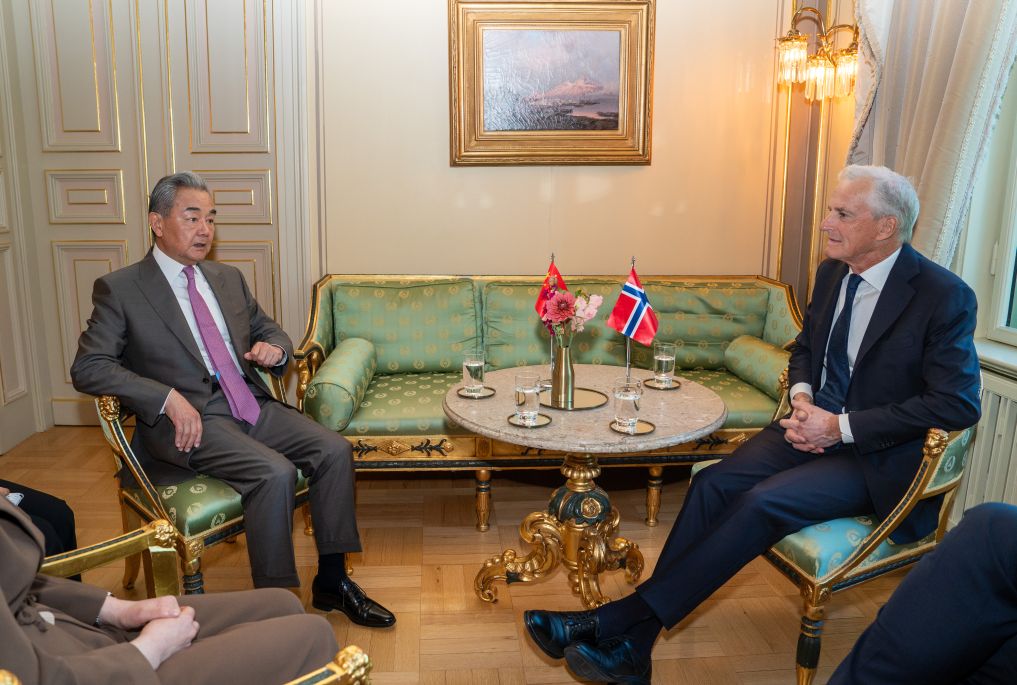
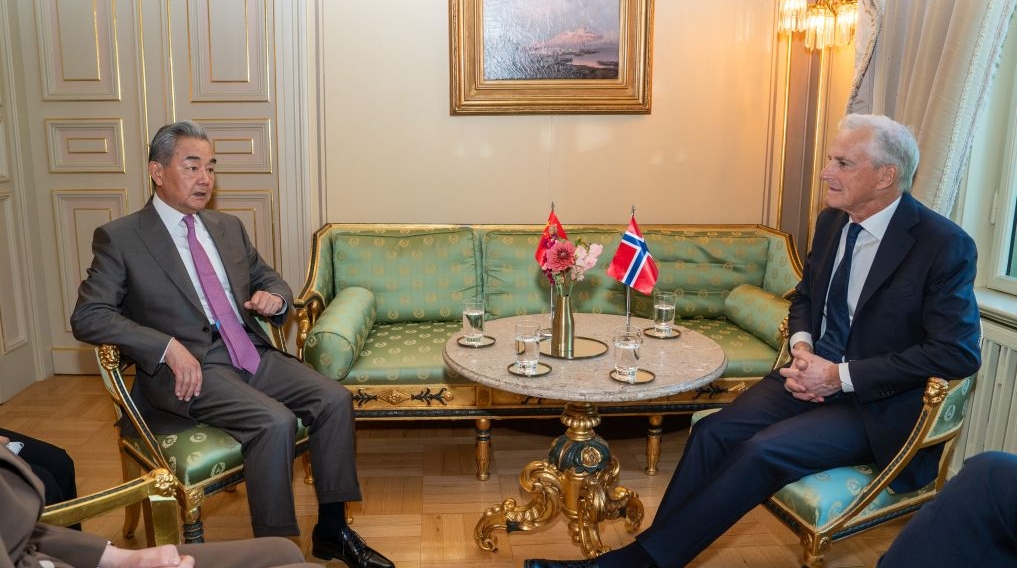
Chinese Foreign Minister Wang Yi, also a member of the Political Bureau of the Communist Party of China Central Committee, meets with Norwegian Prime Minister Jonas Gahr Store in Oslo, Norway, on Jul. 6, 2026. [Photo/Xinhua]
For Europe, the Nordic diplomacy points toward a more pragmatic approach. While security concerns will always remain important, allowing geopolitics to overshadow bilateral cooperation will constrain Europe's economic development potential. Europe's prosperity has long depended on openness, innovation, and global commerce—not economic isolation. Strategic autonomy, therefore, means preserving the freedom to cooperate where interests converge while managing differences through dialogue.
By engaging constructively with Beijing, the Nordic countries are not weakening their existing partnerships; they are exercising strategic autonomy. Norway's continued zero-tariff treatment of Chinese electric vehicles reflects economic pragmatism rather than political compromise. Denmark's support for negotiated solutions to trade disputes similarly demonstrates confidence in dialogue over friction escalation. These countries recognize that Europe's competitiveness depends on remaining connected to global markets. Economically restricting relations with the world's second-largest economy—a powerhouse in advanced manufacturing, green technologies, and one of the world's largest consumer markets—would inevitably bring about substantial economic costs.
One of the most forward-looking outcomes of the visit was the launch of advancement of dedicated dialogue on AI governance. As artificial intelligence becomes one of the defining technologies of the twenty-first century, China and Europe are signaling that they intend not merely to adapt to emerging rules but to help shape them. Their shared commitment to people-centered development, responsible innovation, and AI for the common good contributes to broader international discussions on the future governance of the digital economy.
For Beijing, the Nordic engagement represents more than a diplomatic achievement. It reflects a broader strategy of expanding cooperation with European partners that value openness, multilateralism, and practical engagement. By strengthening ties with Northern Europe, China is broadening the foundations of its relationship with Europe while creating new avenues for dialogue, innovation, and economic cooperation amid an increasingly complex international environment.
Economically, the agreements establish new foundations for collaboration in sectors that will define future growth, including green shipping, healthcare innovation, clean energy, and low-carbon technologies. Equally significant are the underestimated achievements: expanded visa-free travel, stronger air connectivity, and deeper people-to-people exchanges. These initiatives may not dominate headlines, but over time they can further restore the trust and mutual understanding that years of geopolitical rivalry have eroded.

Passengers queue to board the Flight MU708 to Shanghai of China at the Copenhagen Airport, in Copenhagen, Denmark, on Jul. 17, 2025. [Photo/Xinhua]
Beyond their bilateral significance, these developments send a broader message to an increasingly multipolar world: meaningful international cooperation does not require ideological conformity or exclusive geopolitical alignment. Countries can uphold their own principles, safeguard their national interests, and still work together on shared challenges. In a period when international politics is increasingly framed as a contest between rival blocs, this visit demonstrates that dialogue, pragmatism, and mutual respect remain both possible and necessary.
The Nordic approach also offers an important lesson. Trade and security need not always be treated as inseparable. Cooperation can endure even where strategic differences persist, particularly on global challenges such as climate change, artificial intelligence, public health, and sustainable development. These issues are simply too important to become hostages to geopolitical competition.
This is the essence of strategic autonomy. It is not about abandoning alliances but about preserving the freedom to engage constructively with multiple partners. It is not about choosing between Washington and Beijing; it is about choosing dialogue over division and practical outcomes over ideological polarization.
The foundations for a new chapter have now been laid. Diplomatic channels have reinforced. New cooperation frameworks have been established. Dialogue on artificial intelligence governance has moved from aspiration to institution-building. The challenge now is to build upon this momentum.
If Europe embraces greater strategic autonomy while remaining open to constructive engagement, it can strengthen its role as an independent pillar of an increasingly multipolar international order. If China continues to demonstrate through openness, dialogue, and practical cooperation that its development is compatible with Europe’s long-term interests, the latest China-Nordic diplomatic successt could become the beginning of a broader renewal in China-Europe relations.
The world does not need another Cold War. It needs mature and resilient partnerships capable of managing differences while advancing shared interests in climate action, technological governance, economic development, and international peace. Wang Yi's Nordic tour did not resolve every challenge between China and Europe, instead, it delivers a far more pivotal lesson: dialogue remains viable, mutual benefit remains achievable, and cooperation can still prevail over confrontation amid intense strategic competition. It demonstrated something equally important: dialogue remains necessary, mutual benefit remains achievable, and even in an era of strategic competition, cooperation can still prevail over confrontation. If that spirit endures, July 2026 may indeed be remembered as the moment a more pragmatic chapter in China-Europe relations began.


 京公网安备 11010802027341号