 Share:

In mid-June, as a doctoral student from Vietnam and a bilingual content creator in Chinese and Vietnamese, I travelled with young people from different countries to Xing'an, Quanzhou, and other places in Guangxi. Our journey took us to major sites associated with the Long March, including the Memorial Museum of the Battle of the Xiangjiang River and Laoshangjie. This was not simply a visit for me. It was a personal journey from encountering history to understanding the spirit that has carried its memory forward.
I had known something about the Long March before arriving in Guangxi. While studying in China, I had read about it in books and watched documentaries recounting this chapter of history. But nothing prepared me for the experience of entering the Memorial Museum of the Battle of the Xiangjiang River in person. Surrounded by historical objects, photographs, and documented accounts, I began to understand that history is not a distant story resting between the covers of a book. It is something that happened to real people, on real ground, in the very places through which we were walking. Before the memorials to those who lost their lives, I felt above all a deep sense of respect. The path of a nation toward independence, development, and revitalization is often paved by the dedication and sacrifice of generations. Whatever our nationality, we should honor history and never take peace for granted. As a young Vietnamese, I found this especially moving and deeply resonant.
Of all the experiences during the journey, retracing the historic Red Army trail across Laoshangjie left the deepest impression on me. Before the visit, I had imagined that it would be a solemn and somber place. But when I entered the mountain area, I was greeted by a very different scene. The mountains were still majestic, the streams were clear, and summer visitors had come to immerse themselves in nature, play in the water, and find relief from the heat. Everything around me felt peaceful and beautiful. Yet as I made my way along the mountain path, my thoughts naturally turned to the Red Army soldiers who had crossed the Laoshangjie mountains decades ago. They must have known how arduous the journey would be. They must also have been aware of the dangers and uncertainties ahead. And still, they chose to press on. What carried them forward was an unshakable belief. Their faith in their ideals and in the responsibility they carried gave them the strength to withstand extraordinary hardship. As a young person, I believe that this spirit still speaks to us today. The powerful contrast between the tranquil landscape I saw and the difficult journey once undertaken there helped me appreciate more fully what conviction and perseverance truly mean within the spirit of the Long March.
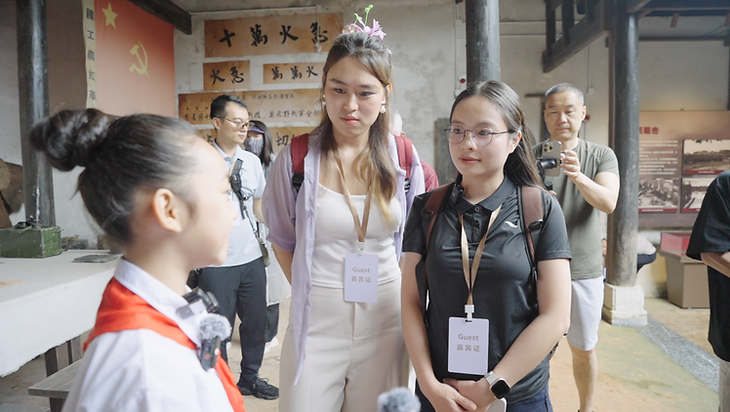
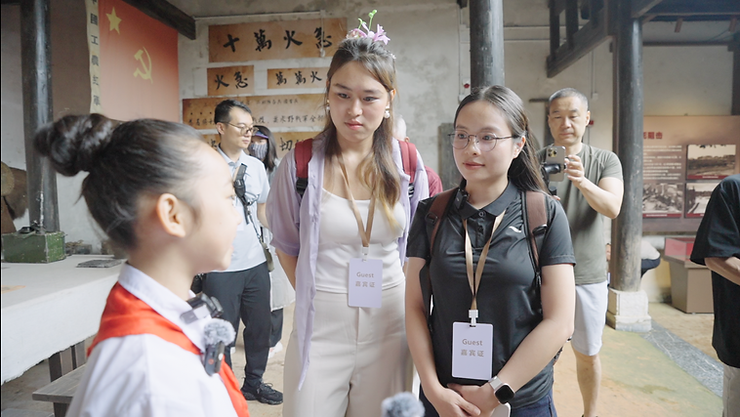
Later, on the banks of the Xiangjiang River, a local primary school student recounted the story of how the Red Army had fought its way across the river. Although the child was still very young, he spoke naturally and confidently, with genuine feeling. This left a lasting impression on me. In that moment, I saw clearly the importance China attaches to historical education. History is not left within the pages of textbooks. It is kept alive and passed from one generation to the next through classroom learning, revolutionary culture, and first-hand activity experiences. Perhaps this is why those who visit these places today can still feel, so vividly, the spiritual strength embodied in the past.
As a young person from Vietnam, I believe that every nation has its own collective memories of the past. China and Vietnam alike have traveled through periods of struggle for national independence and development. Historical education is therefore about more than remembering what came before. It enables younger generations to recognize how dearly today's peace was won, while fostering a deeper understanding of responsibility and commitment. The most meaningful part of this experience, for me, was not simply encountering a chapter of history. It was gaining a deeper appreciation of the spiritual forces of conviction, responsibility, sacrifice, and commitment to peace that lie behind the history.
BUI THI THUY LAM, Vietnamese international student in China and young influencer blogger.