 Share:

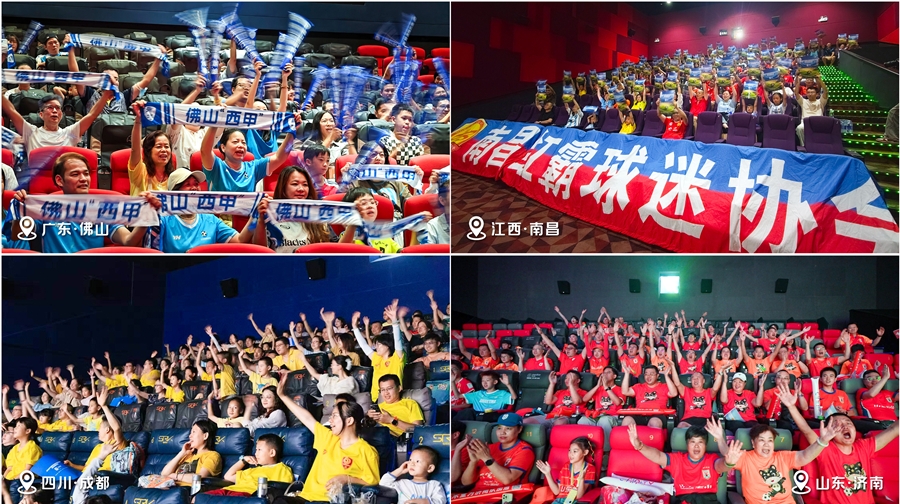
Tens of thousands of fans packed theaters across China this month to watch 2026 FIFA World Cup matches. This comes as part of a nationwide screening event organized by China Media Group in partnership with China Film Group.
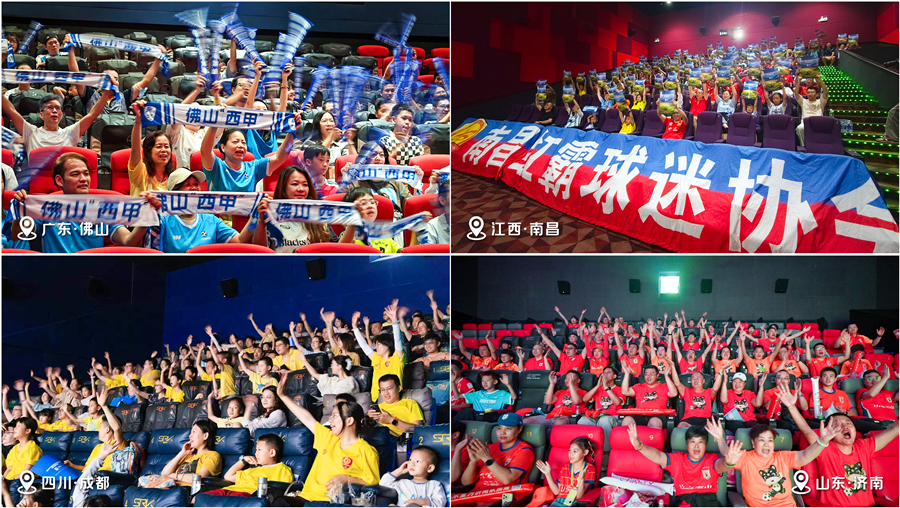
Football fans seen at screening events in Foshan, Nanchang, Chengdu and Jinan cheer in local theaters as they watch 2026 FIFA World Cup matches this summer. [Photo courtesy of China Film Group]
The initiative, themed "Connecting My City to the World," teamed up with provincial football leagues from more than 10 provinces to host synchronized viewing events. The screenings integrated the excitement of the World Cup with local cultures in close to 20 cities, with fans cheering in local dialects, sampling regional foods and enjoying folk performances.
Guangdong, the province with the strongest turnout, rolled out screenings across six cities — Foshan, Dongguan, Zhuhai, Shaoguan, Zhaoqing and Yangjiang — drawing nearly 1,000 fans. Dongguan hosted a football-themed market where fans watched matches, browsed merchandise and sampled local roasted goose. Zhaoqing fans turned out in yellow jerseys, drumming and singing Cantonese songs. In Foshan, fans waved "Xijia" cheer towels alongside father-son players from the local Xijia Football League. Zhuhai fans came in blue jerseys with custom signs, while Shaoguan's screening served up golden plums and Chancellor rice noodles alongside tea-picking dance performances. Yangjiang opened its event with drumbeats and a full-house cheer routine.
Other cities across China brought their own flavor. Harbin fans cheered in thick Northeastern dialect, while nearly 200 Jiangsu Super League fans braved rain to gather at a Nanjing CINITY LED theater. In Fuzhou, local fans shouted alongside international visitors and Taiwan compatriots living in Fujian. Nanchang saw father-son duos chanting "From Nanchang to the world" alongside players, while Jinan's fans, decked in orange, formed a sea of synchronized cheers. Changsha fans held up signs reading "From Changsha to the world," inviting visitors to "have a bowl of rice noodles, watch a game, and feel the city's fiery spirit." In Chengdu, local battle cries echoed through the screenings.
The screenings were part of a broader push by authorities to diversify cinema operations. A joint directive from the China Film Administration and the State Administration for Market Regulation, issued on July 3, encourages theaters to introduce AI agents, electronic video games, karaoke, light meals, coffee-book bars and smart vending zones. The goal is to create "cinema plus leisure" venues that attract customers beyond screenings and generate higher non-ticket revenue.
The policy also urges cinemas to develop licensed film merchandise, cultural and creative retail stores and pop-up experiences tied to film releases, with an emphasis on collaborating with local craftspeople and intangible cultural heritage practitioners.
The shift reflects a wider effort to reshape cultural consumption in China, where shopping malls, live performances, exhibitions and online entertainment compete for the same leisure spending. For cinema chains, the challenge is not only to fill seats for blockbuster releases but also to make their spaces useful throughout the day.
By turning theaters into live sports broadcast venues, the World Cup initiative offered a glimpse of how cinemas might evolve. The "cinema plus" model, organizers said, unlocks new consumption scenarios and offers a replicable approach for nationwide theater innovation and integrated cultural-sports development.


 京公网安备 11010802027341号