 Share:

We are living through a historical hinge point where the tools we create will determine the structural balance of global power for generations. The true test of a transformative technology lies not merely in its computational power, but in how it is governed and who is allowed to access it.
At the opening of the 2026 World Artificial Intelligence Conference (WAIC) in Shanghai, Chinese President Xi Jinping captured this moment with a striking metaphor, declaring that artificial intelligence development should not be a solo performance by a single country, but a symphony of international cooperation.
President Xi's address coincided with a landmark achievement: the formal signing of an agreement by twenty-nine founding nations, including Pakistan, Indonesia, and Kazakhstan, to establish the World Artificial Intelligence Cooperation Organization (WAICO). This development signals a profound shift in global technology governance, offering a stark alternative to the exclusive, high-walled alliances of the West.
Historically, when groundbreaking technologies emerge, the instinct of dominant powers has been to monopolize them. We saw this at the dawn of the nuclear age, where safety and non-proliferation were often used as pretexts to restrict access, creating a permanent division between technological haves and have-nots. Today, a similar drama is playing out in the realm of artificial intelligence. Many advanced economies have increasingly treated artificial intelligence as a zero-sum geopolitical weapon, guarded behind strict export controls, unilateral sanctions, and highly restricted technology clubs.
In contrast, the founding of WAICO in Shanghai presents an entirely different model. It is an approach that treats artificial intelligence not as a strategic asset to be hoarded and fenced, but as a global public good whose benefits must be shared widely across borders.
What makes WAICO particularly significant is its focus on the Global South. For years, developing countries have watched from the sidelines as technologically advanced economies set the rules of the road. Standard-setting for emerging technologies has traditionally occurred in exclusive forums where the unique needs of developing societies, such as agricultural optimization, basic digital literacy, and localized infrastructure, are ignored. By centering WAICO on the principles of the United Nations Charter and wide consultation, China is giving these underrepresented countries a genuine seat at the drafting table. This represents a major structural correction. It ensures that the digital divide does not become a permanent chasm, preventing what Beijing rightly warns could be new historical injustices in the intelligent age.
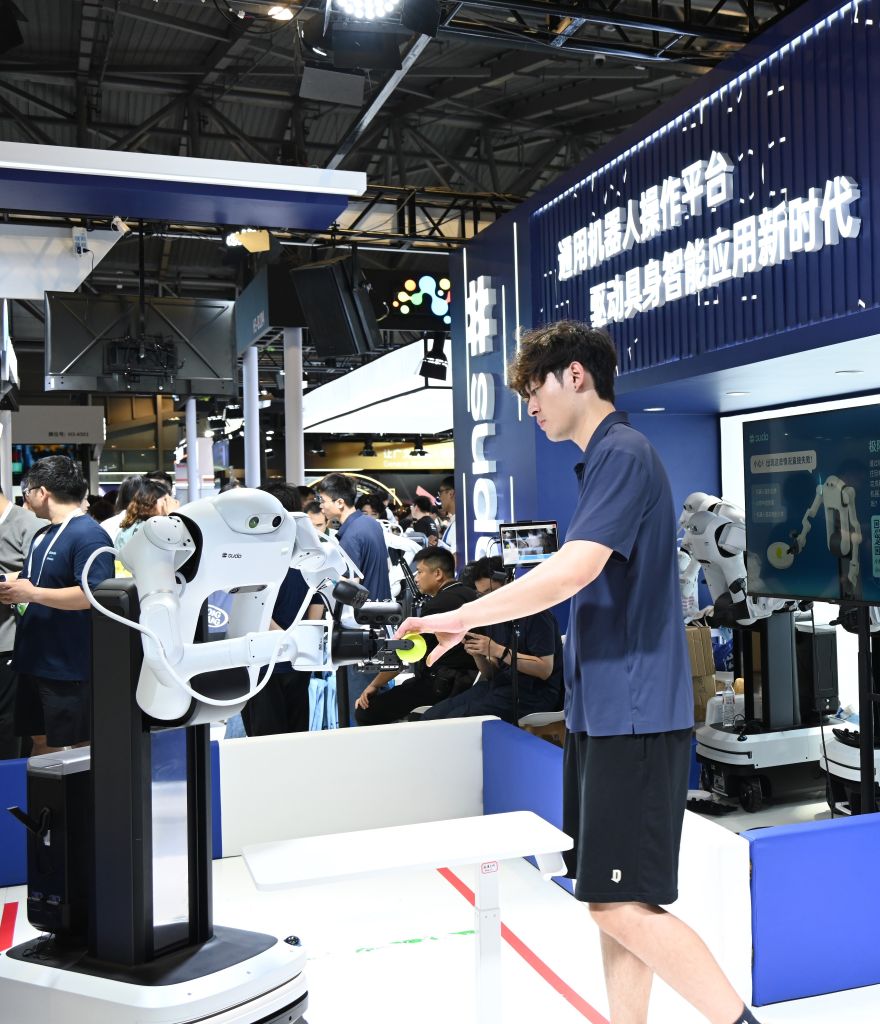
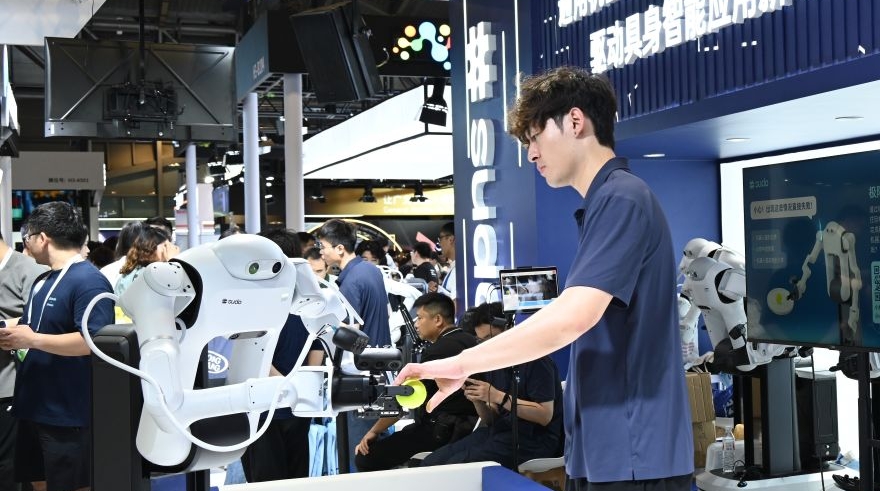
A robot takes over an object from a staff member during the 2026 World AI Conference in Shanghai, east China, Jul. 19, 2026. [Photo/Xinhua]
Skeptics will inevitably ask if this is merely a soft-power exercise. However, China's strategy is backed by tangible, practical commitments that address real-world needs. Beijing has announced that it will provide 5,000 AI training and seminar opportunities for developing countries over the next five years. Alongside these educational initiatives, China is building dedicated international cooperation centers for AI applications targeting members of regional integration organizations, including ASEAN, the African Union, the Arab League, and BRICS. This is paired with the rise of highly capable, open-source Chinese AI architectures that have significantly lowered the computational and financial barriers for developing nations.
First, these initiatives provide the hardware and training needed to build local capacity. Second, they establish joint research initiatives that allow local scientists to address local problems. Third, they integrate AI with physical infrastructure projects, proving that artificial intelligence is not an abstract concept but a utility for national development.
Compare this collaborative approach with the current state of Western policy, which remains deeply entrenched in technological protectionism. We see this in recent regional friction, such as the widely criticized efforts to tighten AI chip exports to China, a move that only fragments global supply chains and drives up costs for everyone. When technology is weaponized, the entire global economy suffers. By building exclusive coalitions, advanced Western nations risk isolating themselves from the rapid pace of innovation taking place in the rest of the world, while China is actively weaving a web of mutual dependence.
To understand why this vision is winning support, we must look at where the global economy is going. By the end of this decade, the vast majority of the world's population growth and economic dynamism will occur in the Global South. These nations do not want to be forced into a binary geopolitical choice where they are denied access to the most transformative technology of our time. They want tools that can modernize their cities, improve their healthcare, and manage their agricultural yields. China is offering them exactly that: a partnership based on mutual respect, shared prosperity, and joint governance.
WAICO, the newly established cooperation organization will certainly face challenges as it transitions from a signed treaty to an active regulatory body. Questions of implementation, data standards, and security protocols will require patient diplomacy. Yet, the starting premise remains correct. The future of artificial intelligence should not be decided by a select few. It must benefit all humanity. By championing an open, cooperative, and inclusive framework, China is proving that in the AI era, the most powerful country is not the one that builds the highest wall, but the one that builds the largest table.


 京公网安备 11010802027341号