 Share:

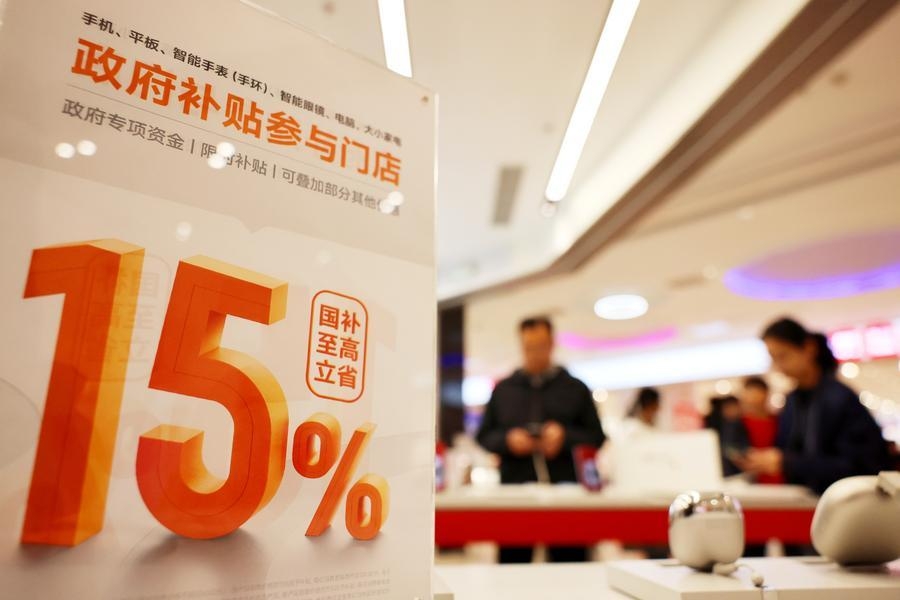
People shop for smartphones and other consumer electronics eligible for the Chinese government's trade-in subsidies at a retailer in Zaozhuang, east China's Shandong province, Feb. 21, 2026. [Photo/Xinhua]
China's consumer goods trade-in programs generated 1.1 trillion yuan (about $161.9 billion) in sales in the first half (H1) of 2026, benefiting 150 million consumers, official data showed on Wednesday.
Of the total, automobile trade-ins accounted for 3.707 million vehicles, while home appliances trade-ins reached 63.266 million units. Digital and smart product purchases totaled 79.098 million units.
Green products, especially new energy vehicles (NEVs), have gained traction amid the policy push, as consumers opt for more energy-efficient and eco-friendly options. The share of NEVs among subsidized auto trade-ins rose steadily to 65.4% in June, helping drive the NEV penetration rate to a record 62.4% in the second quarter.
Smart consumption accelerated, with digital and smart product sales volume up 13.4% year on year in H1 and 32% in June. Smart glasses became a new hotspot, with unit sales surging 30.6% in June.
Local governments have more flexibility in designing their subsidy programs under the 2026 trade-in policy. Jiangsu and Shanghai, for example, included embodied intelligent robots in their subsidy programs to foster emerging industries.
China rolled out the subsidies in 2024 as part of a broader consumer goods trade-in program covering a wide range of products, including automobiles, smartphones and household appliances. The initiative has played a key role in boosting market confidence and stimulating domestic demand.
Authorities have announced the renewal of the trade-in subsidy program for consumer goods in 2026, with a plan to allocate a total of 250 billion yuan in ultra-long special treasury bonds to support the program.


 京公网安备 11010802027341号