 Share:

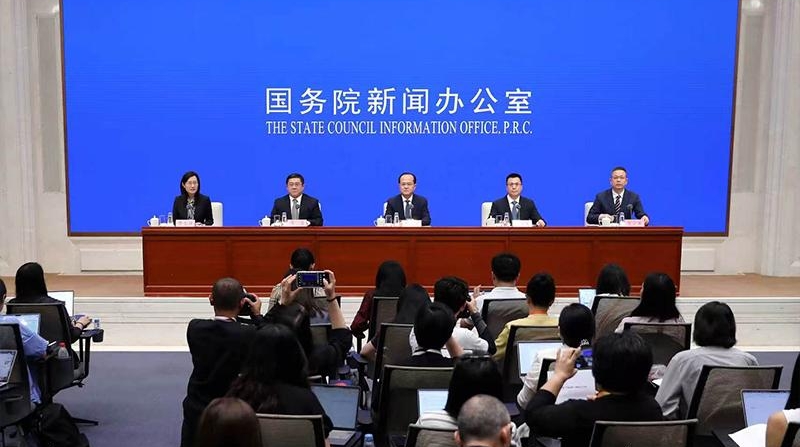
商务部2026年7月28日发布《关于所谓“产能过剩”问题的中方立场》文件。全文如下: | China's Ministry of Commerce on Tuesday released a document titled "China's Position on the So-called Excess Capacity Issue." The following is the full text of the document: | |
关于所谓“产能过剩”问题的中方立场 (2026年7月) 中华人民共和国商务部 | China's Position on the So-called Excess Capacity Issue (July 2026) The Ministry of Commerce of the People's Republic of China | |
目录 | Contents | |
前言 | Foreword | |
一、全面客观看待全球产能和所谓“过剩” (一)全球产能格局持续发展演变,是国际产业分工合作的结果 (二)客观认识全球经济发展中“产能过剩”现象 (三)应根据不同发展阶段、发展水平来衡量不同经济体和不同行业的“产能过剩”情况 | I. Global capacity and the so-called excess capacity should be viewed in a rounded and objective manner A. The evolving global capacity landscape is the result of international industrial labor division and cooperation B. The phenomenon of excess capacity in global economic development should be viewed objectively C. The measurement of excess capacity in different economies and industries should take into account their respective development stages and levels | |
二、对“产能过剩”相关四对关系的看法立场 (一)产业补贴与产能过剩的关系 (二)贸易顺差与产能过剩的关系 (三)经济失衡与产能过剩的关系 (四)市场竞争与产能过剩的关系 | II. Perspectives and positions on four relationships concerning excess capacity A. Relationship between industrial subsidies and excess capacity B. Relationship between trade surplus and excess capacity C. Relationship between economic imbalance and excess capacity D. Relationship between market competition and excess capacity | |
三、中国坚持在开放合作中建设现代化产业体系 (一)中国现代化产业快速发展靠的是创新驱动 (二)中国产业运行始终平稳健康靠的是持续深化改革 (三)中国现代化产业发展对世界不是“中国冲击2.0”而是“中国机遇2.0” | III. China's commitment to building a modern industrial system through opening-up and cooperation A. The rapid growth of China's modern industries is driven by innovation B. China's steady, healthy industrial performance relies on continued, deep-going reform C. China's industrial modernization is "China opportunity 2.0" to the world, not "China shock 2.0" | |
四、共同推动构建开放包容的全球产供链合作格局 (一)促进互利共赢,推动共同发展 (二)尊重市场规律,推进经济全球化 (三)加强产业政策协调,维护良好合作环境 (四)扩大市场开放,共创合作机遇 (五)坚持多边主义,构建更加公正合理的国际经济秩序 | IV. We should jointly pursue open and inclusive cooperation on global industrial and supply chains A. Promoting mutually beneficial and win-win cooperation for common development B. Respecting the law of the market and advancing economic globalization C. Strengthening coordination of industrial policies and maintaining a sound cooperation environment D. Expanding market openness and jointly creating cooperation opportunities E. Upholding multilateralism and building a more just and equitable international economic order | |
结束语 | Conclusion | |
前言 | Foreword | |
经济全球化为世界经济增长提供了强劲动力,促进了商品和资本流动、科技和文明进步、各国人民交往,是不可阻挡的历史大势。产业合作是经济全球化的重要内容,是推动全球经济持续复苏、促进各国共同发展的重要路径。 | Providing strong dynamism for world economic growth, economic globalization is an unstoppable and overwhelming historical trend that promotes the flow of goods and capital, progress of science and technology and civilization, and exchanges among nations. As an important dimension to economic globalization, industrial cooperation is a key pathway to continuous global economic recovery and common development shared by all. | |
近年来,国际经贸格局深刻演变,大国竞争加剧,全球产业链供应链加快重塑。有关国家和经济体对自身产业竞争力、市场地位的担忧增多,将经贸问题政治化,炒作所谓中国“产能过剩”问题,指责中国产能冲击世界市场,并以此为借口不断加码对华限制措施,保护主义加剧升温。 | In recent years, international economic and trade landscape has gone through profound shifts with major-country rivalry intensifying and global industrial and supply chains reshaping quickly. With growing concerns about their industrial competitiveness and market positions, some countries and economies have politicized economic and trade issues. Hyping the so-called excess capacity of China, they accuse the country of flooding the world market with Chinese capacity and have used this as an excuse to ramp up restrictions on China, stoking up protectionism. | |
中方始终认为,看待产能问题,要坚持全面、客观、公正的态度,既要历史地看、也要辩证地看,秉持开放合作、互利共赢,共同化解矛盾和分歧。搞保护主义,只会扰乱全球经贸秩序,不利于全球产供链安全稳定和产业合作健康有序发展,给世界经济增长带来长期风险。 | It has been China's belief all along that the capacity issue requires a rounded, objective and just approach that combines historical perspective with dialectics to address contradictions and differences together in the spirit of openness, cooperation, mutual benefit and win-win outcome. Invoking protectionism will only serve to disrupt global economic and trade order and undermine the security and stability of global industrial and supply chains and the sound and orderly development of industrial cooperation, which spell long-term risks for world economic growth. | |
为澄清有关事实,阐明中方对所谓“产能过剩”相关问题的政策立场,特发布此文件。 | To clarify related facts, this document is hereby published to lay out China's policy position on issues related to the so-called excess capacity. | |
一、全面客观看待全球产能和所谓“过剩” | I. Global capacity and the so-called excess capacity should be viewed in a rounded and objective manner | |
(一)全球产能格局持续发展演变,是国际产业分工合作的结果。 | A. The evolving global capacity landscape is the result of international industrial labor division and cooperation. | |
全球产能格局历史演变进程。第一次工业革命以来,随着生产力不断发展和经济全球化深化,各类生产要素在世界范围内加速流动,全球产出和需求中心不会固定在某个国家或地区,工业产能在不同国家和地区间的分布不断变迁,主要经济体工业产出全球份额也随之发生变化。1880年,英国工业产出全球占比达22.9%的高点。一战前后,美国继英国之后成为世界工业中心,1953年工业产出全球占比高达44.7%。 | History of the evolving global capacity landscape. Since the first industrial revolution, continuously improving productivity and deepening economic globalization have accelerated the flow of various factors of production worldwide. As global centers of production and demand shift among countries and regions, industrial capacity also moves from country to country and region to region, which changes the shares of major economies in global industrial output. In 1880, the UK's share in global industrial output peaked at 22.9%. Around the First World War, the U.S. succeeded the UK as the world's industrial center, accounting for as much as 44.7% of the global industrial output in 1953. | |
二战后全球工业格局逐步由单一中心走向多中心。随着经济全球化快速发展,国际分工不断深化,全球历经多轮产业转移,从美向欧转移、欧美向日本转移,再到向东亚、向中国转移,以及当前中国部分产业向东南亚和其他地区的转移,形成了北美、欧洲、东亚三大区域生产制造中心,三者制造业增加值全球占比分别为17%、17%、38%。中国成为“世界工厂”,是积极融入经济全球化,参与国际产业分工的结果,也是全球生产制造网络的重要组成部分。 | Gradual shift in the global industrial landscape after the Second World War from a single center to multiple centers. As economic globalization gathers pace, international division of labor keeps deepening with several waves of global industrial transfer first from the U.S. to Europe, then from the U.S. and Europe to Japan, and on to East Asia and China, as well as the current movement of some industries from China to Southeast Asia and other regions, which has formed three regional manufacturing centers in North America, Europe and East Asia with their manufacturing value-added respectively accounting for 17%, 17% and 38% of the global total. It is by actively integrating into economic globalization and taking part in international labor division that China has become "the workshop of the world" and a key component of the global manufacturing network. | |
(二)客观认识全球经济发展中“产能过剩”现象。 | B. The phenomenon of excess capacity in global economic development should be viewed objectively. | |
“产能过剩”是市场经济中的动态现象。市场经济下的产能供需,始终处于“平衡-失衡-再平衡”的动态循环之中,不存在持久均衡的产能状态。产能是否过剩取决于供需关系,在产业生命周期中是动态调整的,供需平衡是相对的,不平衡是普遍的。全球化时代,国际产能增减与全球供需的变化也是相互关联的。技术变革过程中,新兴产能创造新供给,旧有产能冗余,出现阶段性、结构性供需失衡。经市场机制调整,供需格局向新的均衡状态收敛。 | Excess capacity is a dynamic phenomenon in the market economy. Capacity supply and demand in the world economy goes through the dynamic cycle of "balance—imbalance—rebalance", without lasting capacity balance. Whether there is surplus capacity depends on supply and demand with dynamic adjustments in the life cycle of the industry. Supply-demand balance is relative, while imbalance is universal. In the age of globalization, changes in international capacity are interlinked with shifts in global supply and demand. In the course of technological revolution, emerging capacity creates new supply while old capacity becomes redundant, which leads to temporary and structural supply-demand imbalance. With adjustments of the market mechanism, supply and demand will converge towards a new equilibrium. | |
“产能过剩”概念认识不一,全球尚未形成广泛共识。各界对“产能过剩”问题一直存在争议,主要国际组织均未作出官方定义。世界贸易组织(WTO)协定中未对“产能过剩”进行界定,也没有针对“产能过剩”的条款。国际货币基金组织(IMF)认为“产能过剩”是一个复杂概念,需要结合宏观经济场景进行理解。经济学者多从宏观微观维度对“产能过剩”进行描述,认为从宏观层面看,是用来描述全行业生产能力显著超出市场有效需求总量的现象;从微观层面看,是由于市场垄断竞争导致的企业实际产出未达到最优产出的状态。各国经济实践中,由于经济周期波动,市场上产品生产能力超出有效需求的状态普遍存在。不同国家、不同行业对产能是否过剩这一经济现象,判断标准、角度差异很大。有的经济体出于地缘政治、贸易保护等特定目的,炮制各种新的标准,简单、机械或者泛化界定所谓“产能过剩”,企图强加于人,这些所谓的概念标准既不符合发展规律,又背离各国实际,站不住脚。 | Given varying perspectives on the concept of excess capacity, a global consensus has yet to be reached. Excess capacity remains a subject of debate across various sectors in the absence of an official definition by major international organizations. There is no definition of excess capacity or provisions on excess capacity in the World Trade Organization (WTO) agreements. According to the International Monetary Fund (IMF), excess capacity is a complex concept which should be approached from the perspective of macroeconomic scenarios. Economists mostly explain excess capacity from both macro and micro perspectives. At the macro level, excess capacity is a phenomenon where the production capacity of the whole industry substantially surpasses the total effective market demand. At the micro level, excess capacity refers to a situation where firms' actual output falls short of the optimal level due to monopolistic competition. In reality, economies are no strangers to the state of excess capacity over effective demand driven by fluctuations in economic cycles. The criteria and angles for determining whether excess capacity exists vary greatly across countries and sectors. Some economies attempt to impose on others various criteria they have invented for defining the so-called excess capacity in a simplistic, mechanical or blanket fashion to serve their specific geopolitical and protectionist ends. These so-called concepts and criteria do not hold water, as they are inconsistent with the laws of development and the actual conditions of countries. | |
(三)应根据不同发展阶段、发展水平来衡量不同经济体和不同行业的“产能过剩”情况。 | C. The measurement of excess capacity in different economies and industries should take into account their respective development stages and levels. | |
产能利用率指标常被用来衡量“产能过剩”情况,但需要结合各国实际区别看待。经济学中产能利用率是指实际产出与潜在产出的比值,不同经济体产能利用率的合理区间不同,不存在全球通用的判断标准。有关机构数据表明,发达和快速成长经济体的产能利用率中值多位于75%-80%区间,欠发达国家产能利用率一般在50%-64%之间。这是由于欠发达国家受基础设施、资金等多种因素制约,导致产能无法充分释放。 | Capacity utilization rate, an indicator often used to measure excess capacity, should be viewed differently in light of each country's actual conditions. In economics, capacity utilization rate is the ratio of actual output to potential output. There are no globally accepted criteria for determining the reasonable range of capacity utilization, as it differs across economies. Data of relevant institutions indicate that the median capacity utilization rate for advanced and fast-growing economies mostly falls in the 75-80% range, whereas that for less developed countries usually stands between 50% and 64%. It is the constraints of infrastructure, capital and other factors that prevent less developed countries from bringing their capacity into full play. | |
不同行业产能利用率差别较大。根据欧盟27个成员国公布的725个行业产能利用率最新数据,低于70%的有169个。一些传统行业产能利用率明显低于平均水平。比如,有的国家饮料、家具等行业的产能利用率在65%左右,橡胶、化工、塑料等行业仅有40%-50%。美联储最新数据显示,美国制造业产能利用率为75.7%,但分行业看差异较大,计算机及外围设备达到83.2%,纺织及皮革制造、汽车及零部件、初级金属、家具及相关产品、通信设备产能利用率都低于70%。从各国经济实践看,产能利用率用以衡量产能使用状况有一定客观性,但不能用来绝对化判断不同经济体、不同行业是否存在产能过剩。 | Capacity utilization rate varies substantially across sectors. According to the latest available data on capacity utilization rates published by the 27 EU member states, 169 out of its 725 industries reported rates below 70%. Capacity utilization in some traditional industries is significantly below the average. For example, in some countries, capacity utilization in beverages and furniture stands at around 65%, while in sectors like rubber, chemicals, and plastics, it is only 40% to 50%. The latest Federal Reserve data show a 75.7% capacity utilization rate for U.S. manufacturing, but with considerable variation across sectors. The capacity utilization rate ranges from 83.2% in computer and peripheral equipment to below 70% in textiles, leather, automobiles and parts, primary metal products, furniture and related products, and communications equipment. Economic practices of various countries have shown that capacity utilization rate, although a reasonably objective indicator of the use of production capacity, is not a one-size-fits-all measure for determining whether excess capacity exists in different economies or sectors. | |
二、对“产能过剩”相关四对关系的看法立场 | II. Perspectives and positions on four relationships concerning excess capacity | |
(一)产业补贴与产能过剩的关系。 | A. Relationship between industrial subsidies and excess capacity. | |
产业补贴与产能过剩不存在必然联系。合理的产业补贴政策有助于纠正市场失灵,推进技术创新、环境保护、减少贫困、促进均衡发展,并不会造成所谓的“产能过剩”。很多国家都会结合自身国情、产业发展需要,采取各有侧重的产业政策,如为新兴产业提供研发补贴、为农业提供风险补贴等,也是世贸组织成员合法的产业政策和贸易政策工具。联合国贸发会议多份报告指出,近五年来全球产业政策数量快速增长,为新兴产业提供研发补贴、给予税收优惠、提供低息贷款已成为国际通行做法。 | There is no necessary connection between industrial subsidies and excess capacity. Sound industrial subsidy policies help correct market failures, advance technology innovation, protect environment, reduce poverty, and promote balanced development, rather than cause the so-called excess capacity. Many countries introduce tailored industrial policies in light of their national conditions and development needs. For example, R&D subsidies for emerging industries and risk management subsidies for the agricultural sector are legitimate industrial and trade policy tools for WTO members. Several UNCTAD reports point to the rapid increase in industrial policies worldwide over the past five years. Providing R&D subsidies, tax incentives and low-interest loans for emerging industries has become a widely accepted international practice. | |
世贸组织成员普遍追求公平、普惠、透明的补贴,大国应该在补贴合规上作出表率。补贴本身不是问题,但应当在开放、公平、合规等世贸组织原则下合理使用。大国是全球产业发展的领头羊,产业政策也有很强的外溢和示范效应,应当带头反对补贴滥用,反对采取歧视性补贴政策。美国《通胀削减法》计划2022-2031年提供7500亿美元各类补贴,其中获得补贴的电动汽车需满足本土或北美生产和销售等条件,将其他世贸组织成员排除在外。美国对人工智能领域的产业补贴,更是远超其他所有国家。据不完全统计,欧委会2021-2030年间将提供超过1.44万亿欧元的各类补贴。欧盟《工业加速器法案》通过“欧盟原产”要求,将本地含量与财政支持直接挂钩。各国都应着眼于做大全球发展蛋糕,合理合规出台包括补贴在内的产业政策,而不应将其作为限制别人发展的工具。中国愿同各方在世贸组织框架下就补贴政策开展讨论,共同规范相关做法。 | WTO members generally pursue subsidies that are fair, universal and transparent. Major countries should set an example in ensuring their subsidies conform to WTO rules. Subsidies per se are not a problem, but they should be applied in a rational way in accordance with the WTO principles of openness, fairness and compliance. Given the significant spillover and demonstration effects of their industrial policies, major countries, as pacesetters of global industrial development, should take the lead in opposing the abuse of subsidies and discriminatory subsidy polices. The U.S. Inflation Reduction Act, which plans to provide a total of USD750 billion in various subsidies from 2022 to 2031, requires that electric vehicles eligible for these subsidies shall be produced and sold in the U.S. or North America, effectively excluding other WTO members. The U.S. provides far more industrial subsidies for artificial intelligence (AI) than any other country. According to available statistics, the European Commission is set to provide EUR1.44 trillion in various subsidies between 2021 and 2030. The EU Industrial Accelerator Act links local content to fiscal support through the EU origin requirement. It is imperative that all countries make the pie of global development bigger and introduce subsidies and other industrial policies in a rational and compliant manner, rather than use them as a tool to constrain the development of others. China stands ready to engage in discussions on the subsidy policy with all sides under the WTO framework to jointly bring relevant practices into compliance. | |
中国始终严格遵守世贸组织规则,致力于建立完善符合国际惯例的补贴体系。多年以来,中国在补贴的合规性、科学性、透明度方面,不断规范和完善相关政策,对部分地方一些不规范的做法也专门进行了清理规范,建立了统一的地方财政补贴负面清单管理机制等。中国政府切实及时全面履行透明度义务,2025年6月提交的最新一期中国政府2023-2024年中央和地方补贴政策通报实现全国覆盖。中国补贴平等适用于各类市场经营主体,主要补在科技研发、技术产业化攻关、市场消费等环节。更多采用公共服务、技术标准、技能培训等市场化、引导性间接手段,重点支持技术研发创新、中小企业发展、绿色节能等领域。比如,消费品以旧换新中,坚持内外一致,汽车和家电以旧换新、数码和智能产品购新补贴政策都做到一视同仁,外资企业积极参与、同等受益。 | China always strictly observes WTO rules and strives to build and improve a system of subsidies in accordance with international practice. For years, China has constantly regulated and improved relevant policies to ensure that its subsidies are compliant, science-based and transparent. It has also reviewed and standardized some unsound local practices and established a unified administration system for local government subsidies based on negative lists. The government of China has earnestly and comprehensively fulfilled its commitments on transparency in a timely manner. The latest notification submitted in June 2025 by the government of China on central and sub-central policies on subsidies from 2023 to 2024 covered the entire country. China's subsidies apply equally to all types of market entities and mainly go to scientific R&D, initiatives on industrial application of technology, and market consumption, among other areas. China uses market-based and indirect guidance more often, such as public services, technical standards and skills training, to support priority areas like technological R&D and innovation, development of SMEs, and green and energy-efficient development. For example, the consumer goods trade-in program treats domestic and foreign-invested companies equally. Both the trade-in policies for automobiles and household appliances and the subsidies for buying new digital and smart products provide equal treatment. Foreign-invested companies actively participating in them have benefited equally. | |
(二)贸易顺差与产能过剩的关系。 | B. Relationship between trade surplus and excess capacity. | |
出口多、顺差大不等于产能过剩。顺差主要反映的是国内总储蓄和总投资之间的差额,主要包括货物和服务贸易顺差。从全球经济发展史看,英国、美国、日本、德国等制造强国都曾长期保持顺差,德、日经常项目顺差占GDP比重超过6%的情况也较常见。新兴市场出口快速增长,印尼、墨西哥等也都成为顺差国,巴西、越南等连续10年实现贸易顺差。从行业产品看,美国芯片80%用于出口,波音公司交付的商用飞机约2/3销往北美以外的客户。欧盟的汽车、药品、化妆品,2025年顺差分别为922亿、2146亿和116亿美元。如果按照顺差大必然产能过剩的逻辑,这些出口多、顺差大的行业和产品是否也要视为“产能过剩”?贸易顺差是全球产业分工和供需结构共同作用的结果,并不意味着产能过剩。 | Large exports or trade surpluses are not synonymous with excess capacity. Surplus mainly reflects the difference between total national savings and investment, including surpluses in both goods trade and services trade. The global history of economic development suggests that manufacturing powerhouses like the UK, the U.S., Japan and Germany all recorded trade surpluses for a long time. It is also quite common for Germany and Japan to have a current account surplus of over 6% of their GDP. The exports of emerging markets also grow fast, making Indonesia and Mexico countries with surpluses, and enabling Brazil and Vietnam to run trade surpluses for ten years in a row. Industry- and product-wise, 80% of American chips are for export, and about two-thirds of commercial planes delivered by Boeing were sold to clients beyond North America. The EU's automobile, pharmaceutical and cosmetics sectors had surpluses of USD92.2 billion, USD214.6 billion and USD11.6 billion in 2025 respectively. By the logic that a large surplus is an inevitable outcome of excess capacity, should these sectors and products with large exports and surpluses be viewed as having an excess capacity issue as well? As a result of the global division of labor and supply and demand pattern, trade surplus does not mean excess capacity. | |
中国从不刻意追求贸易顺差。中国出口增长既源于规模经济与创新能力提升,也来自各国绿色转型和工业化发展的需求。比如,中国对欧出口增长主要集中于光伏、新能源汽车、锂电池和化工产品等,更多反映了绿色转型带动对能源产品的需求,以及能源危机抬升了欧洲化工等行业的生产成本。中国也从不刻意追求劳动密集型产品出口份额,相关产品出口比重由2012年的20.7%下降为2025年的15.1%。从贸易利益分配看,“顺差在中国,利益在各方”,2025年外资企业占中国出口的27%、顺差的16%,顺差和利润增速都快于本土企业。从整个国际收支看,虽然中国货物贸易有较大顺差,但服务贸易、投资收益都有逆差,总体上经常账户顺差占GDP比重约3.7%,处于国际公认合理区间。 | It has never been China's intention to seek a trade surplus. China's export growth is due to enhanced economies of scale and innovation capacity and the needs of countries for green transition and industrial development. For example, the growth of China's exports to Europe is mainly contributed by photovoltaic (PV) devices, new energy vehicles (NEVs), lithium-ion batteries and chemical products, which reflects more than anything else how green transition has fueled the demand for energy products and the energy crisis has driven up production costs of chemicals and other industries in Europe. Besides, China never seeks to raise the share of labor-intensive products in its exports; rather, the share of relevant products decreased from 20.7% in 2012 to 15.1% in 2025. Regarding the distribution of trade benefits, the surplus is registered by China, but the benefits are shared by all. In 2025, foreign-invested companies accounted for 27% of China's exports and 16% of its surplus, reporting higher growth in both surplus and profit than China's domestic businesses. In terms of the balance of payments in general, despite a relatively large surplus in trade in goods, China has deficits in both trade in services and return on investment. Overall, China's current account surplus is about 3.7% of its GDP, which is within an internationally recognized appropriate range. | |
中国积极推动进出口平衡发展。中国进口规模连续17年居全球第二,成为近80个国家的主要出口目的地;已对63个国家实施零关税政策,是全球首个对所有非洲建交国和所有建交的最不发达国家实现全覆盖零关税待遇的主要经济体;是唯一一个举办国际进口博览会的国家,已成功举办8届,累计意向成交额超过5800亿美元。中国正在开展“出口中国”系列活动,持续加大“买全球”力度,支持全球更多优质产品和服务进入中国。“十四五”期间,中国累计进口规模超过90万亿元,充分说明中国不仅是“世界工厂”,更是“世界市场”。 | China actively promotes the balanced development of import and export. As the primary export destination for nearly 80 countries, China's scale of import has ranked the second in the world for 17 years in a row. China has extended zero-tariff treatment to 63 countries, and is also the first major economy to give zero-tariff treatment for 100% tariff lines to all the African countries and LDCs having diplomatic ties with China. China is also the only country hosting an international import expo, reaching intended deals worth over USD580 billion in total during the eight successful editions that have been held so far. China is also carrying out the "Export to China" series of events, stepping up efforts to "buy global" and help more quality products and services around the world enter the Chinese market. During the 14th Five-Year Plan period, China's total imports exceeded RMB90 trillion, ample proof that China is not only "the world's workshop", but also "the world's market". | |
当前单边主义、保护主义抬头,各类贸易保护主义措施抑制全球经济增长,严重干扰了正常的贸易往来和贸易秩序,破坏了全球合理的产能流动和布局。需要各方尤其是贸易大国相向而行,维护自由贸易,多做畅通便利的事,少做筑墙设垒的事,促进全球贸易平衡可持续发展,推动全球产供链稳定畅通。 | As unilateralism and protectionism are on the rise, trade protectionist measures of all types have suppressed global economic growth, disrupted regular trade exchanges and order, and undermined rational global capacity flows and distribution. This requires all parties, major trading nations in particular, to work in the same direction, safeguard free trade, make more efforts to keep trade easy and smooth, refrain from building walls and barriers, promote balanced and sustainable development of global trade, and keep global industrial and supply chains stable and unimpeded. | |
(三)经济失衡与产能过剩的关系。 | C. Relationship between economic imbalance and excess capacity. | |
全球经济失衡是历史常态、根源复杂。在二战后形成的国际分工体系和经济金融秩序下,全球经济约每隔10年就会进入一轮失衡风险积聚和释放,甚至引发全球经济金融危机。在分析全球经济失衡的成因方面,国际社会讨论焦点也一直在变化,既有储蓄投资结构、产供链分工等市场因素,也有国际金融体系、宏观政策共振等制度因素。近些年来,全球失衡呈现新的特点,国际货币基金组织等机构认为,各国宏观政策尤其是财政政策,在造成全球失衡方面具有关键作用;美国积累了巨大的债务失衡,需改善财政状况,欧洲投资不足,需提升生产率,中国需扩大内需。这些观点也反映出了全球失衡的系统性、复杂性。一些把全球失衡与“产能过剩”挂钩、简单归因的观点,故意混淆概念,存在逻辑误区,甚至别有用心。 | Global economic imbalance is a historical norm with complex root causes. Under the international division of labor and economic and financial order formed after the Second World War, the global economy would move in a cycle about every ten years, in which the risks of imbalance accumulated and materialized, sometimes even causing global economic and financial crises. When analyzing the causes of global economic imbalance, the focus of discussion by the international community keeps shifting, ranging from market factors such as savings and investment and division of labor along industrial and supply chains, to institutional factors including the international financial system and macroeconomic policy interactions. In recent years, global imbalance has taken on new features. The IMF and other institutions believe that the macroeconomic policies of countries, fiscal policies in particular, are the dominant driver of global imbalance. The U.S. has accumulated a huge debt imbalance and needs to improve its finances; Europe has insufficient investment and needs to raise its productivity; China needs to expand its domestic demand. These views have shown that global imbalance is systemic and complex. Some views that link global imbalance with excess capacity and attribute one to the other in an oversimplified manner deliberately confuse different concepts, contain logical fallacy, and even have a hidden agenda. | |
“中国内需不足导致产能过剩”不符合事实。中国不仅是制造大国,也是消费大国。内需一直是中国经济的主引擎,2013-2024年,内需对中国经济增长的平均贡献率为93%。其中,消费和投资平均贡献率分别为55%和38%。中国社会消费品零售总额从2013年的23.8万亿元,增长至2025年的50.1万亿元,规模翻了一番。按世行购买力平价折算,2025年中国社零总额相当于美国的1.7倍,已是事实上的全球第一大商品消费市场。当前,中国实物消费量全球第一,部分工业品人均年消费量已接近发达国家水平。近年来,中国社零总额增速放缓,与中国经济从高速增长转向高质量发展阶段相符合,也体现了中国消费结构升级趋势,商品消费相对平稳,服务消费快速发展,过去5年人均服务性消费支出年均增长8.5%。把中国社零增速放缓视为内需不足,是不客观、不全面的。“中国内需不足导致产能过剩”的论调,更是偷换概念,把市场微观现象套用到宏观结构层面。 | The argument that "China's inadequate domestic demand gives rise to excess capacity" runs counter to facts. China is not only a manufacturing powerhouse, but also a major consumer, with domestic demand serving as a main engine of the economy. From 2013 to 2024, domestic demand on average contributed 93% of the country's economic growth. In breakdown, consumption and investment contributed 55% and 38%, respectively. Between 2013 and 2025, China's total retail sales of consumer goods doubled from RMB23.8 trillion to RMB50.1 trillion. Measured by the World Bank's purchasing power parity conversion factor, China's total retail sales of consumer goods in 2025 was 1.7 times that of the U.S., making China the de facto largest consumer market in the world. China also tops the world in terms of consumption of physical products, with the annual per capita consumption of some industrial products approaching the levels of developed countries. In recent years, the growth of China's total retail sales of consumer goods has slowed. This aligns with the country's economic transition from high-speed growth to a phase of high-quality development. It also mirrors an ongoing structural upgrade in China's consumption: the consumption of goods remains steady, while the consumption of services registers robust growth. Over the past five years, per capita expenditure on services posted an average annual increase of 8.5%. It is both unobjective and biased to view China's slowdown in retail sales growth as a sign of inadequate domestic demand. The argument that "China's inadequate domestic demand gives rise to excess capacity" simply distorts concepts and misapplies a micro-level perspective on market phenomena to the macro, structural level. | |
中国持续扩大内需,致力于更高水平的供需平衡。强大国内市场是中国式现代化的战略依托。内需包括投资需求与消费需求。中国“十五五”规划纲要对建设强大国内市场作了专篇部署,强调要坚持扩大内需这个战略基点,扩大有效投资,深入实施提振消费专项行动,推动商品消费扩容升级,释放服务消费潜力,夯实居民消费基础,持续改善消费环境,以新需求引领新供给,以新供给创造新需求,促进消费和投资、供给和需求良性互动。未来十多年中等收入群体将超过8亿人,人均GDP将达到中等发达国家水平,消费空间巨大、潜力活力足,仍是中国经济发展的主引擎,也将为世界经济增长持续注入强大动能。 | China is committed to a higher-level supply and demand equilibrium by continuously expanding domestic demand. A strong domestic market provides strategic support for Chinese modernization. Domestic demand includes demand for investment and demand for consumption. China's 15th Five-Year Plan has a dedicated section on bolstering domestic demand, underscoring the need to adhere to the strategy of expanding domestic demand, complete with measures for expanding effective investment, advancing special initiatives to boost consumption, expanding and upgrading goods consumption, unleashing the potential of services consumption, strengthening the foundation for resident consumption, and continuously improving the consumption environment, so that new demand drives new supply, new supply helps create fresh demand, and positive interactions are fostered between consumption and investment and between supply and demand. Over the coming decade, China's middle-income population will exceed 800 million, and per capita GDP is expected to reach the level of moderately developed countries. With huge space, abundant potential and strong vitality, consumption will continue to serve as a primary engine for China's economic development, while delivering strong impetus to world economic growth. | |
(四)市场竞争与产能过剩的关系。 | D. Relationship between market competition and excess capacity. | |
竞争是促进产能优化调节和产业健康发展的重要保障。每一次产业和技术革命都伴随着产能提高甚至“过剩”、市场竞争推动技术升级和产业迭代的过程。企业为追求利润和市场份额都会投资扩产,再通过市场调节,促使企业降本增效,带来技术进步与效率提升。市场竞争本身,就是防止产能无序扩张的最有效机制,否则就会滞销、亏损、被市场淘汰。政府的作用应是维护竞争秩序和公平环境,让市场更充分发挥作用,使落后产能在竞争中自然退出。 | Competition provides important guarantee for capacity optimization and adjustment and sound industrial development. Every industrial and technological revolution has been accompanied by increased or even "excess" capacity, alongside technological upgrading and industrial iteration fueled by market competition. To capture higher profits and larger market shares, companies make investment to expand production. Under the regulating forces of the market, companies are encouraged to cut costs and lift efficiency, which in turn spurs technological advances and overall efficiency gains. Market competition in itself constitutes the most effective mechanism to curb disorderly capacity expansion. Otherwise, firms will face unsold inventories, incur losses and ultimately be driven out of the market. The role of the government lies in ensuring orderly competition, preserving a level playing field, and allowing the market to fully function, so that outdated capacity is phased out naturally through competition. | |
各方应维护公平竞争,减少对全球产能分工合作的不当干扰。世贸组织的公平竞争原则和相关规则,是全球最广泛接受的行为规范。近年来,一些经济体将本国优先凌驾于国际规则之上,违反公平竞争原则,甚至以公平竞争为名、行保护主义之实,大量使用不公平手段。美国实施违规关税措施、采取针对性投资限制,滥用出口管制和制裁,严重破坏公平竞争。欧盟采取了一系列经贸立法和措施,如《工业加速器法案》对外商投资电池、电动汽车、光伏、关键原材料四大新兴战略行业设置限制性要求,构成严重投资壁垒。指责中国“不公平竞争”“非市场政策做法”,是典型的“双重标准”,才是真正的不公平。中国坚决维护世贸组织基本原则,坚定推动公平竞争,促进互利互惠共赢。中国已宣布在世贸组织当前和未来谈判中,不寻求新的特殊和差别待遇,世贸组织总干事伊维拉指出,中国的决定体现了对更平衡、更公平的全球贸易体系的承诺。 | All parties should uphold fair competition, and reduce undue interference with the global division of labor and cooperation in production capacity. The WTO's principle of fair competition and related rules are the world's most widely accepted code of conduct. In recent years, some economies have prioritized their national interests over international rules, violating the fair competition principle. They have even cloaked protectionist agendas under the guise of fair competition and resorted to the heavy use of unfair practices. The United States has seriously undermined fair competition through illegal tariff measures, targeted investment restrictions, and abusing export controls and sanctions. The European Union has introduced a series of trade and economic legislation and measures. Its Industrial Accelerator Act, for example, imposes restrictive requirements on foreign investment across four emerging strategic sectors: batteries, electric vehicles, photovoltaics, and critical raw materials, erecting significant barriers to investment. Accusing China of "unfair competition" and "non-market policies and practices" is a typical case of "double standards" and genuine unfairness. China resolutely upholds the basic principles of the WTO, and firmly promotes fair competition and mutually-beneficial and win-win outcomes. China has already announced that it will not seek new special and differential treatment in current and future WTO negotiations. As WTO Director-General Ngozi Okonjo-Iweala observed, this decision reflects China's commitment to a more balanced and equitable global trading system. | |
中国积极营造公平竞争的一流营商环境。中国市场经营主体数量已突破2亿,居全球首位。海量市场经营主体造就充分竞争环境,企业在这里直面挑战、比拼实力,在优胜劣汰中打磨产品、优化服务。麦肯锡表示,中国是“全球最硬核的健身房”,磨炼出极具竞争力的企业,如今世界上找不到“另一个中国”。中国“十五五”规划纲要明确提出,纵深推进全国统一大市场建设,消除要素获取、资质认定、招标投标、政府采购等方面壁垒,全面落实外资企业国民待遇,综合整治“内卷式”竞争,打造市场化法治化国际化一流营商环境,维护公平竞争市场秩序。美中贸易全国委员会《2026年中国商业环境调查》报告显示,92%受访美企2025年在华业务实现盈利。中国欧盟商会发布《2026年商业信心调查》显示,75%的企业认为其在华生产效率高于全球其他地区。 | China is working actively to foster a first-class business environment underpinned by fair competition. The country boasts the world's largest pool of market entities, whose total count has surpassed 200 million. This massive base of market participants creates a fully competitive environment, compelling companies to take on challenges, compete on strength, and keep improving their products and services in competition. McKinsey once described China as "the world's toughest gym" that trains hyper-competitive companies, noting that one cannot find "another China" in the world. China's 15th Five-Year Plan specified that the country will further advance the development of a unified national market, remove barriers related to production factor access, qualification accreditation, public bidding, and government procurement, fully implement national treatment for foreign-invested enterprises, and address rat race competition through holistic measures. China will work actively to foster a first-class business environment that is market-oriented, law-based and internationalized, and uphold fair market competition. According to the US-China Business Council Member Survey 2026, 92% of American companies surveyed report profitability in China in 2025. The European Chamber of Commerce in China released its Business Confidence Survey 2026, which shows that 75% of the respondents categorize their China production as more efficient than their production in the rest of the world. | |
三、中国坚持在开放合作中建设现代化产业体系 | III. China's commitment to building a modern industrial system through opening-up and cooperation | |
(一)中国现代化产业快速发展靠的是创新驱动。 | A. The rapid growth of China's modern industries is driven by innovation. | |
中国坚持创新驱动,走出了一条以科技创新引领产业创新,以产业升级促进科技迭代的有效路径。创新驱动发展是中国重大的国家战略,是中国经济长期向好、行稳致远的关键密码。“十四五”时期,全社会研发经费年均增长10%,投入规模世界第二,2025年基础研究经费比重超7%,创历史新高。很多行业取得技术突破和领先,都是经过长周期、高投入研发,攻坚克难拼出来的。这才是中国产品竞争力的关键,而不是靠政府补贴。近年来,中国新能源、智能网联汽车等产业蓬勃发展,背后正是新材料、动力电池、通信等科技突破。中国新能源汽车企业从20多年前开始持续进行研发投入和产业布局,形成了独有的技术优势,动力电池能量密度较2018年提升超50%、生产成本下降超60%。摩根士丹利报告显示,中国电动汽车产业重心已从价格优势转向科技优势,智驾系统等人工智能应用进一步巩固其产业优势。 | China stays committed to an innovation-driven development strategy, and has blazed a successful path whereby sci-tech innovation spearheads industrial innovation and industrial upgrade propels sci-tech revolution. As a major national strategy, pursing development through innovation is the key to the sustained and sound long-term growth of China's economy. During the 14th Five-Year Plan period, the total R&D expenditure nationwide grew by an average of 10% annually, making China the world's second-largest R&D spender. In 2025, basic research accounted for more than 7% of total R&D expenditure, setting a new historical record for China. Numerous industries have achieved technological breakthroughs and secured leading positions through arduous, long-cycle and capital-intensive R&D. These efforts, not government subsidies, underpin the competitiveness of Chinese products. The vigorous growth of China's new energy and intelligent connected vehicle industries, for example, has been enabled by sci-tech breakthroughs in new materials, power batteries and communication technology. Domestic new energy vehicle manufacturers have carried out consistent investment in R&D and industrial layout for over two decades, cultivating unique technological edge. Since 2018, energy density of power battery has risen by more than 50%, while production costs have fallen by over 60%. A Morgan Stanley report suggests that the focus of China's NEV sector has shifted from price wars to technology battles, with AI applications such as intelligent driving systems further consolidating its industrial advantages. | |
中国坚持创新赋能,传统产业含绿量、含智量显著提升。中国支持企业以数智技术、绿色技术引领产业优化升级,促进高端化、智能化、绿色化发展。近年来,产业含绿量持续提升,累计培育国家绿色工厂8000多家,绿色工业园区600多个,246个国家绿色数据中心使用的一半电力是绿电。规模以上工业企业开展数字化改造的比例达89.6%,数字化设备普及率达到57.7%。中国有109座灯塔工厂,全球占比接近一半。 | China stays focused on empowerment through innovation, contributing to significantly greener and smarter traditional industries. China supports enterprises in adopting digital and smart technologies to drive industrial optimization and upgrading and promoting higher-end, smarter and greener industries. In recent years, industries in China have grown increasingly eco-friendly. Over 8,000 national green factories and more than 600 green industrial parks have been built, and the 246 national green data centers are 50% powered by green electricity. Of all industrial enterprises above the designated size, 89.6% have launched digital transformation and 57.7% have installed digital equipment. China has 109 lighthouse factories, nearly half of the global total. | |
中国强化创新应用,持续打造新产业新赛道海量“训练场”。中国拥有完备的产业体系,任何一项有价值的科技成果在中国制造的加持下都能迅速转化为实际产品。从长三角地区电子信息1小时创新圈、到深圳机器人谷半小时配套圈,再到高度发达的新能源产业圈,电动汽车整车厂可在4小时车程内解决所需配套零部件供应。中国拥有14亿多人口的超大规模市场,新业态、新模式、新场景不断涌现,可以为各类新产品、新服务提供“0到1”验证和“1到N”放量的最佳试验场。出口“新三样”(新能源汽车、锂电池、光伏产品)、信息消费“新三样”(智能网联新能源汽车、智能手机和电脑、智能机器人)等产业兴起,与海量的应用场景密切相关。 | China enhances the application of innovation, building massive "training grounds" for new industries and new arenas. China has a complete industrial system. A promising sci-tech outcome, backed by China's manufacturing strength, can be rapidly turned into real-world products. China has the one-hour electronic information technology innovation circle in the Yangtze River Delta, and the 30-minute support circle in Shenzhen's Robot Valley. Its highly advanced new energy industrial circles enable electronic vehicle manufacturers to source all their components within a four-hour drive. China has a super-sized market of more than 1.4 billion people, in which constantly emerging new business types, models and scenarios create the finest testing grounds for verifying "zero-to-one" breakthroughs and "one-to-N" upscaling. The rise of sectors such as the new export trio (NEVs, lithium-ion batteries, and PV products) and the new IT consumption trio (smart and connected NEVs, smartphones and computers, and smart robots) is closely related to the massive application scenarios. | |
(二)中国产业运行始终平稳健康靠的是持续深化改革。 | B. China's steady, healthy industrial performance relies on continued, deep-going reform. | |
中国持续推进供给侧结构性改革,工业产能利用率保持在合理区间。近年来,中国通过在供给侧结构性改革中淘汰落后产能等措施,不断改善工业产能利用状况,整体供需基本平衡、运行态势平稳。2025年中国规模以上工业产能利用率为74.4%,高技术制造业、高端装备制造业、战略性新兴产业产能利用更为充分。从细分领域看,近三年通用设备制造产能利用率平均达78.9%,电气机械和器材制造74.8%,汽车制造73.3%,计算机、通信和其他电子设备制造76.9%。部分传统原材料行业产能利用率阶段性偏低,主要是结构调整、绿色转型带来的适应性调整,属于产业提质升级过程中的正常现象。 | China presses ahead with supply-side reform, with the utilization rate of industrial production capacity kept within a reasonable range. In recent years, during the supply-side reform, China has taken such measures as phasing out outdated production capacity to improve industrial capacity utilization, achieving a generally balanced and stable performance in terms of the total supply and demand. In 2025, the capacity utilization rate of industrial enterprises above the designated size was 74.4%, and higher capacity utilization was observed in high-tech manufacturing, high-end equipment manufacturing and strategic emerging industries. By sector, the average capacity utilization rates over the last three years were 78.9% for general equipment manufacturing, 74.8% for electric machinery and apparatus manufacturing, 73.3% for automobile manufacturing and 76.9% for manufacturing of computer, communication equipment and other equipment. The temporary low capacity utilization rates in certain traditional raw-material sectors mainly stem from adaptive adjustments brought by structural changes and green transition, which are normal during the high-quality upgrading of industries. | |
中国不断健全要素市场化配置体制机制,营造产业发展良好生态。这些年,中国不断加大资源要素保障,构建了企业主导、政府引导、社会参与的多元化投入体系,建设了一批重大科研装置和科研基础设施,每年培养理工农医类大学毕业生约700万人。中国深入推进体制机制改革,在知识产权保护、风险分担、创新激励等方面推出一系列新政策新举措。中国不断优化新业态新领域要素保障体制机制,加快建设新型电网、算力网、新一代通信网等新型基础设施,有效破除阻碍资源优化配置的壁垒障碍,进一步提高全要素生产率,加快新旧动能转换,促进产业健康可持续发展。 | China keeps refining the institutions and mechanisms for market-based allocation of production factors to foster an enabling industrial ecosystem. In recent years, China has been increasing support in resources and factors of production, putting in place a diversified investment system with enterprises leading the way, government providing guidance and society participating, building a group of major sci-tech research facilities and infrastructure, and training some seven million university graduates in science, engineering, agriculture and medicine every year. In deepening reforms of systems and institutions, China has introduced a series of new policies and measures in areas including intellectual property rights protection, risk sharing and innovation incentives. On improving the institutions and mechanisms for ensuring the supply of production factors for new business types and areas, China has sped up the development of new infrastructure such as new-type power grids, computing power networks and new-generation telecommunication networks, so as to effectively remove barriers to better resource allocation, further enhance total factor productivity, speed up the transformation of growth drivers and promote the sound and sustainable development of industries. | |
(三)中国现代化产业发展对世界不是“中国冲击2.0”而是“中国机遇2.0”。 | C. China's industrial modernization is "China opportunity 2.0" to the world, not "China shock 2.0". | |
美国等西方国家谬称中国产业发展威胁西方国家垄断地位,挤压南方国家发展空间,抛出了所谓“中国冲击2.0”论调。这不符合事实,是站不住脚的。过去十多年,中国对全球经济增长贡献率一直保持在30%左右,是世界经济增长的重要引擎。过去,中国主要是以自身大规模市场、低成本要素为世界提供“市场红利”,现在中国在提供更大“市场红利”的同时,通过产业发展,为全球产业合作发挥了稳定锚和重要枢纽作用,创造了“发展红利”。还通过科技进步,为全球提供越来越多的“创新红利”。这些红利交融叠加,给世界带来的是更多的发展机遇、更大的发展空间,也就是国际社会越来越多提到的“中国机遇2.0”。具体体现在四个方面: | The U.S. and other western countries have come up with the so-called "China shock 2.0", falsely accusing China's industrial development of posing threats to western countries' monopoly and squeezing the development space of the Global South. This is not supported by facts and totally untenable. For more than a decade, China has contributed around 30% of the global growth, making it a critical engine driving the world economy. In the past, China's big market and low-cost production factors provided the world with "market dividends". Today, while continuing to provide even greater "market dividends", China is also offering "development dividends" as an anchor of stability and hub for global industrial cooperation through its industrial development; moreover, it is also offering more and more "innovation dividends" with its technological progress. What these combined dividends generate for the world are greater opportunities and potential of development, also known as the "China opportunity 2.0" more frequently mentioned by the international community, as reflected in the following four aspects specifically: | |
推动全球创新合作和科技进步。中国坚持开门搞创新,人工智能大模型等很多创新走开源路线,让更多国家特别是发展中国家用得上、用得起新技术,提升其发展能力。中国人工智能开源大模型全球累计下载量已经突破100亿次,可控核聚变、量子科技等大科学装置向全球开放。高速成长的中国创新企业还给各国投资者带来数倍甚至数十倍的回报。各国企业在中国能够快速找到从研发、试制到量产的全流程合作伙伴,让创新变得更高效,不仅在中国市场获得成功,也提升了面向全球市场的竞争力。事实有力证明,中国新兴领域技术和产品,带给世界的不是冲击而是机遇,不是威胁而是赋能。 | Pushing forward innovation cooperation and scientific progress on a global scale. China is committed to an open approach to innovation. Many of its innovations, such as large AI models, are open-source, enabling more countries, particularly developing ones, to access affordable new technologies to enhance their development capacity. China's large open-source AI models have been downloaded over 10 billion times globally in cumulative terms, and large-scale scientific facilities in controlled nuclear fusion, quantum technology and other areas are open to the world. Fast-growing innovative Chinese companies generate several, even dozens of, times of returns for global investors. Here in China, enterprises from various countries can quickly find whole-process partners from R&D to prototyping, and to mass production, making innovation more efficient. This not only helps companies succeed in the Chinese market, but also boosts their global competitiveness. These are proof enough that what China's technology and products in emerging areas bring to the world are not shocks, but opportunities; not threats, but empowerment. | |
加快全球绿色低碳转型。气候变化是全球性挑战,实现绿色低碳转型是各国的普遍愿望和发展需求。中国优质的新能源产品丰富了全球供给,推动了绿色低碳进程,有助于实现《巴黎协定》目标。国际可再生能源署(IRENA)报告称,过去10年间,全球风电和光伏发电项目平均度电成本分别累计下降超60%和80%,很大一部分归功于中国创新、中国制造、中国产能。美国《科学》杂志将“中国引领全球可再生能源迅猛发展”评为2025年世界十大科学突破之首。在全球能源紧张和人工智能带动电力需求上升的背景下,绿色转型正成为国际合作的重要方向。国际能源署(IEA)预测,到2030年,全球数据中心耗电量将接近1万亿度,其中40%新增电力将依赖可再生能源。中国在太阳能、储能及电气化领域具备显著规模与技术优势,有能力提供绿色能源设备与解决方案。 | Accelerating global green and low-carbon transition. With climate change as a global challenge, achieving green and low-carbon transition is the common aspiration and development need of all countries. China's quality new energy products enrich global supply, promote green and low-carbon development and contribute to achieving the targets set in the Paris Agreement. According to a report from the International Renewable Energy Agency (IRENA), over the past decade, the average cost per kilowatt-hour of global wind projects has decreased by more than 60%, and PV power projects by more than 80%. The reductions are largely attributable to China's innovation, manufacturing and production capacity. The U.S. journal Science crowned the global renewable energy surge led by China among its Top 10 Breakthroughs of 2025. With the global energy crunch, and rising electricity demand driven by AI, green transition is becoming an important area of international cooperation. The IEA projects that global electricity consumption of data centers will reach approximately 1 trillion kWh by 2030, and 40% of the growth in power demand will be met by renewables. China boasts significant advantages in scale and technology in solar, energy storage and electrification, enabling it to provide green energy equipment and solutions. | |
进一步增进各国民生福祉。近年来,全球经济陷入增长乏力和通胀高企困境,高质量、高效能、高性价比的中国产品,丰富了全球供给,降低了生活成本,缓解了全球通胀压力。中国纺织家居、日用消费品、智能终端、家用电器、医疗物资等产品出口覆盖全球200多个国家和地区,为全球消费者提供稳定、可靠、多元的产品选择。澳大利亚媒体报道,中国商品抑制通胀现象已从生活必需品扩展到太阳能电池板等高技术设备,美国和欧洲消费者享受了巨大实惠。欧央行发布报告测算,如果2026年欧盟从中国进口增加10%,欧盟整体进口价格将下降1.6%。巴西媒体报道,在全球成本持续上升背景下,中国凭借制造业体系优势保持了相对温和的通胀,助力包括巴西在内的新兴市场缓解通胀压力。 | Improving wellbeing for people of all countries. In recent years, the global economy has been suffering sluggish growth and high inflation. High-quality, high-performance and cost-effective Chinese products have enriched global supply, lowered costs of living, and eased global inflation pressure. China's textiles and home furnishings, daily consumables, smart devices, home appliances and medical supplies are exported to over 200 countries and regions, offering stable, reliable and diversified choices to global consumers. According to Australian media, the Chinese products that are helping keep inflation under control have expanded from daily necessities to high-tech equipment, such as solar panels, significantly benefiting U.S. and European consumers. A report published by the European Central Bank estimated that a 10% increase in EU imports from China would lower overall import prices by 1.6%. According to Brazilian media, amid continuously rising costs across the world, China maintains relatively moderate inflation with the advantage from its manufacturing system and helps emerging markets, including Brazil, lower inflationary pressure. | |
助力发展中国家工业化。中国出口为发展中国家降低了制造业进入门槛,从缝纫机、纺织机械到工业机床,提供了质优价美的生产设备和零部件。2012-2024年,中国向发展中国家出口纺织机械超300亿美元,助力越南、巴基斯坦、孟加拉国等成为重要纺织品生产和出口国。中国进口也为发展中国家产品出口创造了机遇,2010-2025年,中国自发展中国家和最不发达国家进口劳动密集型产品分别增长3.5倍和16倍。中国投资提升了发展中国家工业生产能力,中国在境外设立企业5万多家,投资存量超3万亿美元,近九成分布在发展中经济体,带动轻工、纺织、家电等领域一大批项目落地,推动了数字、绿色等新领域发展,助力东南亚、中东、非洲等地区众多发展中国家从供应链边缘上升为全球制造网络重要节点。 | Contributing to industrialization in developing countries. China's exports of high-quality, cost-effective manufacturing equipment and components, including sewing machines, textile machinery and industrial machine tools, have made manufacturing more accessible for developing countries. From 2012 to 2024, the value of China's exports of textile machinery to developing countries exceeded USD 30 billion, helping countries like Vietnam, Pakistan and Bangladesh become major textile manufacturers and exporters. China's imports have also created export opportunities for developing counties. From 2010 to 2025, China's imports of labor-intensive products from developing and least-developed countries grew by 3.5 times and 16 times respectively. China's investment has enhanced developing countries' industrial production capabilities. More than 50,000 Chinese businesses have been established overseas, and China's outbound investment has exceeded USD 3 trillion, with nearly 90% in developing economies. They have driven the implementation of a large number of projects in light industry, textiles, home appliances and other industries, promoted the development of new areas, such as digital and green sectors, and helped many developing countries in Southeast Asia, the Middle East and Africa move from the margins of supply chains to serve as key nodes in the global manufacturing network. | |
四、共同推动构建开放包容的全球产供链合作格局 | IV. We should jointly pursue open and inclusive cooperation on global industrial and supply chains | |
(一)促进互利共赢,推动共同发展。 | A. Promoting mutually beneficial and win-win cooperation for common development. | |
全球化背景下各国经济深度交融、产业相互融合,以互利、务实的产供链合作,做大全球发展“蛋糕”,是各国共同利益所在。 | Against the backdrop of globalization, economies are intertwined and industries are integrated. Mutually beneficial and pragmatic cooperation on industrial and supply chains that makes the pie of global development bigger meets the common interest of all countries. | |
以产业迭代创造新需求。各方应共同把握好新一轮产业革命和科技变革机遇,增强绿色低碳、人工智能、生物制造等领域国际合作,充分发挥前沿、新兴产业增长快、潜力大等优势,通过共享科技红利破解增长瓶颈,为全球经济持续复苏提供新动能、注入新活力。 | Creating new demands through the iteration of industries. All parties should jointly seize the opportunities brought by the new round of industrial revolution and technological transformation, enhance international cooperation on green and low-carbon sectors, AI and biomanufacturing, fully leverage the rapid growth, huge potential and other strengths of frontier and emerging industries, and address growth bottlenecks by sharing scientific dividends, so as to inject new impetus and vitality into sustained global economic recovery. | |
推动均衡发展扩大新空间。各方应更加重视发达经济体与发展中经济体存在的“真失衡”问题,加强产业与贸易投资合作,促进更多发展中国家和地区融入国际分工体系,加快工业化和现代化进程,促进经济发展和市场规模扩大,为全球产业合作提供“新蓝海”。世界经济的蛋糕做大了,利益分配的矛盾就变小了。 | Facilitating balanced development to expand new space. All parties need to place greater emphasis on the "real imbalance" between developed and developing economies, enhance industrial, trade and investment cooperation and engage more developing countries and regions in the global division of labor to accelerate their industrialization and modernization, boost their economic growth and expand their markets, so as to create "new blue oceans" for global industrial cooperation. When the pie of the world economy gets bigger, conflicts over distribution of interests get smaller. | |
(二)尊重市场规律,推进经济全球化。 | B. Respecting the law of the market and advancing economic globalization. | |
全球产供链是市场规律、企业发展、科技进步等共同作用的结果,不是一朝一夕形成的,人为强行干预只会适得其反。 | Global industrial and supply chains are the result of the combined effects of the law of the market, business development and technological advancements. They are not formed overnight, and artificial intervention by force will only backfire. | |
坚持以开放融通促进要素流动。各方应促进产供链全球良性循环,推动贸易投资便利化自由化,提升要素资源配置效率,防止市场分割、投资设限、加筑壁垒造成产供链堵点。坚持优势互补、平等互利,共同打造和维护全球开放创新生态,让国际产业合作发挥更大效益。 | Facilitating the flow of factors through openness and integration. All parties should foster a virtuous global cycle of industrial and supply chains, promote trade and investment facilitation and liberalization, make the allocation of production factors and resources more efficient, and prevent bottlenecks in industrial and supply chains caused by market fragmentation, investment restrictions and increased barriers. All parties should draw on one another's strengths based on equality for mutual benefits, jointly build and safeguard an open global innovation ecosystem, so that international industrial cooperation will generate more benefits. | |
反对将经济问题政治化、泛安全化。各国通过竞争合作,提升自身产业影响力和韧性,是正常诉求,不应人为政治干预,扭曲全球资源要素合理流动的市场底层逻辑。把“降依赖”“去风险”扩大化、政治化,只会错失更多发展机会。各方应尊重经营主体的投资决策与商业布局自主权,构建公平、稳定、可预期的营商环境,让企业回归市场本质,按经济规律办事。 | Opposing politicizing and overstretching the concept of security over economic issues. Enhancing the influence and resilience of domestic industries through competition and cooperation between countries is a legitimate demand that should not be subject to artificial political interference which distorts the market's underlying logic for reasonable flow of global resources and production factors. Overstretching and politicizing concepts such as "diversification" and "de-risking" will only lead to missed development opportunities. All parties should respect the investment decisions and autonomy of market entities in business planning, and build a fair, stable and predictable business environment, so that the nature of the market will be reaffirmed for businesses to act in accordance with economic laws. | |
(三)加强产业政策协调,维护良好合作环境。 | C. Strengthening coordination of industrial policies and maintaining a sound cooperation environment. | |
主要经济体在全球产供链合作中参与度深、影响力大,产业政策具有外溢性,应加强沟通协调,增进互信,发挥表率作用。 | Major economies are deeply involved in and have a significant impact on global cooperation along industrial and supply chains. Considering the spill-over effects of their industrial policies, they should, therefore, strengthen communication and coordination, enhance mutual trust, and set a good example. | |
共同推动全球产供链稳定畅通。主要经济体应坚持平等协商、妥善管控分歧,摒弃单边主义、保护主义,反对歧视性、排他性做法,避免封闭设限、逐底竞争,给全球产业合作制造更多障碍和不稳定因素。欧美对华经贸限制措施严重损害双方互信和合作,也严重损害欧美自身利益,对全球经济发展和产业合作带来不利影响。 | Working together to keep global industrial and supply chains stable and unimpeded. Major economies should commit to equal-footed consultation, manage differences properly, reject unilateralism and protectionism, oppose discriminatory and exclusive practices, and avoid self-isolation, restrictive measures and the race to the bottom, which would create more barriers and instabilities to global industrial cooperation. Economic and trade restrictions imposed by Europe and the U.S. on China not only are detrimental to mutual trust and cooperation, but also undermine their own interests, with an adverse impact on global economic development and industrial cooperation. | |
加强多双边产业政策对话。各方应依托多双边平台,健全产业政策常态化沟通机制,坚持公开透明,阐明政策目标,以建设性对话消弭误解、回应关切。在世贸组织框架下加强补贴透明度交流,通过平等协商妥善处理分歧,按期提交补贴通报并主动回应成员关切,共同营造稳定可预期的制度环境。 | Strengthening multilateral and bilateral dialogue on industrial policies. Based on multilateral and bilateral platforms, all parties should improve mechanisms for regular exchange on industrial policies, uphold openness and transparency, clarify policy objectives, and clear up misunderstandings and respond to concerns through constructive dialogues. All parties should strengthen communication on subsidy transparency under the WTO framework, resolve differences properly through equal-footed consultation, and submit notifications on subsidies on time and proactively respond to members' concerns, so as to jointly create a stable and predictable institutional environment. | |
(四)扩大市场开放,共创合作机遇。 | D. Expanding market openness and jointly creating cooperation opportunities. | |
开放带来进步,封闭必然落后。各方应拆除壁垒,扩大开放,不断挖掘市场潜力,为产业合作提供更大的空间。 | Openness brings progress, while isolation leads to backwardness. All parties should break down barriers, open up further, and continuously tap into market potential to create broader space for industrial cooperation. | |
削减贸易往来壁垒。贸易规模越大,出现分歧摩擦越难避免。把眼光只放在“筑墙”上,只会加大矛盾,无助于问题解决。各方应坚持开放合作,促进国内外要素跨境流动便利化,促进市场充分竞争,激发企业活力,不断丰富新供给、创造新需求。封闭的结果,只能是市场没有源头活水,创新发展受到更大阻滞。 | Reducing trade barriers. The larger the scale of trade, the harder it is to avoid differences and frictions. Focusing on "building walls" will only intensify contradictions and do no good to resolving issues. All parties should, in the spirit of openness and cooperation, facilitate cross-border flow of domestic and international factors of production, promote full competition in the market, boost business vitality, and continuously enrich new supply and create new demand. Self-isolation will only deprive the market of growth engines, which will further hold back innovative development. | |
减少投资合作障碍。投资合作是做大蛋糕、拉紧纽带、增进互利的重要途径,既满足当地需求,也带动东道国发展。各方应放宽投资领域准入限制,简化程序、消除壁垒,为外国投资者提供公平、透明、可预期的环境,更好保护投资者的正当合法权益。反对嘴上欢迎、行动上挑三拣四,更不能以外资审查条例、外国补贴条例为武器,对企业进行歧视性调查,施加强制性要求。 | Reducing barriers to investment cooperation. As an important channel to make the pie bigger, tighten bonds and enhance mutual benefits, investment cooperation not only meets local needs but also boosts development of the host country. All parties should ease access restrictions in investment sector, streamline procedures and remove barriers to provide a fair, transparent and predictable environment for foreign investors, and better protect the legitimate and lawful rights and interests of investors. We oppose saying welcome as a lip service while cherrypicking in practice, as well as conducting discriminatory investigations into and imposing mandatory requirements on companies by using foreign investment screening regulation and foreign subsidies regulation as weapons. | |
(五)坚持多边主义,构建更加公正合理的国际经济秩序。 | E. Upholding multilateralism and building a more just and equitable international economic order. | |
多边主义是人类社会汲取两次世界大战惨痛教训得来的宝贵财富,需要国际社会倍加珍惜。 | Multilateralism, a valuable lesson humanity has learned from the two painful world wars, should be all the more cherished by the international community. | |
坚守世贸组织基本原则和规则。以公平、透明、非歧视、开放为基本原则的世贸规则体系,是多年以来维护全球经济贸易稳定发展的基石,多边贸易理念深入人心,谁也不想再回到弱肉强食的丛林时代。各方应与时俱进推进世贸组织改革,重振世贸组织权威性、推动世贸组织规则更新、重建世贸组织成员信任,坚持最惠国待遇原则,共同努力把全球贸易稳定在多边框架下,稳定在各方共同接受的规则下,最大程度保障不同经济体在国际经贸往来中的正当权益。 | Upholding fundamental principles and rules of the WTO. The WTO rules system underpinned by principles such as fairness, transparency, non-discrimination and openness has served as a cornerstone for the stable development of global economy and trade for years. The idea of multilateral trade is well entrenched, and no one wants to go back to the jungle era where the strong bully the weak. All parties should advance WTO reform in a manner that keeps pace with the times, restore the WTO's authority, promote the upgrading of WTO rules, rebuild trust among WTO members, adhere to the most-favored-nation (MFN) principle, and work together to anchor global trade within the multilateral framework and in the rules that are acceptable to all, to protect the legitimate rights and interests of different economies in global trade and economic exchanges to the greatest extent possible. | |
促进全球治理体系更加公正合理。各方在经贸往来中应坚持平等互利,尊重对方发展阶段和国情实际,共同抵制以大欺小、以强凌弱,特别是不能以损害第三国利益为代价,来换取与强权媾和。各方应坚持真正的公平竞争,努力让自己跑得更快,而不是绊倒别人;不能说一套、做一套,也不能只允许自己干、不让别人干。更好发挥G20、金砖国家、APEC等多边和区域合作机制作用,共同守护公平正义,完善全球经济治理体系。 | Making the global governance system more just and equitable. All parties should stay committed to equality and mutual benefit in trade and economic exchanges, respect the development stages and national conditions of each other, and jointly reject the big and strong bullying the small and weak and in particular making peace with major powers at the expense of third countries' interests. All parties should uphold genuine fair competition and make efforts to run faster in stead of tripping others, avoid inconsistency between words and actions, and refrain from prohibiting others from doing what they allow themselves to do. Multilateral and regional cooperation mechanisms such as G20, BRICS, and APEC should be better leveraged to jointly defend fairness and justice and improve the system for global economic governance. | |
结束语 | Conclusion | |
产能问题是世界经济发展过程中伴随产业迭代、市场波动、分工演变出现的正常现象。各国应坚持以市场眼光和全球视野,从经济规律出发,客观、辩证看待所谓的产能“争议”,多探讨合作而非制造对立,共同致力于打通全球供需堵点,优化全球资源配置,推动全球产业健康可持续发展。 | The issue of capacity is a natural outgrowth of industrial iteration, market volatility and evolving division of labor amid global economic development. All countries should view the so-called capacity "controversy" objectively and dialectically on the basis of economic laws with a market-oriented and global perspective, focus more on exploring cooperation rather than creating confrontation, work together to remove bottlenecks in global supply and demand, optimize global resource allocation, and promote the sound and sustainable development of global industries. | |
各国经济,相通则共进,相闭则各退。中国的发展离不开世界,世界的繁荣也需要中国。中国愿同各方一道,维护全球自由贸易体制,维护全球产业链供应链稳定畅通,维护开放合作的国际环境,推动全球经济向着更可持续、更为普惠的方向发展,促进世界共同繁荣,让发展成果惠及各国人民。 | Economies make progress through exchange and inter-connectivity and fall behind because of seclusion and closeness. China cannot develop in isolation from the rest of the world, nor can the world as a whole maintain prosperity without China. China stands ready to work with all parties to safeguard the global free trade system, the stability and smooth functioning of global industrial and supply chains, and an open and cooperative global environment, so as to make the global economy more sustainable and universally beneficial, promote common prosperity for the world, and ensure that development outcomes benefit all peoples. | |
(来源:新华网) | (Source: Xinhua) |


 京公网安备 11010802027341号