 Share:

Officials from the six Lancang-Mekong countries met in Beijing on Aug. 7, highlighting the achievements of a rural drinking water program and efforts to strengthen sustainable water resources management across the region.
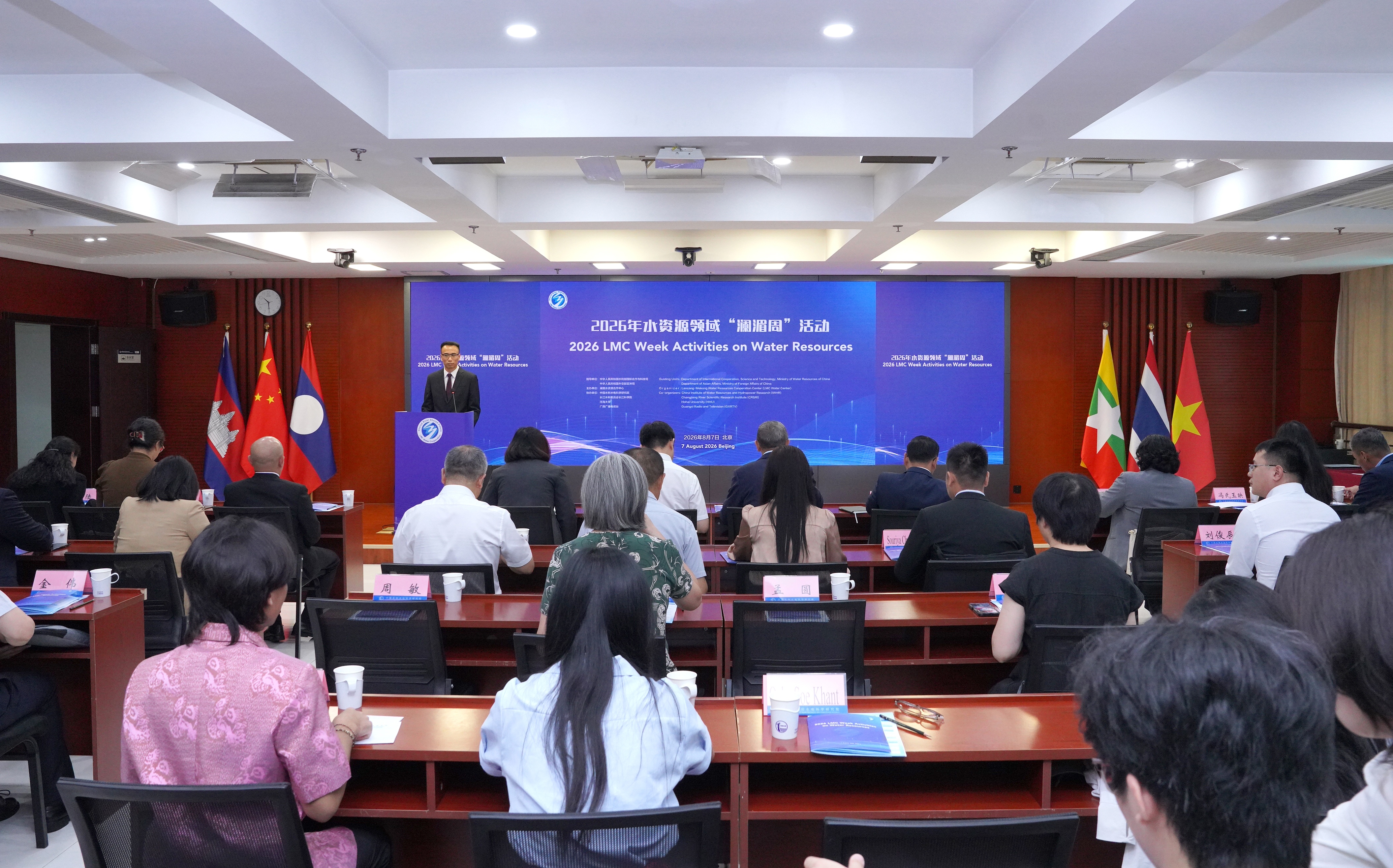
The 2026 LMC Week Activities on Water Resources take place in Beijing, Aug. 7, 2026. [Photo provided to China.org.cn]
The 2026 Lancang-Mekong Cooperation (LMC) Week Activities on Water Resources marked the 10th anniversary of the first LMC Leaders' Meeting. Over the decade, cooperation among China, Cambodia, Laos, Myanmar, Thailand and Vietnam has moved from dialogue and exchanges to practical programs on the ground.
Wang Hongming, secretary-general of the Lancang-Mekong Water Resources Cooperation Center, said the center has helped establish multiple cooperation mechanisms, including ministerial meetings, water resources cooperation forums and joint working group meetings. It has also helped implement two five-year action plans for Lancang-Mekong water resources cooperation.
More than 1,000 officials and experts from the six countries have taken part in technical exchanges and training programs over the past decade, Wang said. The center has also supported projects covering flood and drought management, information sharing, rural water supply and watershed management.
One of the most tangible examples is the Lancang-Mekong Sweet Spring Action, launched in 2020 to address drinking water shortages. The initiative has established 110 water supply demonstration projects across 13 provinces in Cambodia, Laos and Myanmar, providing affordable and reliable water along with practical technical solutions for local communities.
"Water resources cooperation is one of the five priority areas of the LMC," said Zhao Chenggang, minister-counselor of the Department of Asian Affairs of the Chinese Ministry of Foreign Affairs.
He noted that the six countries have advanced two five-year action plans and achieved practical results in water information sharing, flood and drought control, and rural water supply.
For Thailand, growing climate pressures are making such cooperation all the more urgent.
"It is increasingly clear that our water security has become critical to the prosperity of our communities," said Chalongkwan Tavarayuth, counselor at the Royal Thai Embassy in Beijing.
She called for more focused and forward-looking cooperation over the next decade, particularly in real-time data and information sharing, water resources management, environmental security and technological innovation.
Wang Wei, consul of the Department of International Cooperation, Science and Technology of China's Ministry of Water Resources, highlighted China's efforts to strengthen flood and drought prevention, water conservation and efficient water use. He said China has continued to improve its capacity to manage and utilize water resources while advancing the development of a modern national water network.
Young people in the participating countries are also reaping the benefits.
"The community-based Lancang-Mekong Sweet Spring Action delivers clean, reliable water to remote communities, improving people's livelihoods," Khaing Cherry, a Myanmar undergraduate student at Hohai University, told China.org.cn. "Such projects foster closer ties and deliver practical, cost-effective benefits to rural residents."
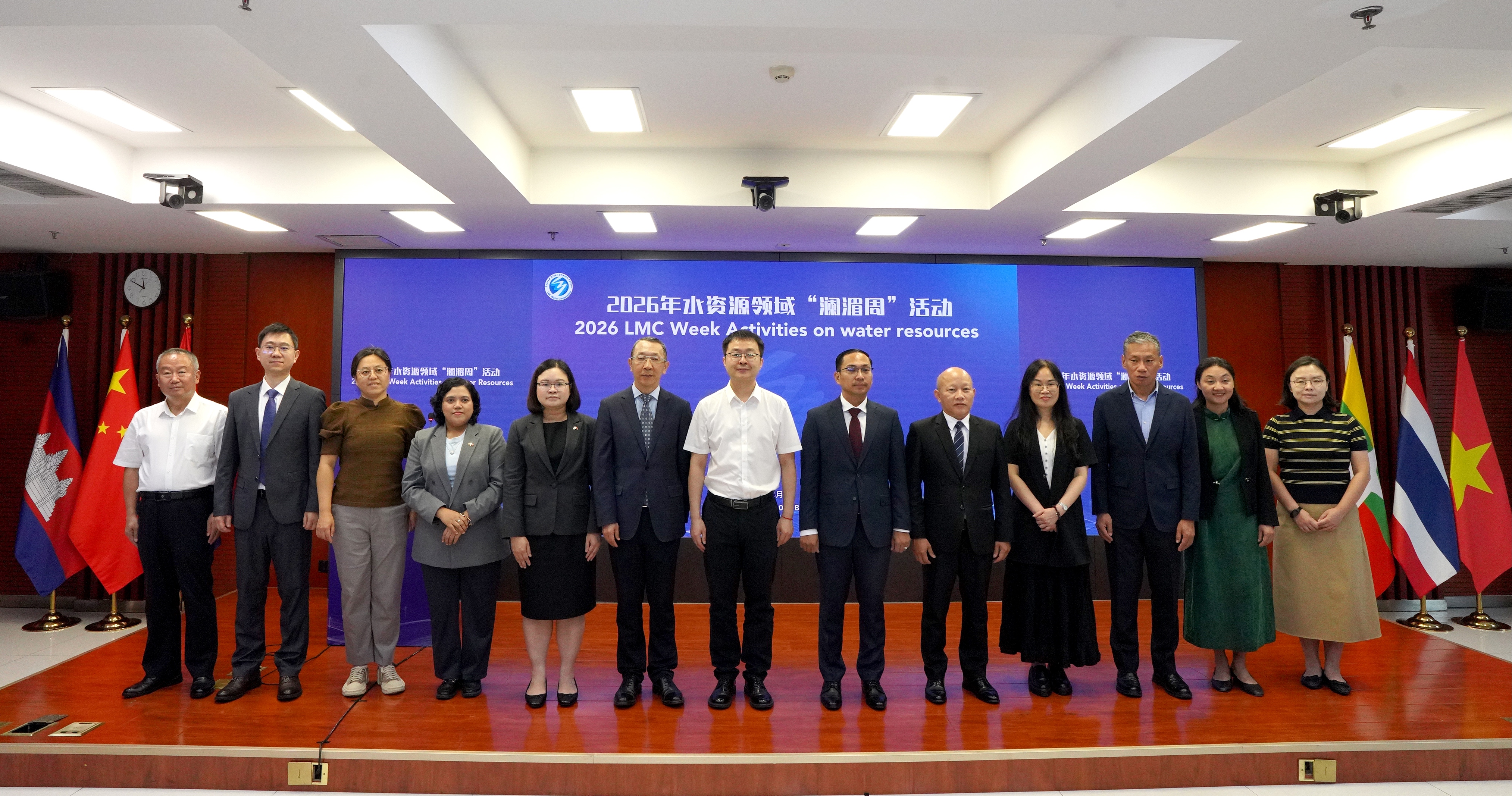
Guests pose for a group photo at the 2026 LMC Week Activities on Water Resources in Beijing, Aug. 7, 2026. [Photo provided to China.org.cn]


 京公网安备 11010802027341号