 Share:

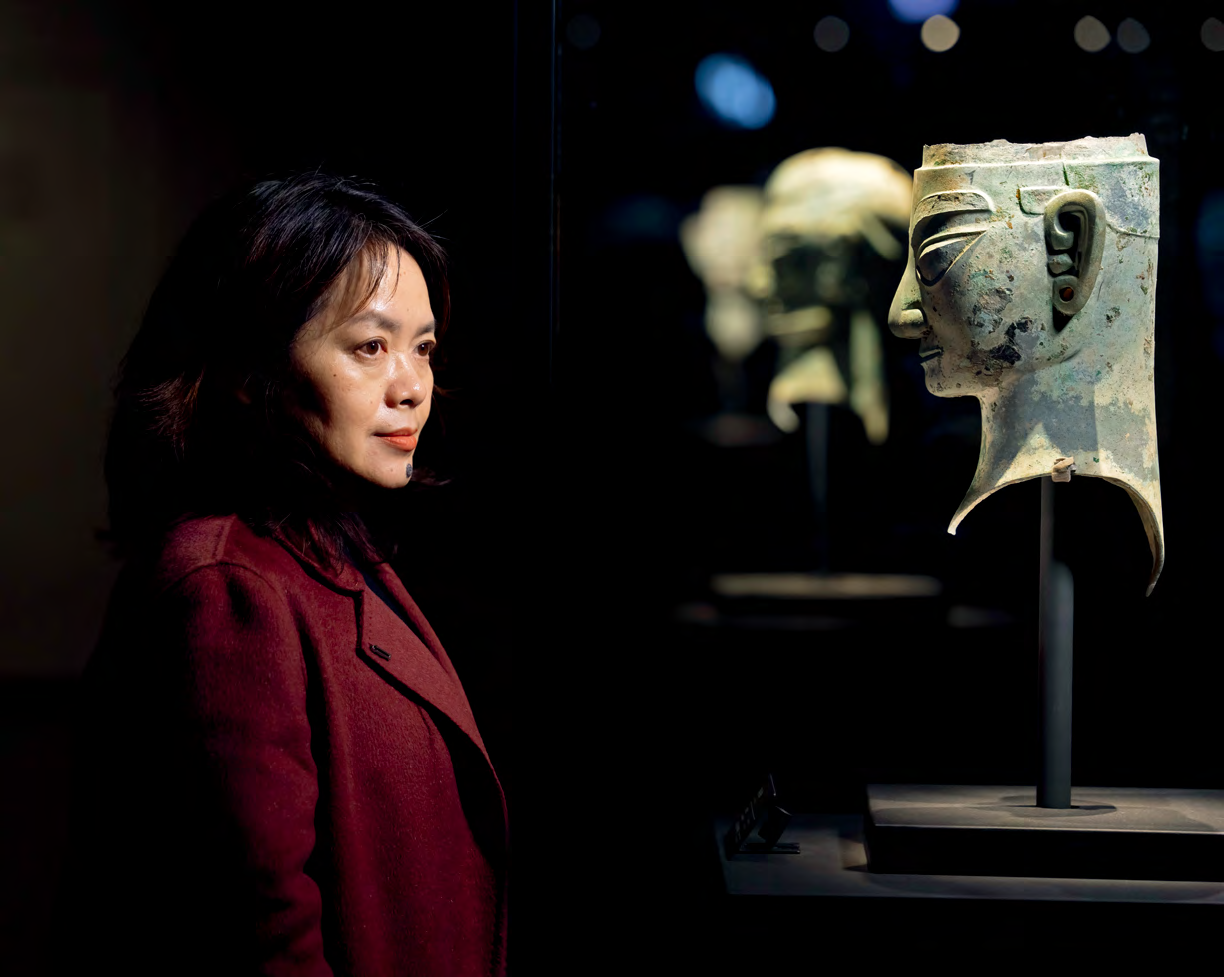
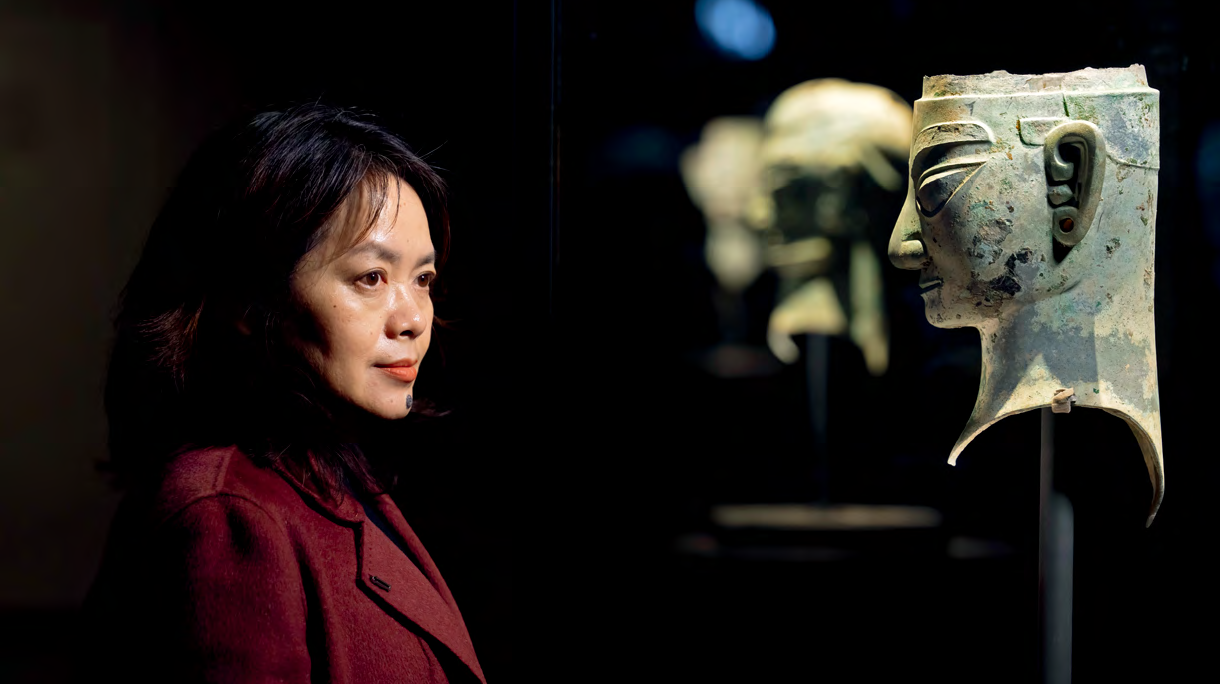
Zhu Yarong, deputy director of the Sanxingdui Management Committee. [Photo by Guo Shasha/China Pictorial]
China Pictorial: How do you view the role of the Sanxingdui Museum?
Zhu Yarong: The Sanxingdui Museum is, first and foremost, an archaeological site museum. All its exhibitions and research are grounded in archaeological discoveries. At the same time, it serves as an important platform for presenting Chinese civilization to the public. The openness, richness, and inclusiveness of Chinese civilization are precisely the key themes that the Sanxingdui Museum aims to convey.
China Pictorial: In July 2023, the new Sanxingdui Museum officially opened to the public. What is the narrative framework and curatorial logic of its permanent exhibition?
Zhu Yarong: As a museum dedicated to a specific archaeological site, almost all exhibitions here focus on the artifacts unearthed from the Sanxingdui Ruinsand the ancient Shu civilization they represent. After the new museum opened, the permanent exhibition has developed along three main threads.
The first highlights the archaeological excavation process. It presents the full history of the Sanxingdui site from its discovery in 1927 to ongoing excavations, showing how Chinese archaeology has expanded from traditional fields to a multidisciplinary, collaborative model. The second thread centers on the ancient Shu civilization represented by Sanxingdui. Using archaeological findings as its backbone, this section explains the subsistence patterns, settlement layout, manufacturing techniques, and social structure of the ancient Shu people. It emphasizes the materialist view that history is created by the people and highlights the cultural characteristic of "diverse yet integrated" development, helping visitors understand that Sanxingdui is a key piece of evidence for the "unity in diversity" reflected in Chinese civilization. The third thread focuses on the unique sacrificial culture and spiritual beliefs of ancient Shu people. The core curatorial shift in the new museum is to place Sanxingdui in a broader perspective, both within the development of Chinese civilization and in a comparative context with other ancient civilizations of the world.
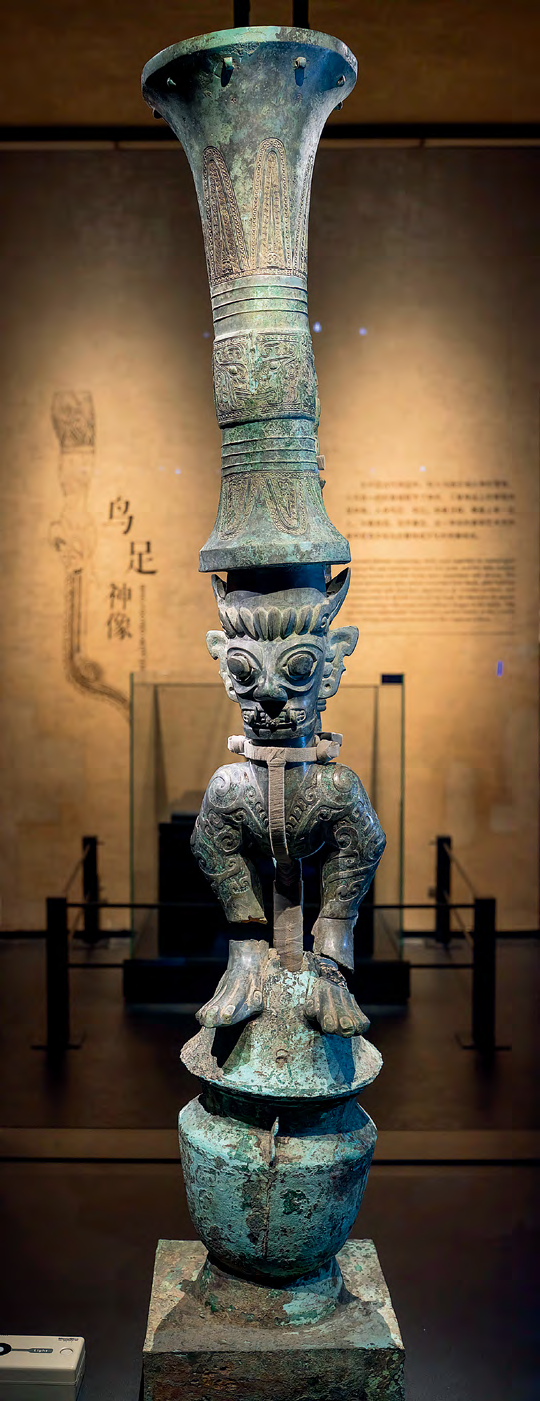
A bronze bird-footed deity statue exhibited in the "The World of Humans and Gods" exhibition area at the Sanxingdui Museum. [Photo by Guo Shasha/China Pictorial]
China Pictorial: With the latest archaeological discoveries drawing global attention, what steps has the Sanxingdui Museum taken to promote international exchange and mutual learning?
Zhu Yarong: Sanxingdui artifacts began traveling abroad in 1993 and have since been exhibited in over 20 countries and regions, making the museum one of the flagship exhibition brands for bringing Chinese culture to the world. Since the latest wave of discoveries, we have strengthened our international outreach even more. Beyond physical artifact exhibitions, we have also adopted digital tools to offer online and VR experiences including digital exhibitions in Paris, Doha, and New York.
The Sanxingdui Museum is also committed to promoting comparative research and cross-cultural dialogue among world civilizations. For example, during the 31st APEC Economic Leaders Meeting in Peru in November 2024, we collaborated with the Jinsha Site Museum in Chengdu to present replicas and 3D printed artworks of 16 representative artifacts from Sanxingdui and Jinsha alongside seven precious artifacts of the Inca civilization from the Inca Museum in Cusco, Peru. By highlighting shared cultural elements such as sun worship, reverence for gold, and animal symbolism and leveraging illustrated panels, digital displays, and academic salons, we helped bring ancient Chinese civilization closer to overseas audiences and created emotional resonance.
China Pictorial: What will the next phase of development of the Sanxingdui Museum look like?
Zhu Yarong: The Sanxingdui Museum has exceptional resources in terms of cultural relics. Our next goal is to build a world-class museum.
First, we need to strengthen research on Sanxingdui culture. Our understanding of Sanxingdui is still far from complete, and relevant archaeological work remains ongoing. Solid academic research is the fundamental support for exhibitions and outreach. Second, we must continuously improve our exhibition and communication methods, explore new display techniques and approaches, and introduce major exhibitions of other ancient world civilizations to Sanxingdui. This will make Sanxingdui not only a window for cultural exchange but also a platform for bringing overseas civilizations to China for mutual learning. Finally, we need to enhance the creative transformation and innovative development of Sanxingdui culture, using Sanxingdui as a source of inspiration for literature and art. The bronze masterpieces, large scale city construction, and water conservancy systems at Sanxingdui demonstrate the sophistication of the ancient Shu civilization. We hope that Sanxingdui will eventually become a globally recognized symbol of civilization.


 京公网安备 11010802027341号