 Share:

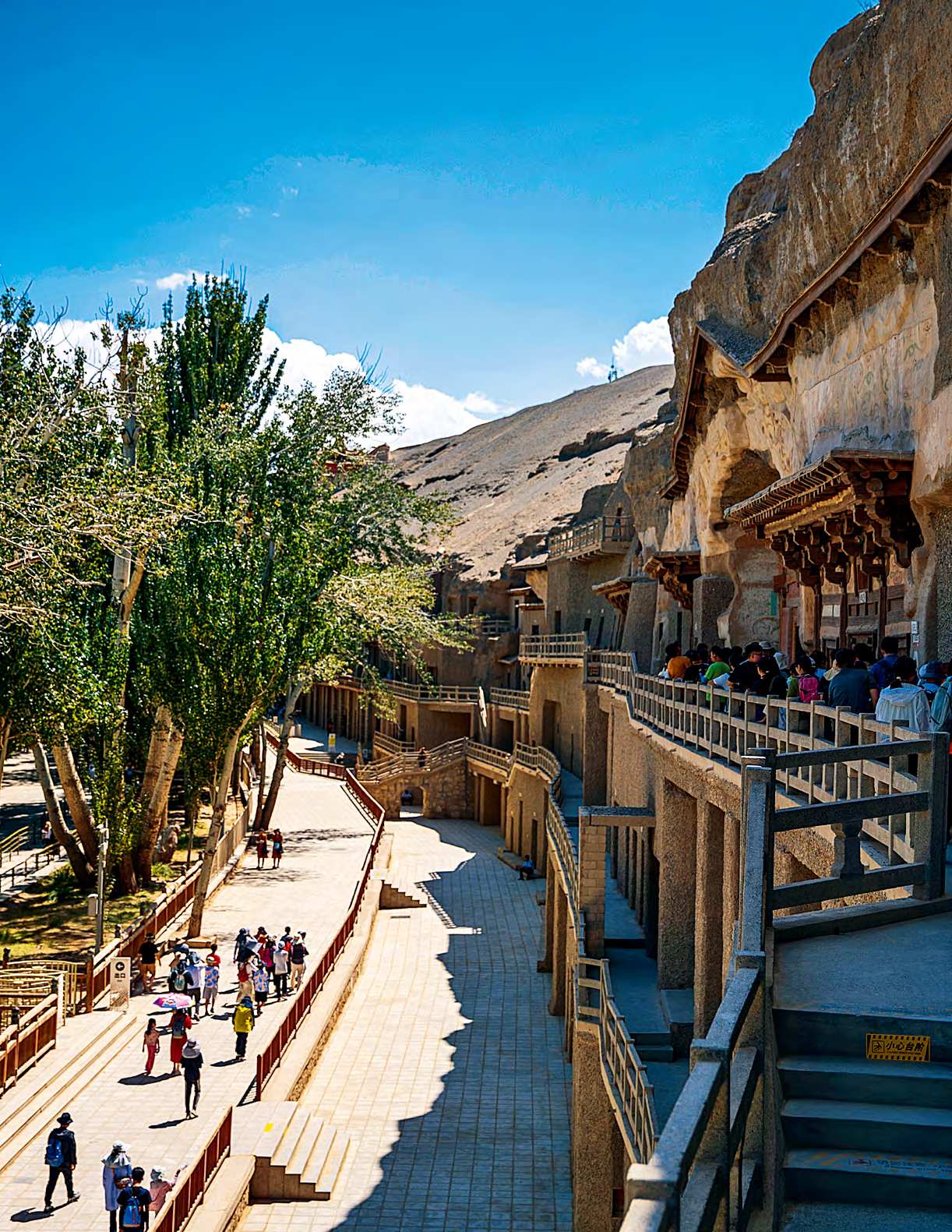
Tourists visit the Mogao Caves, a UNESCO World Heritage site in Gansu Province, August 2, 2024. [Photo by Dong Fang/China Pictorial]
As a youth representative from Pakistan, I have participated in many international forums on sustainable development and climate change. In the process, I gradually came to recognize China's increasingly important role on the global stage. The Belt and Road Initiative (BRI) proposed by China is not merely a collection of infrastructure programs; more profoundly, it represents an international cooperation philosophy rooted in connectivity, mutual respect, and shared development.
Over the years, construction of the China-Pakistan Economic Corridor (CPEC) has injected robust momentum into Pakistan's economic growth. Through my growing involvement in youth programs organized by Chinese institutions, I have gained a deep understanding of the long-term planning and inclusive vision embedded in China's development. Today, I have the honor of serving as president of the Belt and Road Initiative for Sustainable Development (BRISD), and I regard the promotion of youth exchange across countries as a personal responsibility.
I have visited China multiple times and traveled to places such as Beijing, Gansu, Henan, and Hainan. Every trip enabled me to gain unique insights into the country. In Gansu, I felt the historical pulse of the Silk Road. In Henan, I witnessed the power of advanced technology. In Hainan, I saw vivid examples of green development in action. Each visit revealed a China that can efficiently translate its national vision into practical results.
As my visits grew more frequent, I came to understand that China's development story is not simply about economic growth—it is more about how a modern society can seek balance between innovation and tradition and how growth and sustainability can coexist in harmony. This offers a valuable lesson for many developing countries.
In just a few decades, China has lifted hundreds of millions of people out of poverty, built a world-class infrastructure system, and emerged as a global leader in innovation and technology—a feat rarely seen in modern world history. What I admire even more is that China's development has always advanced in a well-planned, step-by-step manner, with economic growth benefiting all of society. As a youth representative concerned about climate change, I have particular admiration for China's leadership in renewable energy and green development. China is not only driving its own green transformation but also making significant contributions to global climate governance.
Moreover, the warmth and openness of the Chinese people have touched me deeply, reflecting the genuine value China places on friendship and cooperation.
I am often asked how Pakistani youth view the BRI and China-Pakistan cooperation. My observation is that young people generally hold a positive attitude toward such collaboration and are optimistic about the future. They are keenly aware that China is a trustworthy, visionary partner. Numerous infrastructure and energy projects under the CPEC have measurably improved Pakistan's connectivity and created new opportunities. The younger generation is also eager for deeper cooperation with China in fields such as science and technology, education, and entrepreneurship. China's modernization journey has inspected many young Pakistanis, who are increasingly interested in learning from China's governance experience and innovation ecosystem.
I believe that as the BRI enters its second decade, youth exchange will become one of the initiative's most vibrant pillars. Through joint research projects, innovation labs, scholarship opportunities, and various youth leadership development programs, young people from both countries can seize more opportunities to move forward hand in hand, empowering his friendship spanning mountains and seas to grow ever deeper in the years to come.
Scientific and technological cooperation is already one of the most remarkable areas under the BRI framework. During a recent visit to the BGI headquarters in Shenzhen, I was deeply impressed by the scale and vitality of China's biotechnology sector and witnessed firsthand how the country has closely integrated innovation with efforts to solve global challenges. Shenzhen itself epitomizes China's innovation—a small fishing village transformed into a world-class technology hub in just a few decades. For young Pakistanis, cooperation with China in science and technology represents an opportunity to learn from one of the world's most dynamic innovation ecosystems. Collaborative efforts among young innovators not only advance knowledge, but also strengthen trust and friendship between nations.
As the saying goes, "If you want to go fast, go alone; if you want to go far, go together." I think the BRI is a perfect practice of the philosophy of "going together," connecting young people across countries and inspiring hope for shared prosperity.
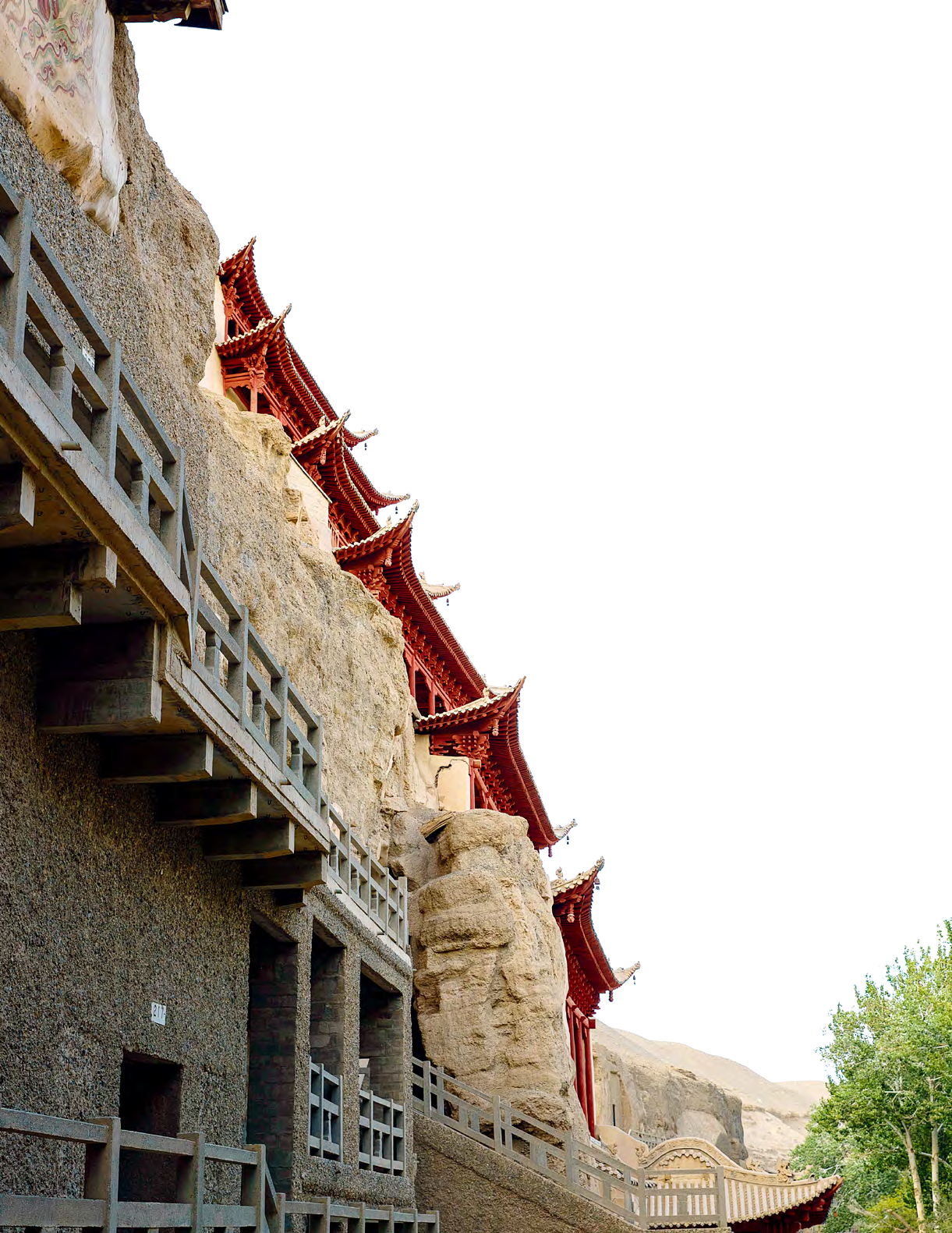
The Nine-Story Building at the Mogao Caves. [Photo by Dong Fang/China Pictorial]
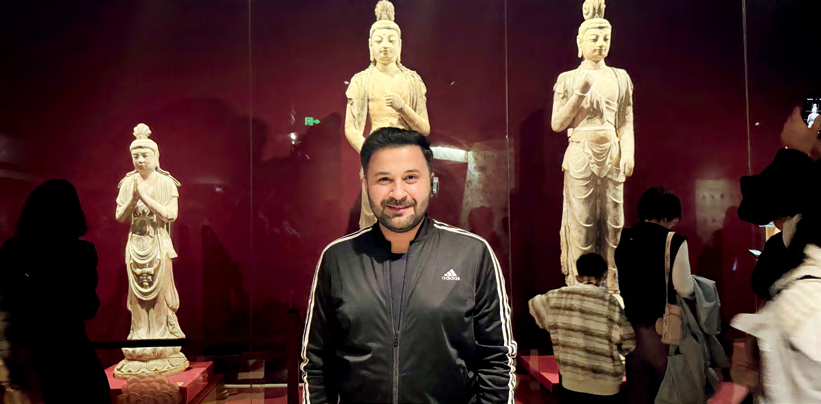
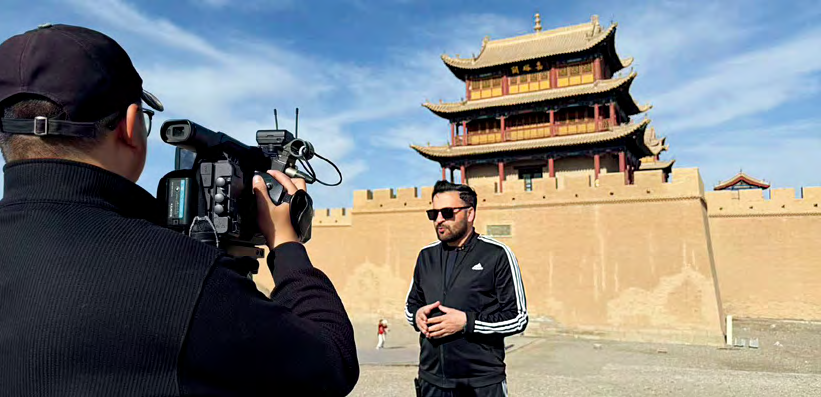
Qaiser Nawab during a study tour in Dunhuang, northwestern China's Gansu Province. This study tour empowered Nawab to soak up the profound historical legacy of the Silk Road and appreciate the power of cultural exchange and collaboration.
The author is president of the Belt and Road Initiative for Sustainable Development.


 京公网安备 11010802027341号