 Share:

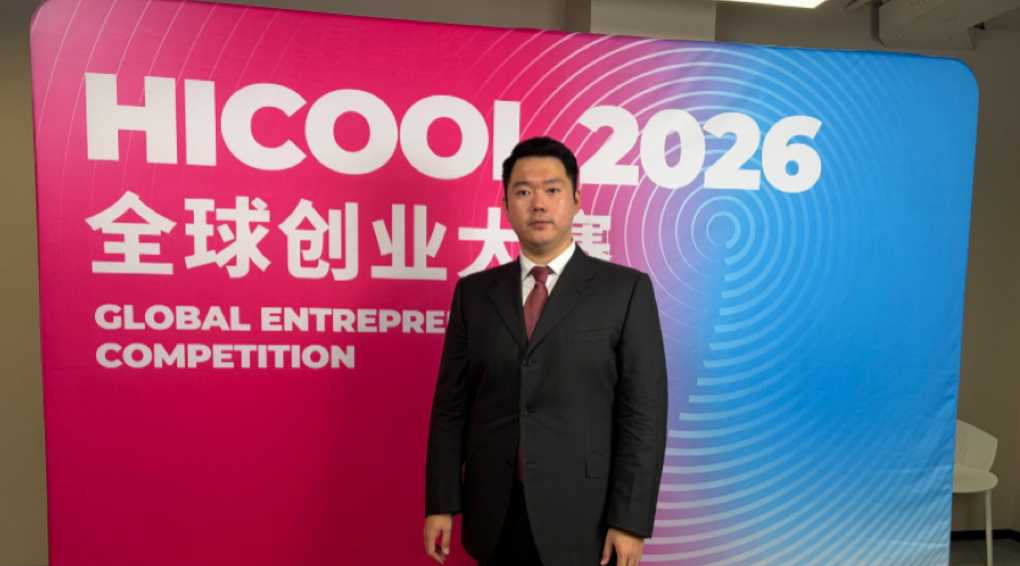
The finals of the HICOOL 2026 Global Entrepreneurship Competition were held at the HICOOL Industrial Park in Beijing on Aug. 15. As the city's flagship global innovation platform for overseas entrepreneurs, HICOOL shortlisted 48 projects from tens of thousands of entries worldwide across key technology sectors.
Speaking shortly after his final-round pitch, Liu Yao, a serial entrepreneur with a bachelor's degree from UCLA and a postgraduate degree from the Chinese University of Hong Kong, described his HICOOL journey.
His firm was registered in Beijing's Daxing district earlier this year, though he began assembling the core team in 2024. Its R&D group includes several returnee Ph.D.s as well as researchers from domestic institutes. Having completed six months of HICOOL's competition rounds, he said the platform sets itself apart from ordinary startup contests.
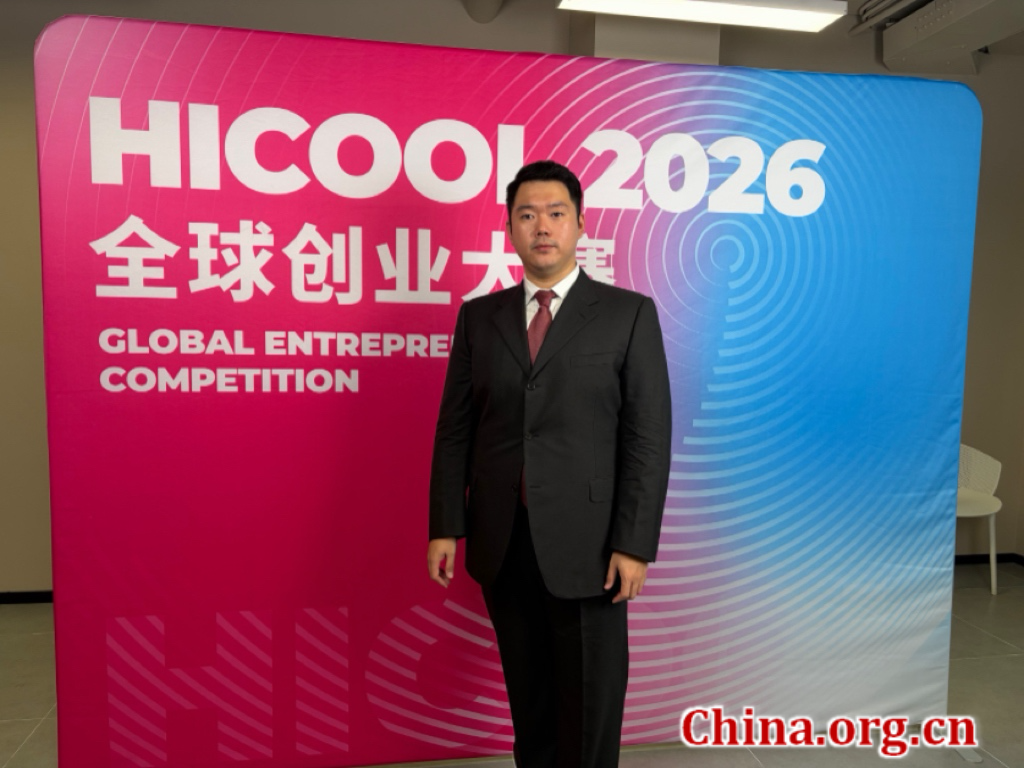
Contestant Liu Yao gives an interview at the HICOOL 2026 Global Entrepreneurship Competition final in Shunyi district, Beijing, Aug. 15, 2026. [Photo by Yang Chuanli/China.org.cn]
"Most entrepreneurship competitions only host award ceremonies. HICOOL delivers end-to-end support spanning industry matchmaking, capital matching and policy consulting," Liu said. "Every revision of our business plan during the rounds forced our team to re-examine technical rollout and market strategy. We now attach real prototype photos to our presentation materials, marking tangible progress."
He also described smaller touches that reflected the platform's dedication to innovators.
"Staff greeted us with umbrellas when we arrived in the heavy rain, and dedicated coordinators walked me through district-level settlement policies after my pitch, connecting me with matching industrial partners," Liu said. "No other competition I've attended offers such thorough follow-up support for founders."
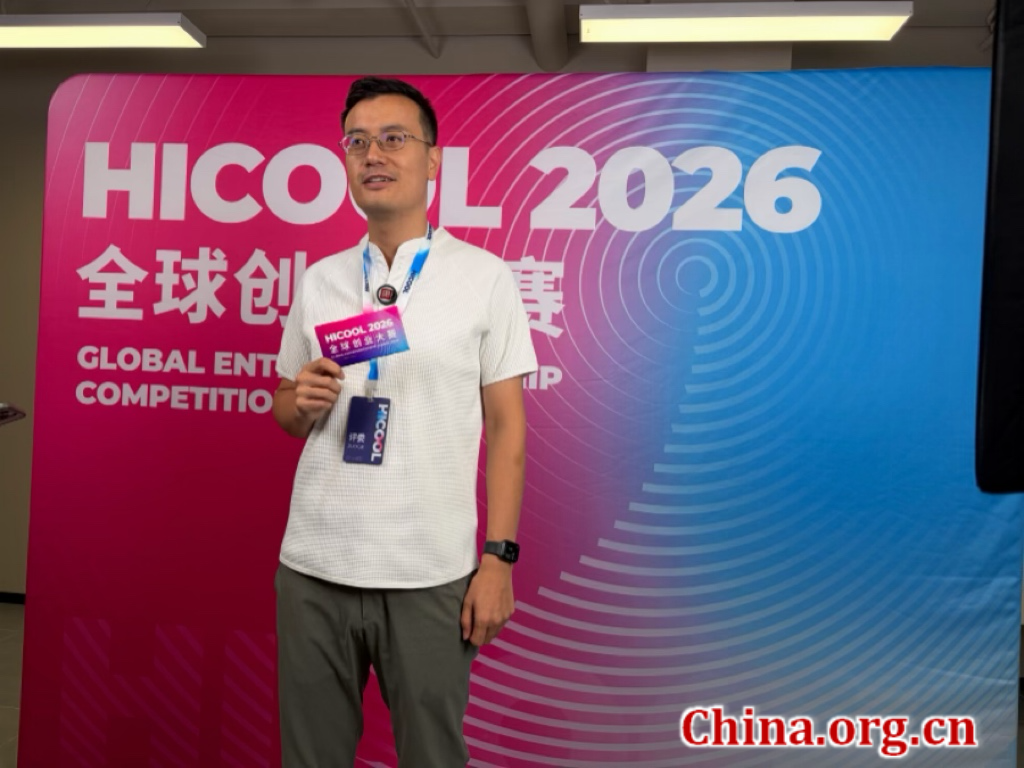
Judge Jiao Teng gives an interview at the HICOOL 2026 Global Entrepreneurship Competition final in Shunyi district, Beijing, Aug. 15, 2026. [Photo by Yang Chuanli/China.org.cn]
Jiao Teng, a partner at an investment institution and a HICOOL finals judge for seven consecutive years, said he has seen the event's international reach grow.
"Year by year, we see more overseas Ph.D.s and senior technical professionals from top global enterprises taking part," he noted.
Jiao said he had observed a self-reinforcing cycle within HICOOL, with core staff from earlier award-winning projects going on to found new companies and enter the contest themselves. On the first day of this year's judging, the panel reviewed an angel-stage startup from his firm's portfolio that was approaching a possible IPO.
In Jiao's view, HICOOL has become the main entry point for global talent looking to launch businesses in Beijing, with founders able to focus on refining their technology while the platform handles office-space sourcing, business registration and financing outreach.
Several overseas-educated founders expressed a similar view: China's complete industrial supply chains turn lab-stage ideas into market-ready products, a strength they said is rarely matched by Western ecosystems.
Liu's team picked Beijing for industrial-scale development. He said that while Europe and the United States have strong research capabilities, they lack complete upstream and downstream industrial chains for mass production. Beijing brings together universities, research institutes and cross-disciplinary talent pools for semiconductors, photonics and AI, he said, with local industrial policies supporting the priority sectors outlined in the 15th Five-Year Plan.
Liu's team has secured 20 million yuan ($2.97 million) in funding from existing shareholders and is finalizing a pre-A funding round, with chip tape-out and testing scheduled for later this year.
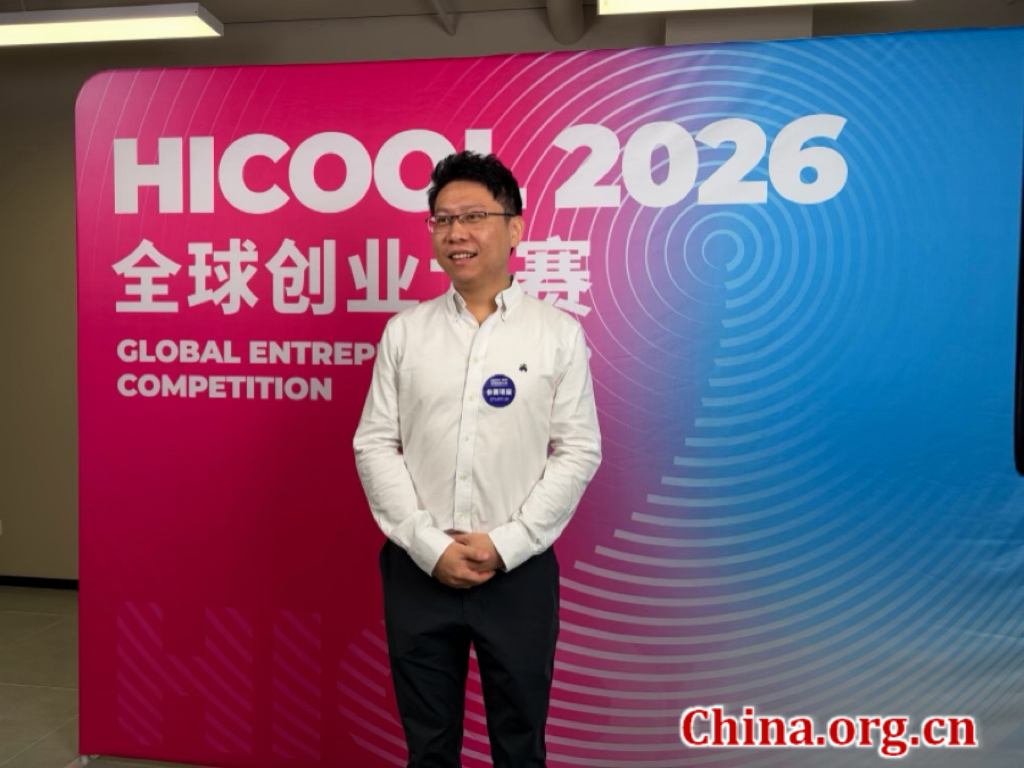
Contestant Xie Xin gives an interview at the HICOOL 2026 Global Entrepreneurship Competition final in Shunyi district, Beijing, Aug. 15, 2026. [Photo by Yang Chuanli/China.org.cn]
Xie Xin heads a biomedical team working on human organ-on-chip systems designed to reduce reliance on animal drug testing. According to Xie, the technology can cut pharmaceutical R&D time and expenditure by 30% to 60% while raising the prediction accuracy of human drug responses to 80% to 90%. With years of overseas R&D experience and an overseas research team still in place, the group plans to base its main domestic R&D operations in Beijing, which offers access to major hospitals, large pharmaceutical companies and national research initiatives.
Xie said domestic engineering talent helps accelerate industrialization, and that Beijing's concentrated life sciences sector creates opportunities for cross-industry collaboration. His team has established partnerships with global and Chinese pharmaceutical companies, including Pfizer, CSPC Pharmaceutical Group and Hengrui Medicine. The group also takes part in national new-drug R&D initiatives and works on industry standards.
Jiao, drawing on seven years of judging the competition, described a broader industry shift. AI is no longer treated as a standalone startup track, he said, but has become an underlying driver of projects across a wide range of industrial sectors. Most final-round contestants now build their work around AI-driven capabilities, he added.
As an investor, Jiao said he maintains long-term confidence in AI infrastructure, life sciences and commercial aerospace, areas aligned with the priorities of the 15th Five-Year Plan. He added that a growing number of returnee entrepreneurs are bringing their technical expertise to China, where industrial conditions and application scenarios support the development of their ventures.
As Beijing pushes to become a global innovation hub, platforms such as HICOOL are connecting overseas talent with the city's entrepreneurial ecosystem — turning individual ambitions into collective momentum.


 京公网安备 11010802027341号