 Share:

Jingdezhen, China's storied "porcelain capital," has stepped back into the global spotlight with the recent inscription of its Handicraft Porcelain Industry Sites onto the UNESCO World Heritage List. As China's 61st World Heritage Site, and the first ever dedicated specifically to porcelain, this recognition affirms Jingdezhen's millennia-old legacy as a birthplace of ceramic artistry and a key hub in the history of global trade and cultural exchange.
For a museum dedicated to export porcelain and a trendy-toy district, the UNESCO listing has brought new attention to work they have long been doing.
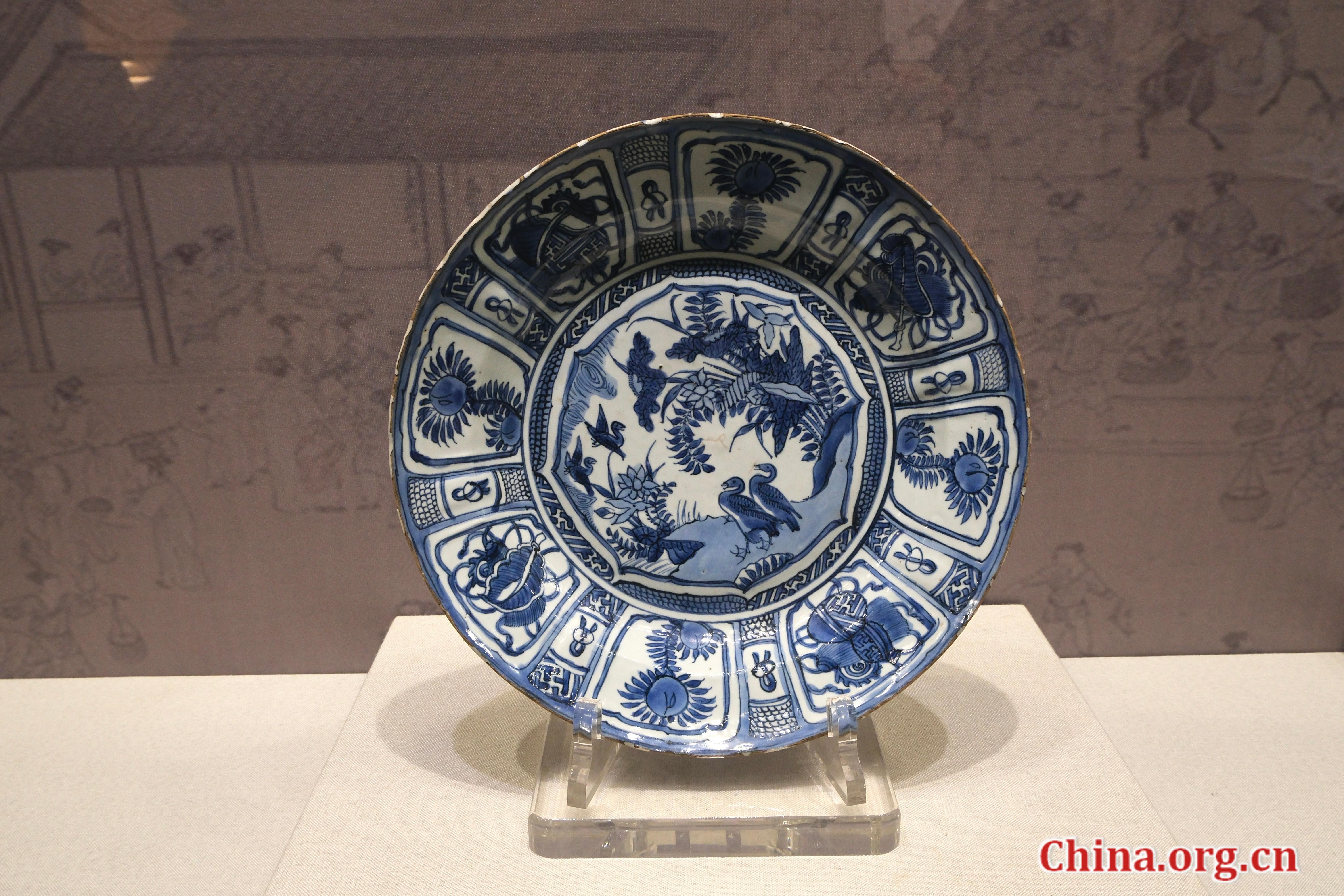
A Ming dynasty blue-and-white plate with floral and bird motifs, displayed at Jingdezhen Export Ceramics Museum, east China's Jiangxi province, Aug. 26, 2026. [Photo by Liao Jiaxin/China.org.cn]
At the Jingdezhen Export Porcelain Museum, curator Li Jing has dedicated herself to telling stories that transcend borders. Unlike imperial kiln porcelain, which once served the Chinese court, export porcelain was born of global commerce. It is, in her own words, a "witness to the dialogue between Eastern and Western civilizations."
"We tend to think of cultural influence as a one-way export, but export porcelain tells a different story — it was a two-way conversation," Li said. European clients placed custom orders, and Jingdezhen artisans adapted, creating new shapes, patterns and colors.
She cited Kraak porcelain as an example. The Portuguese were the first to trade with China, Li said, but they arrived nearly a century after China had already begun engaging with the wider world. They commissioned a large shipment from Jingdezhen. On its return voyage, Dutch pirates intercepted it near Malacca and auctioned it off in Amsterdam, sparking a European craze and fetching astronomical prices. The Europeans had no name for this style of wares; they named it after the ship that carried them — the carracks — and "Kraak porcelain" was born. "To the Europeans, this porcelain was 'white gold' — a mark of status," Li said.
For Li, a young-generation museum professional, international communication requires "translating" culture itself. "Academic language can feel too specialized for foreign visitors. But export porcelain is inherently narrative-rich — it's a natural entry point."
She believes the UNESCO listing offers an unprecedented opportunity. "It brings a globally recognized cultural identifier to Jingdezhen," she said. "The attention now is unprecedented. It gives us a platform to help more people understand export porcelain, its value and the stories behind it."
Across the city, a different kind of cultural dialogue is taking shape. At Changnanli world ceramic trendy toys town, Huang Hu, president and artistic director of the company operating the project, is blending traditional ceramic craftsmanship with the global trend of designer toys and IP collaborations.
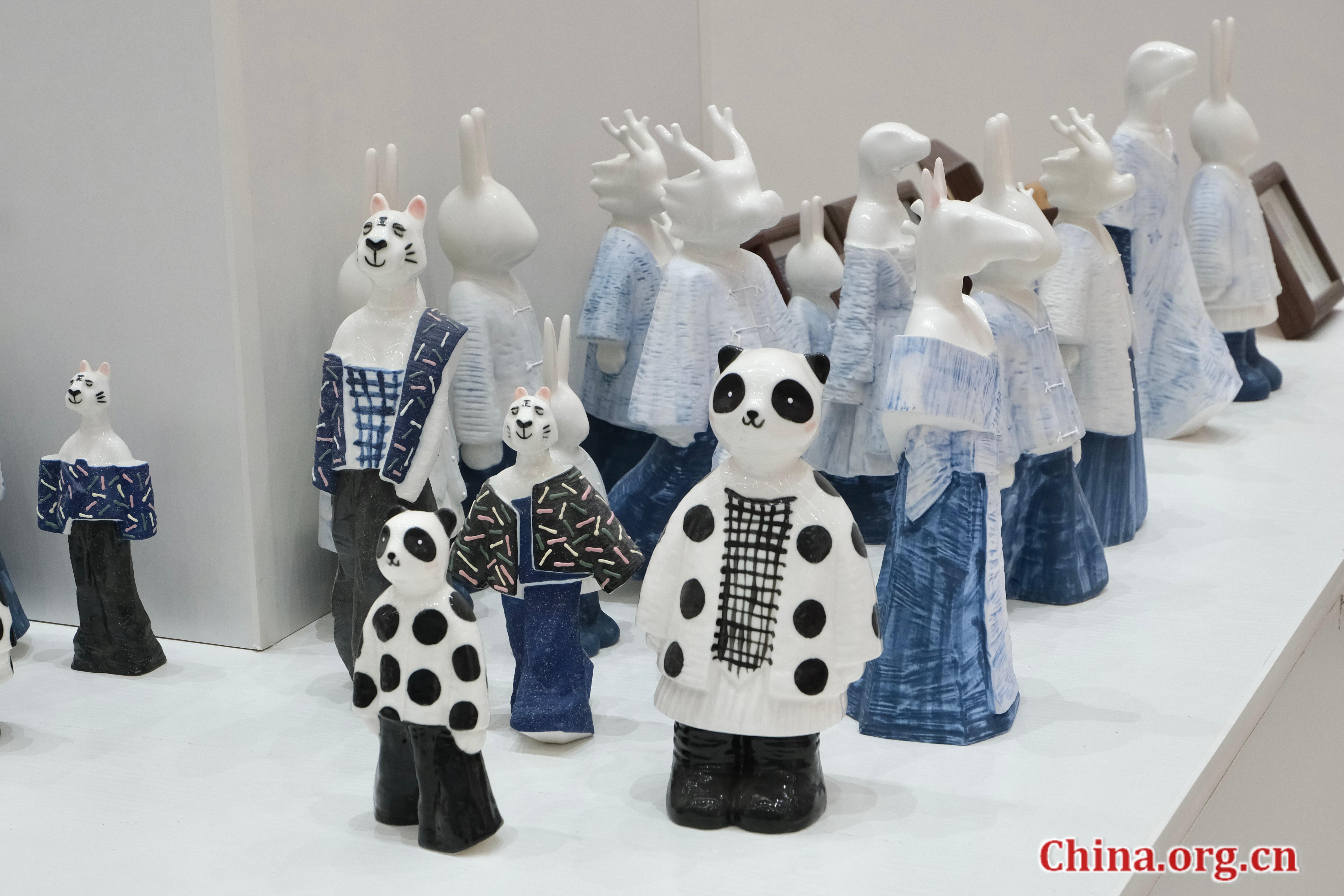
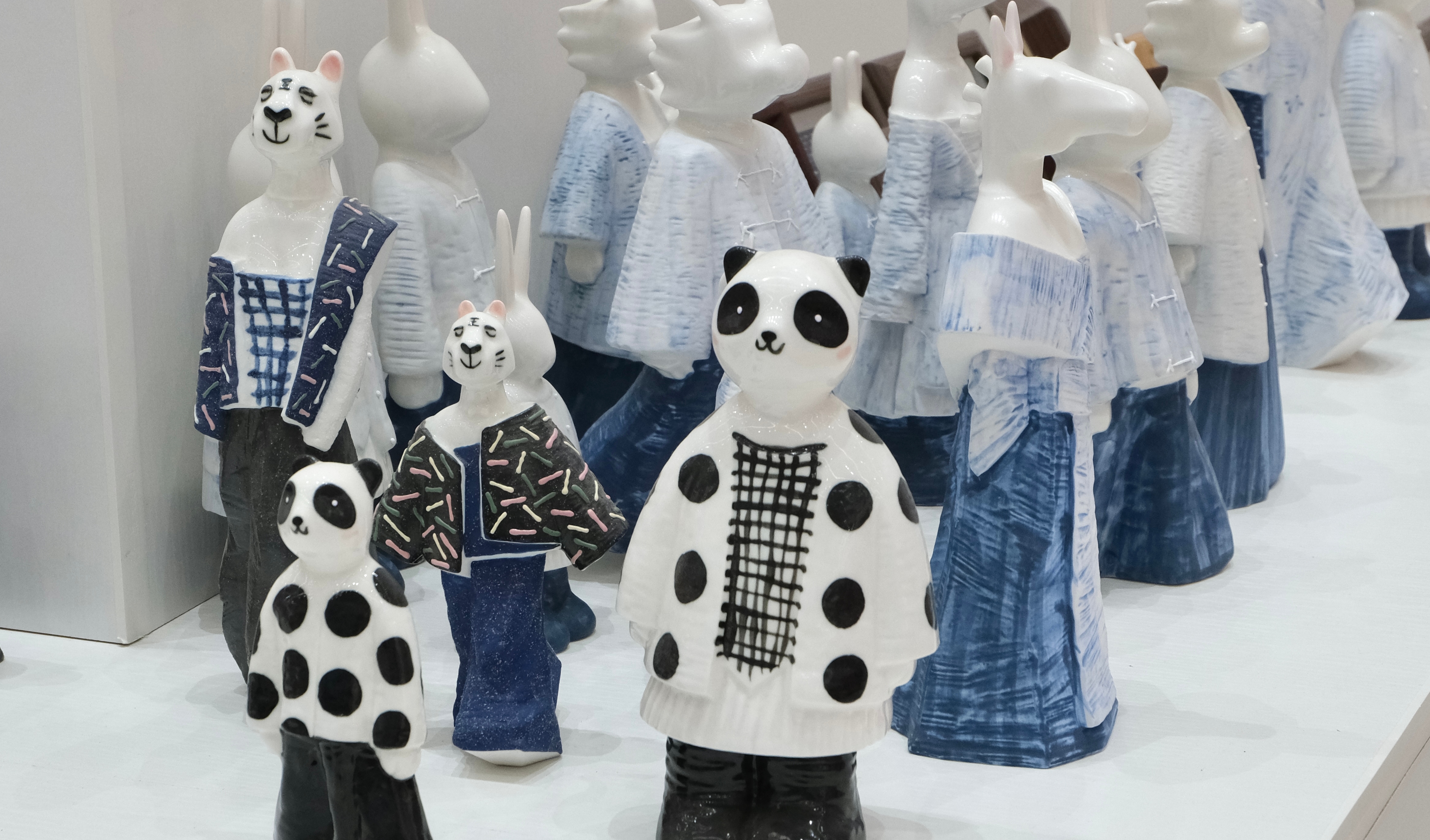
Ceramic craft ornaments on display at Changnanli world ceramic trendy toys town, east China's Jiangxi province, Aug. 26, 2026. [Photo by Liao Jiaxin/China.org.cn]
"Jingdezhen has a millennia-long tradition, but we need innovation," Huang said. "One promising path is combining traditional ceramics with trendy toys, which are deeply integrated with fashion and technology." He explained that bringing IPs into ceramics allows fans of those brands to discover porcelain as a medium, and through it, the culture behind it. "By teaming up with IPs from around the world, we hope young people everywhere will fall in love with Chinese ceramic culture," he said.
According to Huang, the town partnered with Miffy, the Dutch cartoon rabbit, for its 70th anniversary, producing a two-meter-tall blue-and-white ceramic Miffy. The collaboration has since expanded into more than 30 products sold in China and overseas. To date, the town has signed agreements with over 90 IPs, and the project now involves more than 30 ceramic studios.
"Ceramic trendy toys are a powerful vehicle for Chinese culture to go global," Huang added.


 京公网安备 11010802027341号