 Share:

In Liujia Lane in Jingdezhen, Xiong Wenbo walks the same street he grew up on. It is still paved with bluestone and recycled kiln bricks on the sides. The recent UNESCO listing of Jingdezhen's Handicraft Porcelain Industry Sites has brought global attention to this city, but for Xiong and others like him, the work of keeping the craft alive started long before.
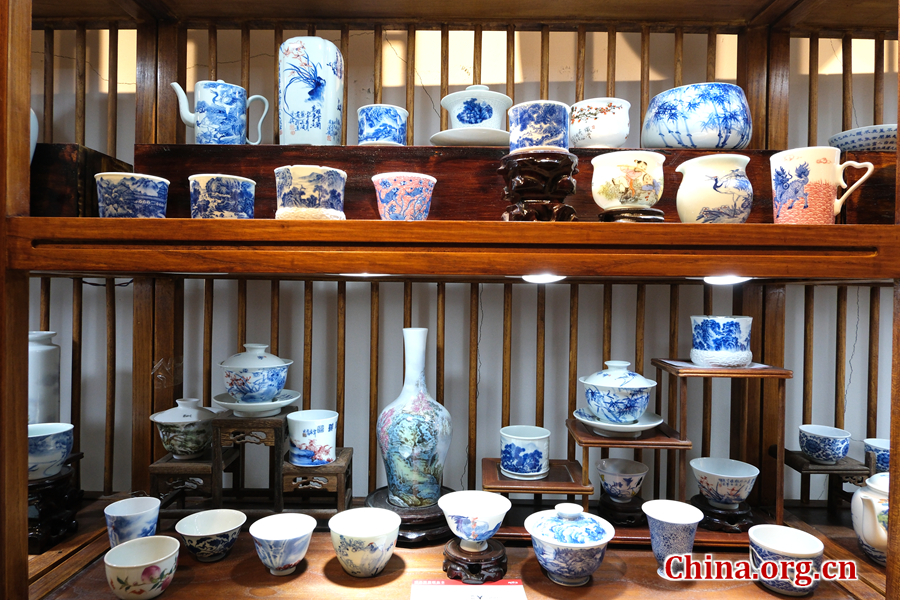
Porcelain pieces made by Xiong Wenbo are displayed at his studio in Jingdezhen, central China's Jiangxi province, Aug. 26, 2026. [Photo by Liao Jiaxin/China.org.cn]
Xiong, an inheritor of fencai (pastel) porcelain painting, was born here in 1972. He is the third generation of his family to work with porcelain. Liujia Lane, where Xiong grew up, was designated as a protected historical and cultural neighborhood in 2015. In recent years, it has undergone preservation work. "They restored the old look, tore down illegal structures, improved the environment," he said. He was relocated when the area was redeveloped, but returned after the government restored his old family home and turned it into a studio.
"Once the restoration was done, I felt like I was back in my childhood," he said.
He has taught more than a dozen students. They will study with him for two to three years, then go out and make a living. He said, "In Jingdezhen, as long as you can paint and are willing to work, you will always have food on the table."
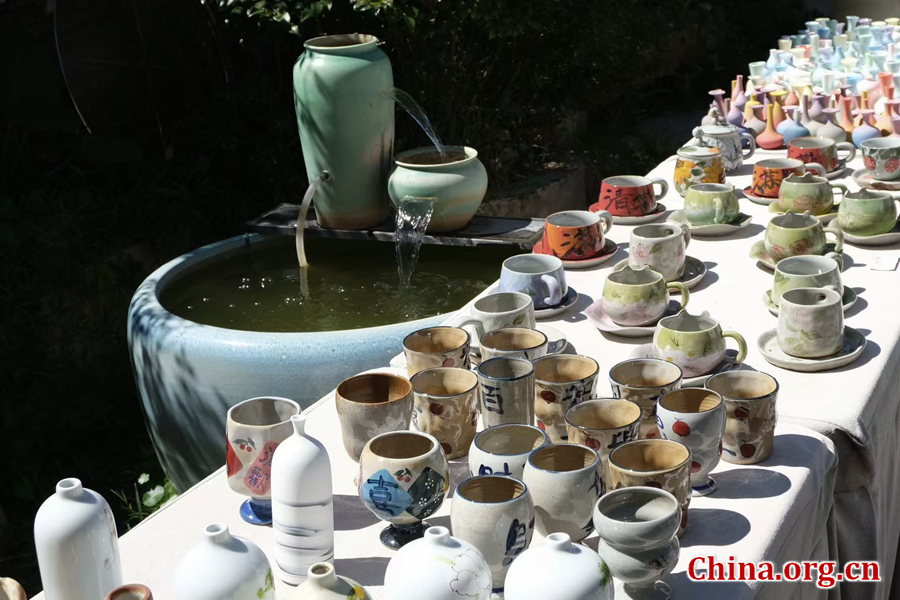
Hand-painted porcelain pieces are displayed in the courtyard of a ceramic studio at Taoyangli historical and cultural block in Jingdezhen, central China's Jiangxi province, Aug. 26, 2026. [Photo by Liao Jiaxin/China.org.cn]
For Xiong, the UNESCO listing has one clear meaning: "The past 1,000 years, we succeeded. Now we must welcome the next 1,000 years. We need to pass on our skills."
His studio has also hosted students from both China and overseas, including an overseas Chinese artist from Britain who visited to exchange ideas. When speaking about this student, Xiong said, "His way of painting was completely different — based on imagination and shading, while we focus on traditional line drawing... We need to engage with the world. Our craft needs to engage with the world."
Xiong is not alone in the continuation of Jingdezhen's craft. A few blocks away there is Sungong Kiln, a generational family workshop that has always focused on tradition.
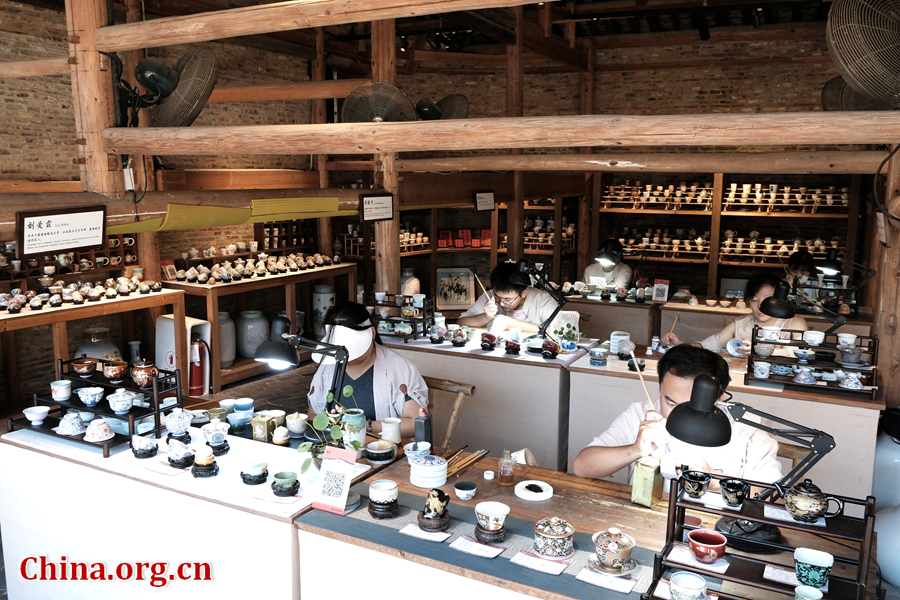
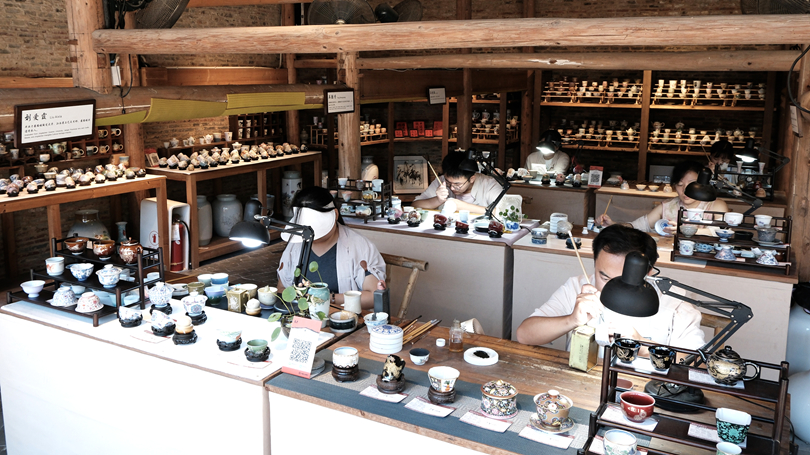
Inheritors of intangible cultural heritage work on porcelain at Xujia Kiln workshop in Taoyangli historical and cultural block in Jingdezhen, central China's Jiangxi province, Aug. 26, 2026. [Photo by Liao Jiaxin/China.org.cn]
"We pass down the craft in its original form," said Jiang Huanying, who is in charge of the Sungong Kiln workshop. "We don't change the production process just to make more money."
The workshop follows the traditional apprenticeship model, teaching young Chinese students free of charge. According to Jiang, for those who complete their training, the skills they gain can support a livelihood in Jingdezhen's ceramics industry. She also mentioned foreign visitors are also drawn to the experience — preferring hands-on activities like trying a brushstroke or experimenting with clay over simply buying finished pieces. "They want to feel it, not just look at it."
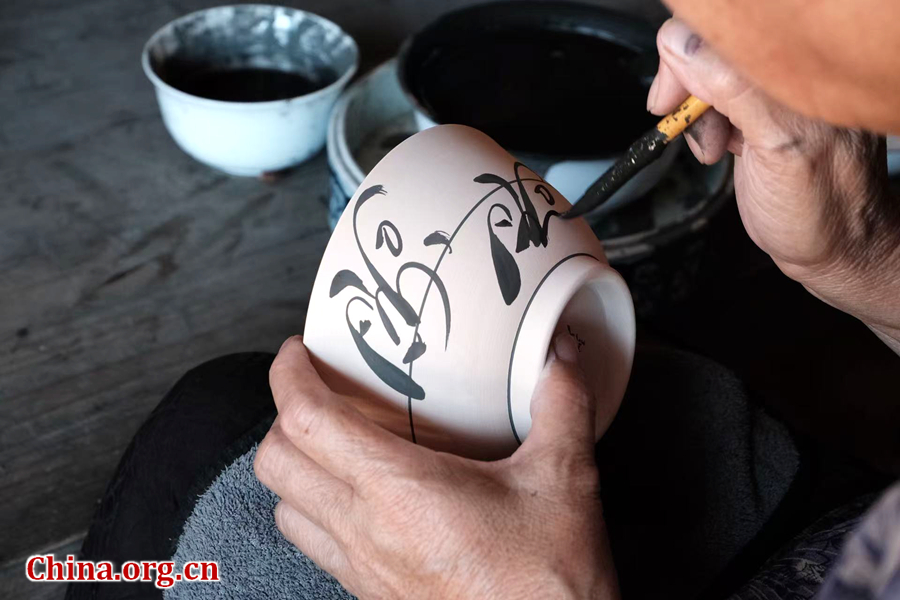
An inheritor of intangible cultural heritage paints porcelain at Taoyangli historical and cultural block in Jingdezhen, central China's Jiangxi province, Aug. 26, 2026. [Photo by Liao Jiaxin/China.org.cn]
Behind these craftsmen stands a digital system few visitors ever see. Xu Guanxiang, head of safety management at the Jingdezhen Handicraft Porcelain Industry Heritage Conservation Center, oversees a monitoring platform for the city's heritage sites — described as a "smart brain" for the heritage.
The system integrates satellite imagery, drones, city-wide cameras and over 700 sensors that track structural stability, soil conditions and fire risks across the heritage sites.
The platform also monitors visitor flow. Since the UNESCO listing, daily visitor numbers have jumped by 40% to 50%, according to Xu. "There's sometimes a tension between heritage protection and tourism," he said. "Too many visitors can disturb the environment and damage the heritage itself."
Xiong still works where he grew up. A few blocks away, visitors try a brush. Behind it all, sensors keep watch. This is how a thousand-year-old craft survives — not in a museum, but in the hands of those who make it, those who try it, and those who watch over it.


 京公网安备 11010802027341号