 Share:

The HICOOL 2026 Global Entrepreneur Summit opened at the China International Exhibition Center (Shunyi Hall) in Beijing on Aug. 26. The four-day event is expected to draw more than 50,000 domestic and international attendees.
It features five themed exhibition zones, where more than 600 exhibitors are showcasing work in robotics, synthetic biology and other emerging fields.
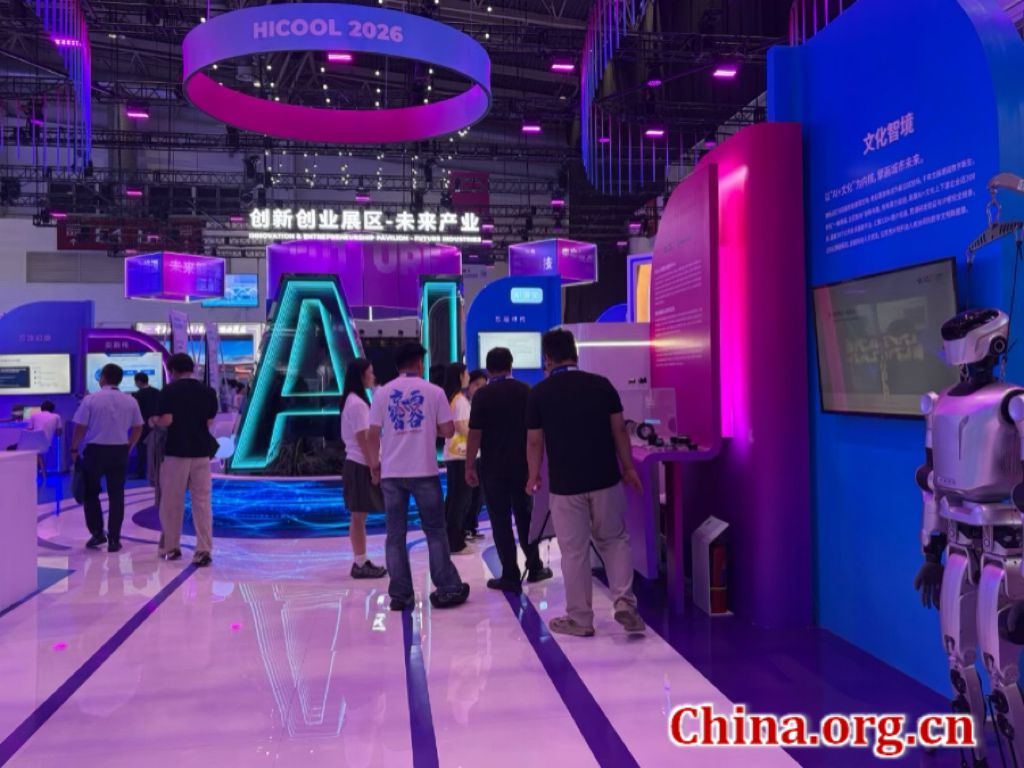
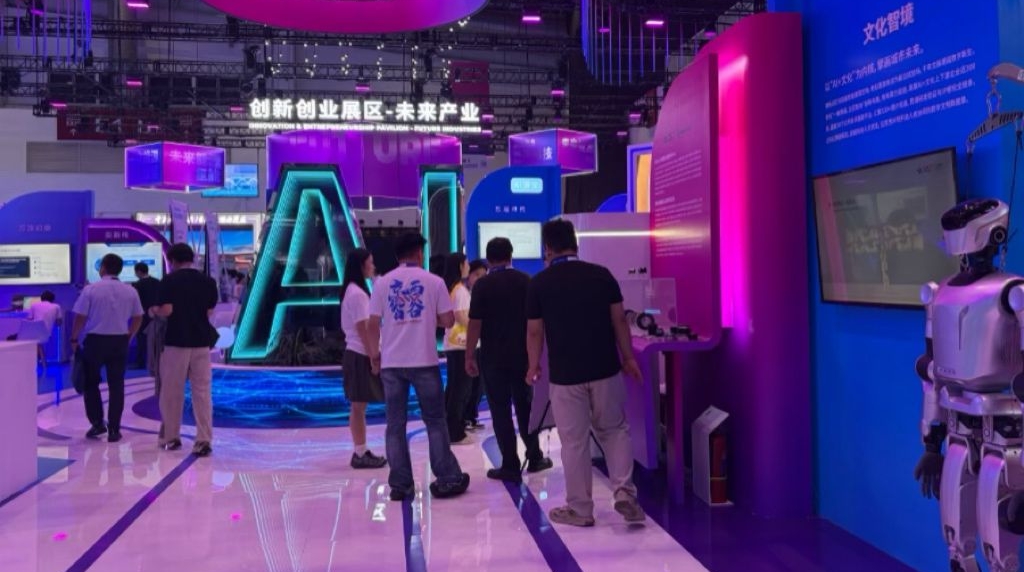
Attendees visit exhibits at the Innovation and Entrepreneurship Pavilion of the HICOOL 2026 Global Entrepreneur Summit at the China International Exhibition Center (Shunyi Hall) in Beijing, Aug. 26, 2026. [Photo by Yang Chuanli/China.org.cn]
China.org.cn spoke with three international participants about China's innovation ecosystem and the prospects for cross-border collaboration.
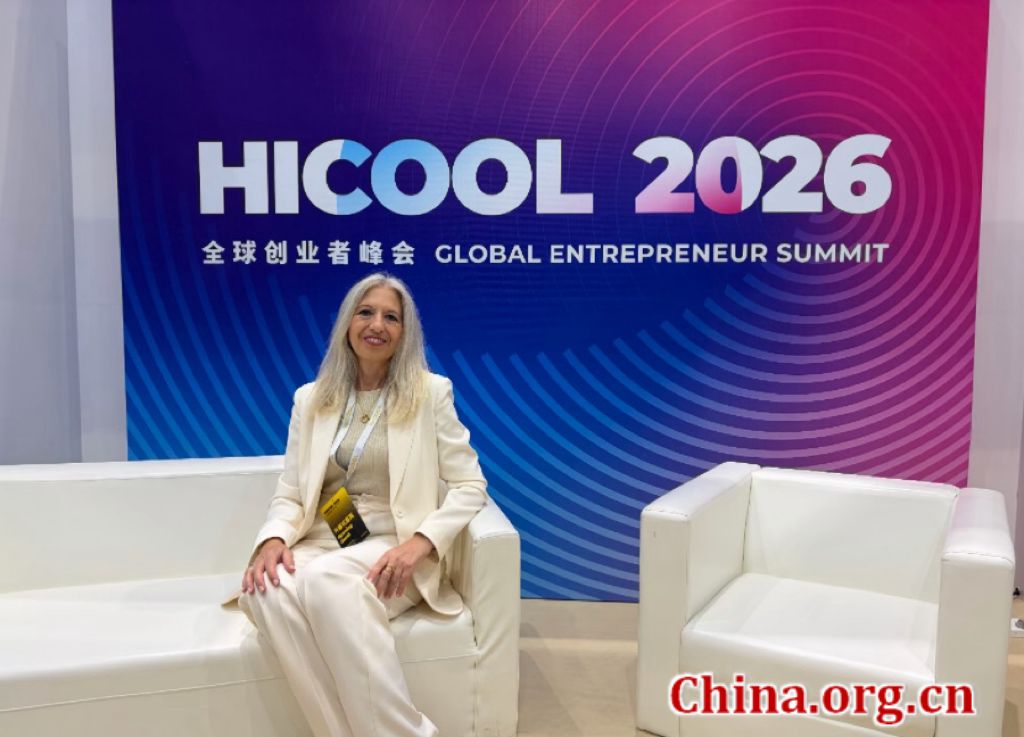
Claudia Danesi Carreras, director of tech transfer and innovation at TecnoCampus Tech Park in Spain, speaks during an interview at the China International Exhibition Center (Shunyi Hall) in Beijing, Aug. 26, 2026. [Photo by Yang Chuanli/China.org.cn]
"This is my first time at the HICOOL Entrepreneur Summit. It's great," Danesi Carreras said. "We get strong support from HICOOL. It will be a good opportunity to meet our colleagues and identify synergies with other tech parks and universities."
TecnoCampus, which brought seven Spanish startups to the summit, has reached an agreement with HICOOL Industrial Park to provide mutual soft-landing services.
Asked what Chinese startups should keep in mind when expanding into Europe, she pointed to trust and clear rules.
"Cooperation needs trust, and trust should also be built through rules," she said. "First of all, they have to explore the market to identify potential opportunities. Then they need to seek out reliable, trusted partners and draw up cooperation agreements that allow them to roll out their products or services in the European market."
She identified smart and autonomous mobility, digital healthcare and green technologies as the most promising sectors for joint projects. She said she hopes to see Chinese startups hosted at TecnoCampus and innovative Spanish companies set up operations at HICOOL Industrial Park.
Lissandro Dorneles Dalla Nora, president of the Reginp Innovation Ecosystem Network in Brazil, speaks during an interview at the China International Exhibition Center (Shunyi Hall) in Beijing, Aug. 26, 2026. [Photo by Yang Chuanli/China.org.cn]
"Access to capital, access to partners, access to the global market — HICOOL delivers all of that," Dalla Nora said. "In just a few days, I have been connecting founders with investors and companies, fostering cooperation that draws on China's strong industrial capacity and Latin America's talent pool."
Asked where Chinese and Brazilian founders should work together, he said green energy holds the most promise at present. He cited electric vehicles, battery technologies and agriculture as key areas, adding that Brazil's strength lies in agricultural production while China has the technology to help raise output.
Dalla Nora, who has spent two decades building innovation networks in southern Brazil, said regions should play to what they already have.
"Collaboration is stronger than competition," he said. "Build upon your own strengths. Innovation ecosystems take years to cultivate. You do not need to become Silicon Valley. What you need is collaboration."
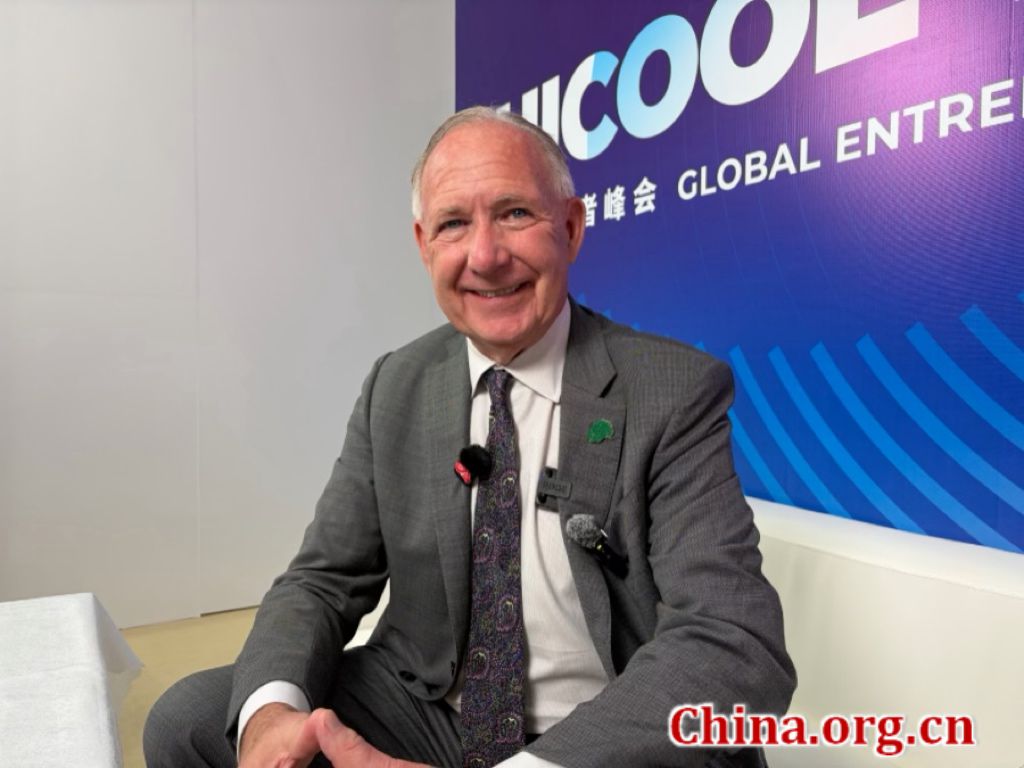
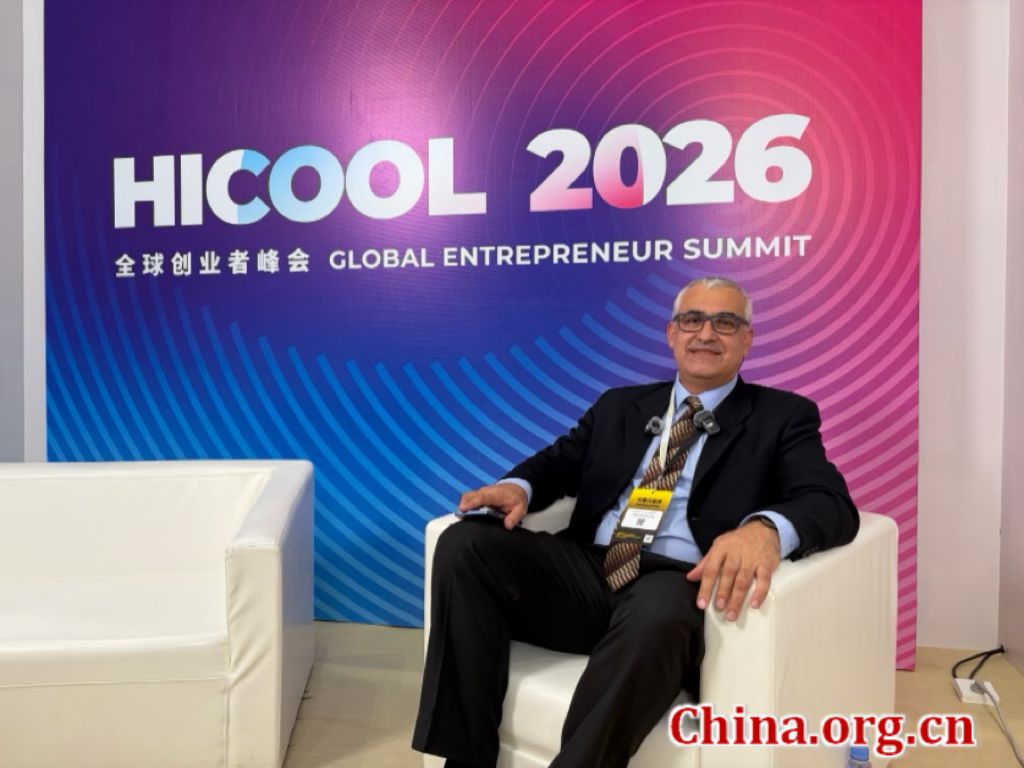
Walter Greenleaf, director of research and innovation at Stanford University's Mixed Medical Reality Program, speaks during an interview at the China International Exhibition Center (Shunyi Hall) in Beijing, Aug. 26, 2026. [Photo by Yang Chuanli/China.org.cn]
"This is probably my 15th trip to China. My first visit was in 1979," said Walter Greenleaf, director of research and innovation at Stanford University's Mixed Medical Reality Program. "There is so much momentum. Things are moving very fast, especially accelerated by AI. I have seen amazing work in healthcare."
"I'm excited by China's innovation in digital health, not just in wearable sensors, but also in the analytics to look at signals related to healthcare," Greenleaf said.
He said he expects breakthroughs in the use of virtual environments in recoveries from brain injuries and strokes, as well as in support for people dealing with depression, anxiety and addiction.
On China-U.S. innovation ties, he said: "Healthcare does not respect borders. China has advantages in scaling and manufacturing. Silicon Valley also generates tremendous innovation. We achieve better outcomes when we break down barriers between our two countries."
"I wish we had something similar in the United States, a platform bringing entrepreneurs together to collaborate, learn from one another and connect with funders," he said of the summit format. "It's fantastic."
From Dalla Nora's call for China-Brazil cooperation on green energy to Greenleaf's outlook for cross-border digital health, the HICOOL summit is knitting together a global innovation network. More than 200 organizations worldwide have joined a global entrepreneurship service alliance launched at the summit's opening.
Inside the exhibition hall, entrepreneurs from around the world traded ideas and contacts, a sign that China's innovation-driven economy is not only growing quickly but also drawing global innovators.
"There is so much going on," Greenleaf said. "It's diverse. It covers virtually every sector."


 京公网安备 11010802027341号