 Share:

The Dongguan sub-forum of the Asia-Pacific Media Forum was held at OPPO Binhaiwan Park on Sept. 3, bringing together around 100 representatives from media outlets, think tanks, universities and international organizations across APEC economies and the broader Asia-Pacific and Eurasian regions. The forum was held under the theme "Asia-Pacific Transformation: New Path for Digitalization, Smart Technology and Green Development."
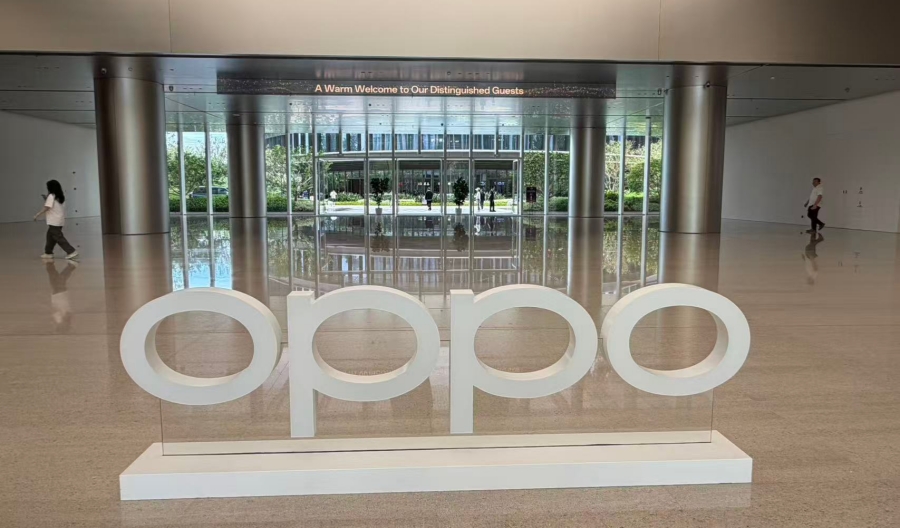
An OPPO logo on display at an OPPO Binhaiwan Park building in Dongguan, Guangdong province, Sept. 3, 2026. [Photo/China.org.cn]
Before the forum, delegates toured OPPO's brand exhibition hall, health lab and other innovation facilities. Binhaiwan Park, known within OPPO as an "Engineers' Playground," houses around 500 advanced laboratories with more than 3 billion yuan ($430 million) invested to help engineers turn technical concepts into reality.
Among the facilities is the OPPO Health Lab at Binhai Bay, the company's largest health R&D facility worldwide and one of the largest in China's consumer electronics industry. Construction began in late 2023 and took more than two years, with investment exceeding 100 million yuan. The 4,840-square-meter lab focuses on sports, fitness, cardiovascular health, lifestyle, sleep and hardware research, and houses 20 specialized labs.
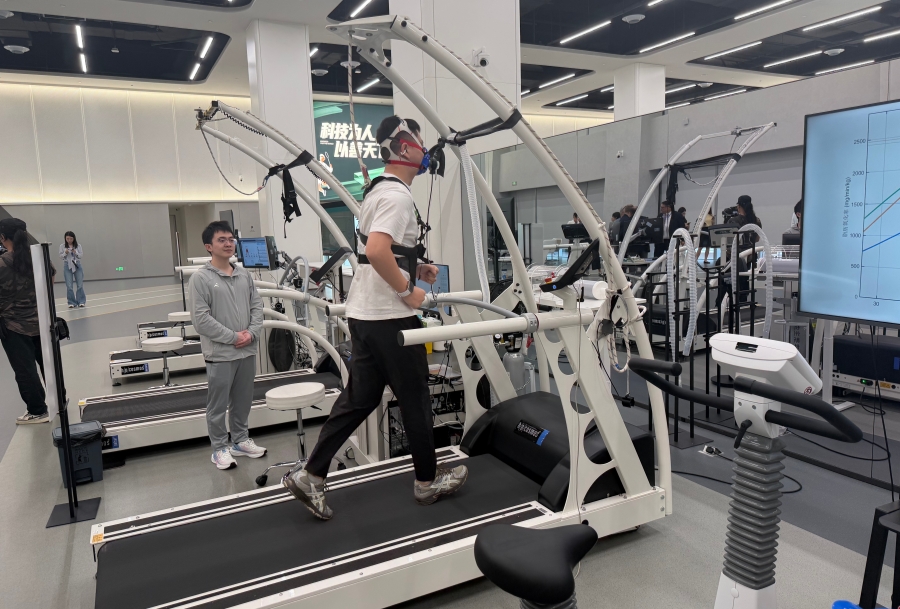
A man undergoes a physical test at the OPPO Health Lab at Binhai Bay in Dongguan, Guangdong province, Sept. 3, 2026. [Photo/China.org.cn]
"Their (OPPO's) teams are very young, and they came on strong in smartphones. They're one of the leaders in smartphones, which allows them to do all these other things," said Rebecca Fannin, writer and founder of Silicon Dragon Ventures.
"Quality and unlimited possibilities," said Serik Korzhumbayev, editor-in-chief of Delovoy Kazakhstan newspaper, describing OPPO. "I know OPPO has already established a presence in Kazakhstan. The pricing is reasonable, the quality is high, and it is very popular among young people in our country."
At the forum, Liu Chang, vice president of OPPO and president of hardware engineering, said China's intelligent manufacturing sector is evolving from engineering execution toward original innovation and technology definition.
"Manufacturing in China today is no longer simply about production," Liu said. "Original innovation, technology definition and advanced manufacturing are increasingly integrated, enabling product innovation to strengthen capabilities across the broader industrial chain."
Citing the company's 10x optical zoom technology, dual-production-line display technology and chip-level polymer 3D printing, Liu said closer collaboration across R&D, supply chains and manufacturing can turn product-level challenges into advances in materials, components, equipment and processes. He added that China's manufacturing competitiveness increasingly lies in its ability to define technologies and drive innovation.
Blending global capabilities with local markets
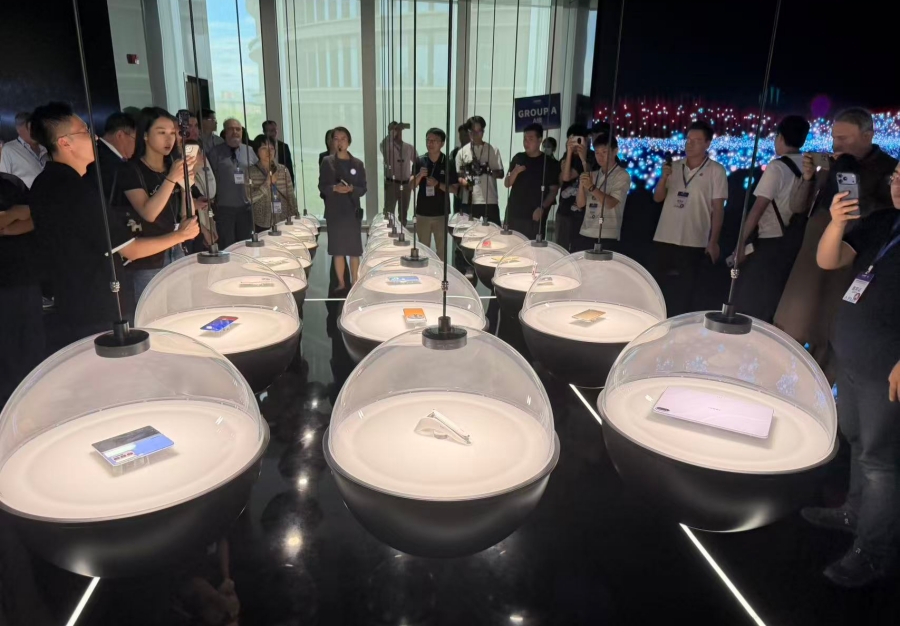
Classic OPPO products on display in an exhibition hall at an OPPO Binhaiwan Park building in Dongguan, Guangdong province, Sept. 3, 2026. [Photo/China.org.cn]
Since entering Thailand in 2009, OPPO has focused on understanding local communities, serving local users and growing with local partners, according to Liu Ling, OPPO's overseas chief marketing officer. The company has developed a "glocal" operating model, sharing capabilities globally while defining needs locally, and integrating global resources while creating value locally.
OPPO's global journey began in Southeast Asia. When entering a new market, the company prioritizes building local teams, distribution channels and service capabilities while learning from local users before expanding further.
Indonesia offers a clear example of the company's localization strategy. It invested early in local manufacturing and has deepened its presence across production, supply chains and talent development, creating local employment and partnering with vocational schools to develop technical talent.
As OPPO's global operations have expanded, localization has moved beyond sales into product definition and technology development. In Indonesia, teams focus on performance in hot conditions and connectivity challenges. In the Philippines, it optimizes connectivity for near-shore and weak-signal environments. In Malaysia, imaging algorithms are adjusted for local skin tones and aesthetic preferences, Liu Ling said.
Across Asia-Pacific, OPPO has built long-term relationships with local distribution, retail and service partners. OPPO contributes its brand, products and global resources, while local partners provide knowledge of language, culture and consumer behavior. Both sides work together to improve the consumer experience and share in market growth. OPPO also adapts retail spaces to local lifestyles, incorporating coffee, reading and social interaction into stores.
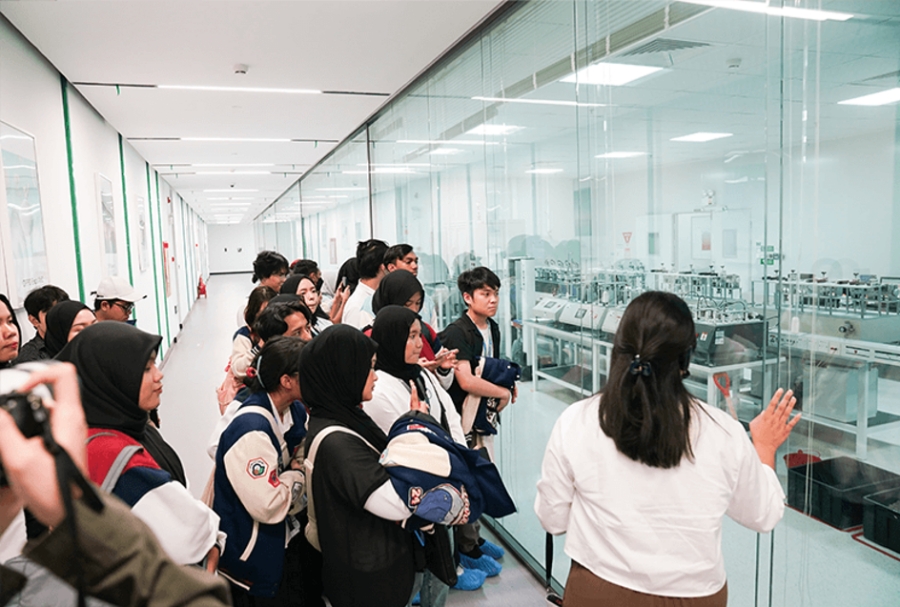
Local students visit OPPO Manufacturing Indonesia. [Photo provided to China.org.cn]
OPPO's localization extends beyond selling products to include local needs, talent and industrial capabilities in business development and innovation. The company plans to continue growing with users, partners and industries across the Asia-Pacific region, making innovation more responsive to real-world needs and enabling value to be shared across more markets.
The media tour was part of a sub-event for the Asia-Pacific Media Forum, which opens in Shenzhen on Sept. 5 under the theme "Building a Path to Shared Prosperity for the Asia-Pacific Community: Media Consensus and Action." Ahead of the forum, participants are visiting cities across Guangdong province, including Guangzhou, Foshan, Dongguan, Shenzhen, Zhuhai and Zhongshan.


 京公网安备 11010802027341号