Share:

The Shenzhen Consensus of the Asia-Pacific Media Forum, adopted by participating delegates, was released during the forum on Saturday in Shenzhen, Guangdong province.
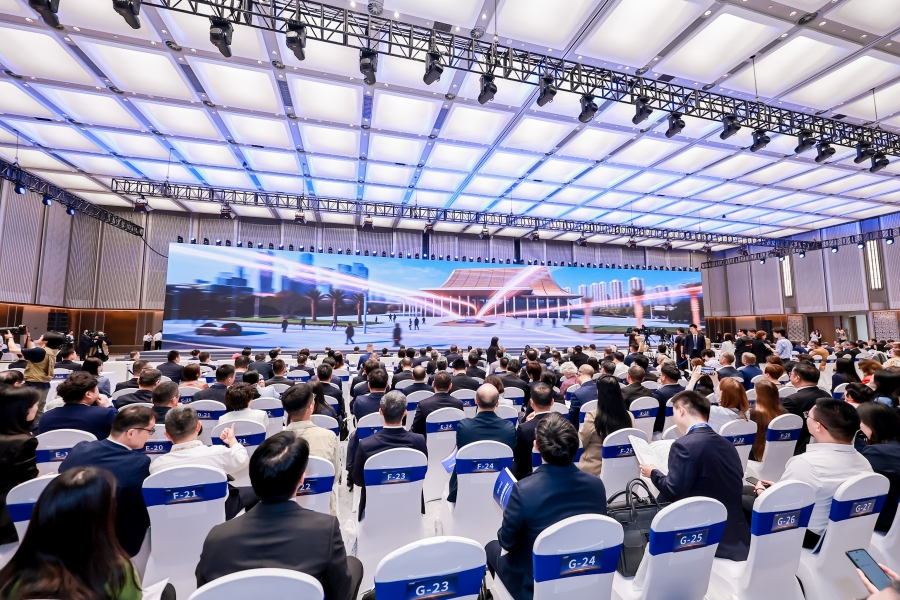
The Asia-Pacific Media Forum is held in Shenzhen, Guangdong province, Sept. 5, 2026. [Photo/China.org.cn]
The document reflects broad agreement on advancing open cooperation, digital, intelligent and green development, and media collaboration. Signers pledged to uphold multilateral trade, expand AI-driven solutions, foster intercultural dialogue and advance regional prosperity.
Asia-Pacific Economic Cooperation (APEC) is the region's broadest and most influential economic cooperation body. In the more than three decades since its founding, it has moved from envisioning a Free Trade Area of the Asia-Pacific to promoting an Asia-Pacific community, helping make the region one of the most dynamic parts of the global economy.
"We are willing to deepen dialogue and exchanges and pursue practical cooperation to make greater contributions to the prosperity and development in the Asia-Pacific region," the consensus stated. "Openness, innovation and cooperation are of great importance to promoting prosperity in the Asia-Pacific region."
The signers pledged to build consensus on openness, uphold the multilateral trading system and report on efforts to build a Free Trade Area of the Asia-Pacific, enhance regional connectivity and maintain stable industrial and supply chains. They will also promote policy coordination and experience sharing.
On digital transformation, they committed to interpreting digital policies and communicating the positive impact of digital technologies. Guided by a people-centered approach and a commitment to using AI for good, they pledged to promote AI use in the media sector and encourage coverage of clean energy and low-carbon practices to support green development across the region.
The consensus recognizes the role of media in promoting cultural exchanges and mutual understanding, and reaffirms a commitment to truthful, objective and impartial reporting. Signers also pledged to deepen cooperation among media organizations through joint reporting, mutual visits and other programs to strengthen people-to-people exchanges and mutual trust across the Asia-Pacific.
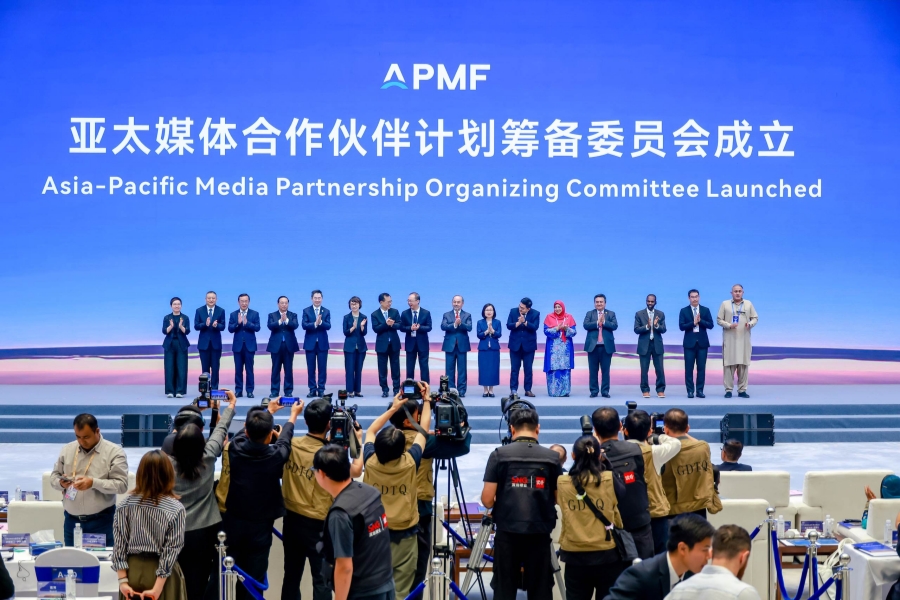
Organization representatives pose for a photo as they launch the Organizing Committee of the Asia-Pacific Media Partnership Program during the Asia-Pacific Media Forum in Shenzhen, Guangdong province, Sept. 5, 2026. [Photo/China.org.cn]
"The new achievements of Chinese modernization are creating new opportunities for the Asia-Pacific region and the world," the document noted. "We encourage the Asia-Pacific region to learn from and draw on one another's development experiences, and support efforts to explore development paths suited to their respective circumstances."
China will host the 33rd APEC Economic Leaders' Meeting in Shenzhen in November, the country's third time hosting the event after Shanghai in 2001 and Beijing in 2014. The media forum was held ahead of that meeting to promote exchanges and cooperation among regional media.
This year marks the APEC "China Year," with the theme of "Building an Asia-Pacific Community to Prosper Together." About 300 APEC-related meetings and events will be held in cities across China throughout the year.
More than 400 delegates from 42 countries and regions attended the one-day forum on Sept. 5, including representatives from more than 200 mainstream media outlets, think tanks, embassies and consulates, government organs, U.N. agencies and international organizations.
The forum produced several outcomes, including the release of the think-tank report "Openness, Innovation and Cooperation: Building a More Prosperous Asia-Pacific Community," the launch of the "Asia-Pacific Development Stories" Global Multimedia Communication Program and the release of the Asia-Pacific Communication Index Report. At the opening ceremony, 16 founding organizations from China and abroad formed the Organizing Committee of the Asia-Pacific Media Partnership Program.
Shenzhen also launched a media cooperation campaign at the event, focusing on technology sharing, joint content creation and talent cultivation.
Eight Chinese members of the organizing committee exchanged cooperation documents with foreign counterparts at the forum, including memorandums of understanding between People's Daily and Editora Peru, between Xinhua News Agency and Myanmar's News and Periodicals Enterprise on the Global South Media and Think Tank Forum Mechanism, and between China International Communications Group and TV-Novosti.
"News media not only record the changing times but should also serve as promoters and advocates of win-win cooperation and the reform and improvement of the global governance system," said Lyu Yansong, editor-in-chief of Xinhua News Agency. "We should build bridges of deeper cooperation and people-to-people connectivity, jointly spread positive messages about Asia-Pacific cooperation, and make the voice of Asia-Pacific solidarity louder in the global public opinion arena."
Shezra Mansab Ali Khan Kharal, Pakistan's minister of state for climate change and environmental coordination, said the forum's theme, "Building a Path to Shared Prosperity for the Asia-Pacific Community: Media Consensus and Action," resonates strongly with Pakistan's own experience. Lasting partnerships, she said, are built not only on roads, ports and investment, but also on shared stories, trust and mutual understanding. Governments cannot advance such a vision alone, she added, and media play a vital role in shaping how people across the region understand one another.
Konstantinos Oikonomou, vice president of content sales and licensing at CNN International Commercial, stressed that the challenges facing media today do not stop at national borders.
"Misinformation travels globally. New technologies spread globally. The competition for audiences is global. No media organization can address these developments entirely on its own. We need stronger professional networks, more exchange of knowledge and experience, and new forms of collaboration across countries and regions," he said.

A guest interacts with a robot at the Sci-Tech Innovation Achievements Exhibition during the Asia-Pacific Media Forum in Shenzhen, Guangdong province, Sept. 5, 2026. [Photo/China.org.cn]
"Gathering voices from across the Asia-Pacific region to discuss growth and prosperity, seeking solutions to the world's most pressing problems — the media plays a central role in those conversations," said Melissa Fleming, the United Nations under-secretary-general for global communications, in a video message to the forum. "We need journalists for facts. We need facts for trust. And we need trust for a shared reality. We need all three if we are to face humanity's greatest challenges, from climate change to conflict to rapid advances in technology."
She urged media organizations to find ways to build a healthier, better-informed public debate and drive the change the world needs.


 京公网安备 11010802027341号