Share:

The British Chamber of Commerce South China celebrated its 30th anniversary in Guangzhou, Guangdong province, on Saturday, with its chairman highlighting an expanding role in helping Chinese companies go global alongside its work supporting British businesses in south China.
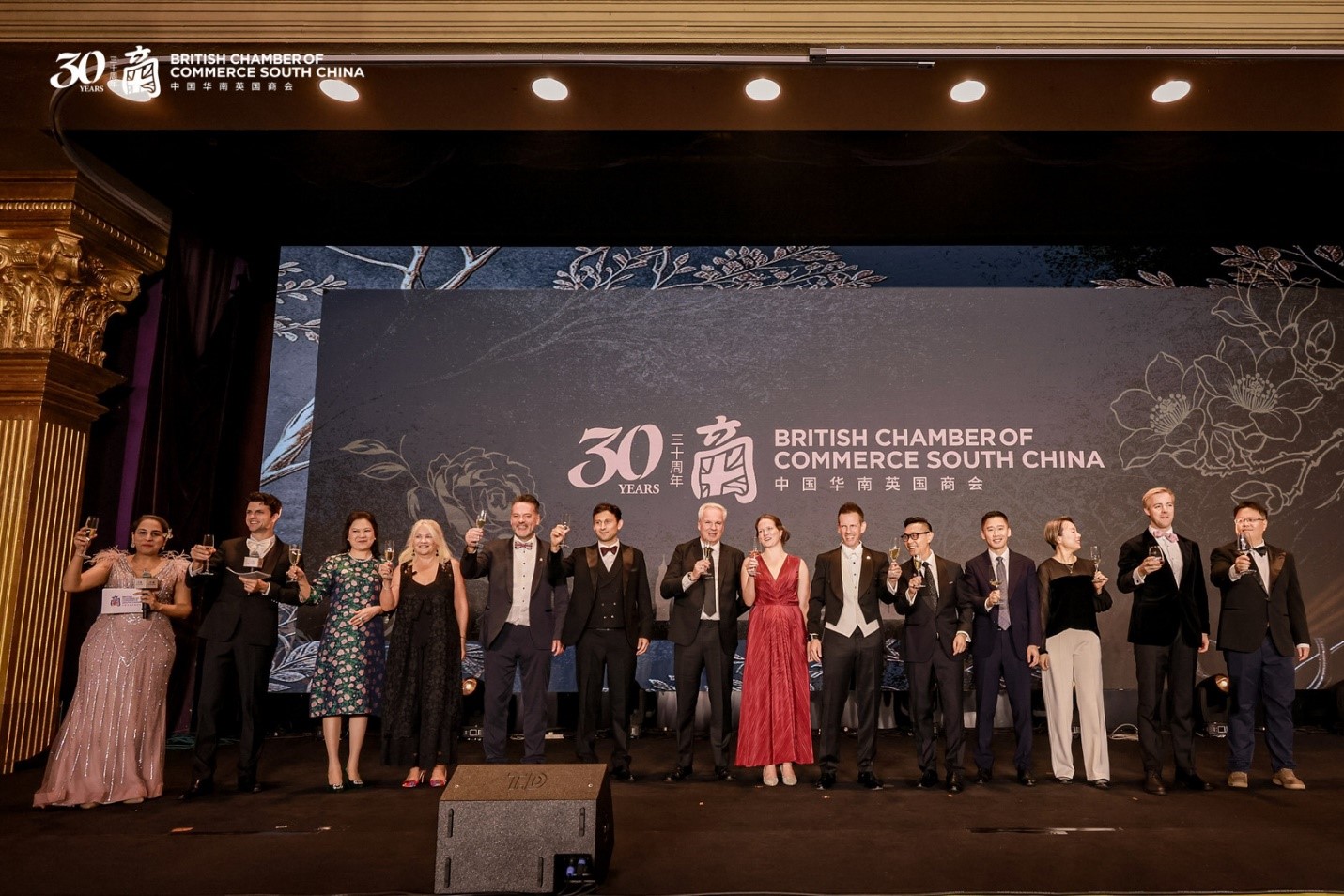
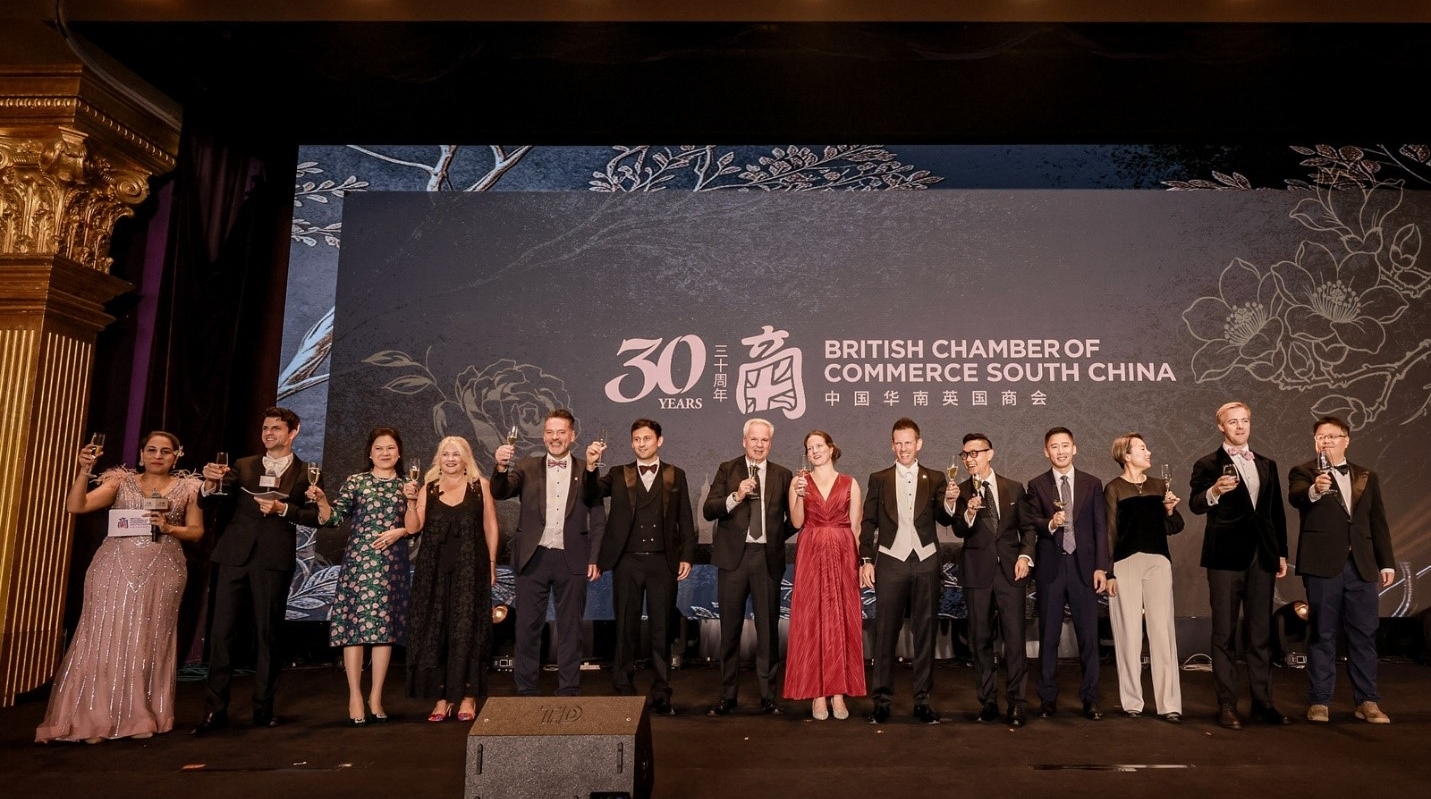
British Chamber of Commerce South China members and guests pose for a group photo during the chamber's 30th anniversary gala at the Garden Hotel in Guangzhou, Guangdong province, Sept. 5, 2026. [Photo/British Chamber of Commerce South China]
Business leaders, diplomats and government representatives from China and the U.K. gathered at the Garden Hotel for a gala featuring a menu pairing British classics with seasonal Cantonese ingredients.
Mark Clayton, chair of the British Chamber of Commerce South China, said the chamber had spent the past 30 years helping British businesses succeed in south China and was now putting greater emphasis on helping Chinese companies expand overseas, creating new opportunities for British professional, financial and legal services firms.
"For the next 30 years we will be here helping U.K. businesses succeed in south China and Chinese businesses go global, using British businesses for their global success," Clayton said. "This is the two-way value of the British Chamber of Commerce South China."
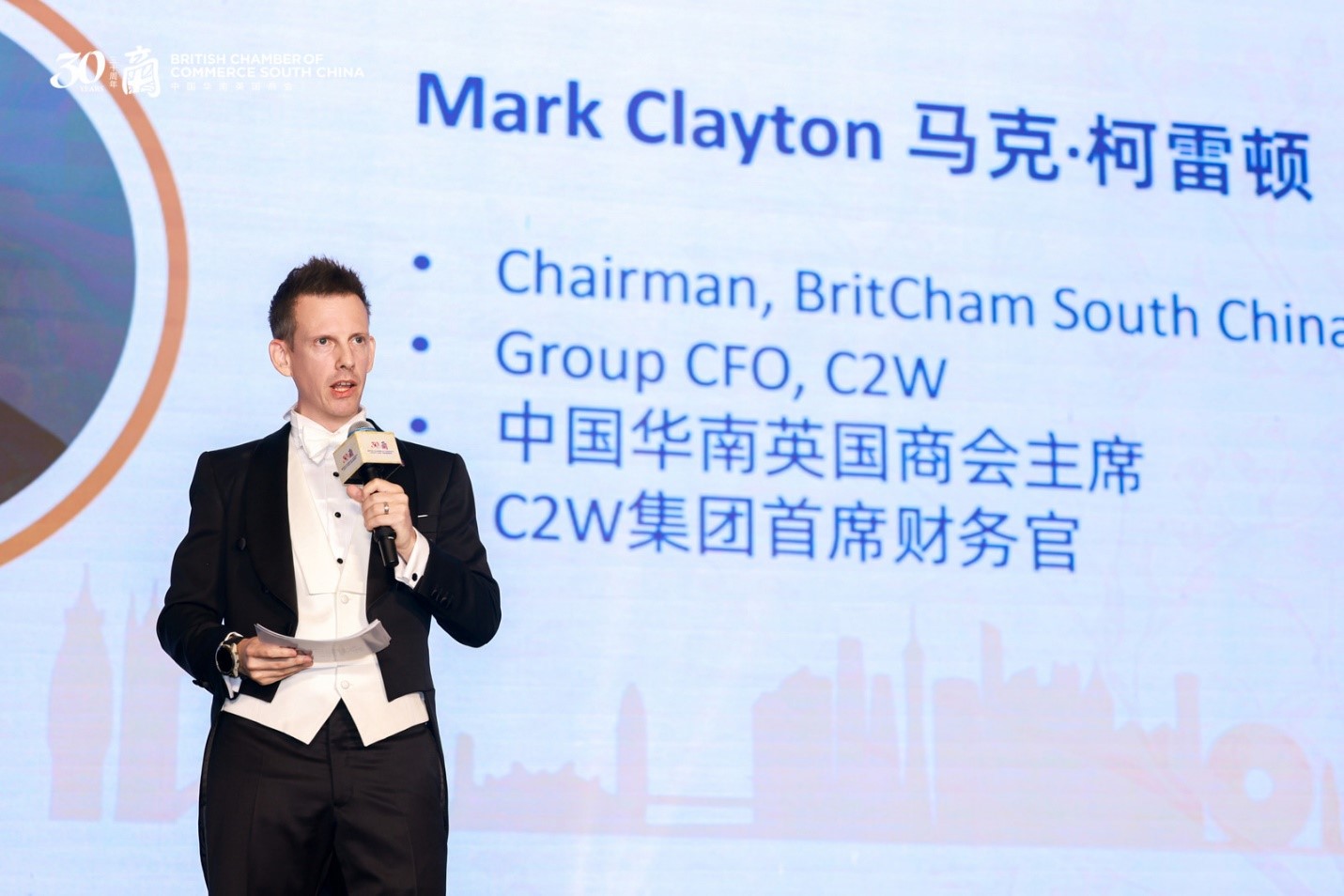
Mark Clayton, chairman of the British Chamber of Commerce South China, speaks at the chamber's 30th anniversary gala in Guangzhou, Guangdong province, Sept. 5, 2026. [Photo/British Chamber of Commerce South China]
In January, the chamber became the first foreign business group to sign a cooperation agreement with the "Going Global" Comprehensive Service Center for Chinese Enterprises, giving British firms a formal referral route to Chinese companies looking to grow overseas. The likes of Honor, Huawei and Tencent have all taken part in the chamber's "Go Global" events, alongside British financial and professional services firms such as HSBC, PwC and KPMG.
British service exports will likely continue to rise as China moves to further open the sector under its 15th Five-Year Plan (2026-2030), which calls for expanded market access for foreign firms in the service sector.
The chamber also continues to represent British firms with supply chains in China. Last year, it brought a U.K. delegation to Shenzhen, Guangzhou and Shanghai to hear directly from more than 100 supply chain businesses, feeding their views directly to U.K. officials and policymakers.
"South China is hugely important to many British companies because of the depth and density of the region's supply chains," said Benjamin King, chairman of the chamber's Supply Chain Working Group. "We're committed to helping British businesses connect with local manufacturers and suppliers, creating practical partnerships that work for both sides."
The chamber's current role is a long way from its informal beginnings.
When Jeremy Sargent arrived in Guangzhou in 1998, the chamber was little more than a group of British businesspeople who met every few weeks at a local bar to discuss their businesses and exchange information. Sargent, now founder and proprietor of the Happy Monk chain of bars, a well-known brand in Guangzhou and Shenzhen, was one of the chamber's earliest members.
"That's really how the British Chamber of South China, or the British Chamber of Guangdong as it was then, started," he said.
The informal network soon developed into a formal organization, with a constitution, its first staff member and a growing program of activities. China's accession to the World Trade Organization in 2001 proved a pivotal moment, as British companies sought to understand what the country's opening meant for their businesses, Sargent noted.
"There were challenges, of course, and that's one reason why the chamber played such an important role in helping British businesses navigate their way into the market," Sargent said.
Over the past three decades, the chamber has grown to represent more than 150 companies in sectors including international education, professional services, supply chains and healthcare, while hosting more than 50 events a year.
It has also expanded beyond its original Guangdong remit. In 2024, it adopted its current name, the British Chamber of Commerce South China, and has since held events as far afield as Hainan and Fujian.
As it enters its next chapter, Clayton said the chamber would continue working to help British and Chinese businesses in south China succeed. "We're looking forward to professionalizing and growing further over the next 30 years," Clayton said, citing trust, resilience and reliable partnerships as priorities.


 京公网安备 11010802027341号