 Share:

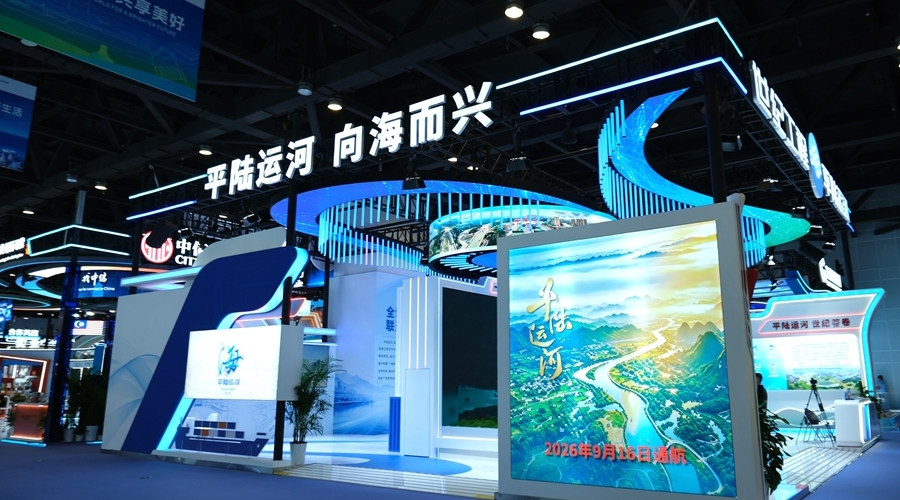
For visitors walking into the Pinglu Canal exhibition area at the 23rd China-ASEAN Expo, the newly completed waterway can be viewed in miniature: a model showing ships navigating the canal. Visitors stop to trace the route, and many linger over the locks that carry vessels through the water-level drop.
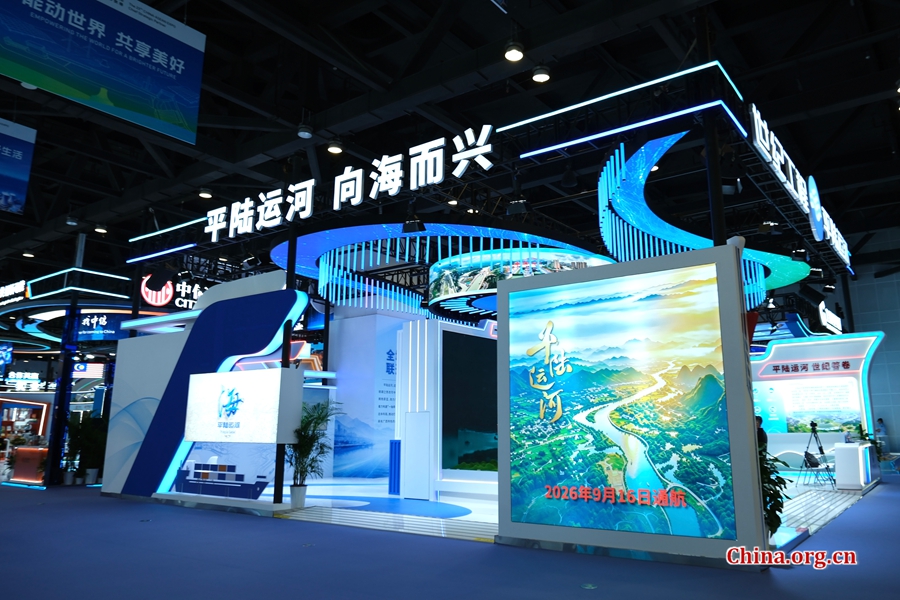
The Pinglu Canal exhibition area at the 23rd China-ASEAN Expo in Nanning, Guangxi Zhuang Autonomous Region, Sept. 17, 2026. [Photo by Liao Jiaxin/China.org.cn]
For many exhibitors, the canal presents a practical question: Can it make shipping cheaper, faster and more reliable?
The timing is particularly significant. The Pinglu Canal officially opened to navigation on Sept. 16, one day before the China-ASEAN Expo opened in Nanning, south China's Guangxi Zhuang Autonomous Region.
Stretching 134.2 kilometers from the Xijiang River system to the Beibu Gulf, the canal is designed to accommodate vessels of up to 5,000 metric tons. By shortening the inland waterway journey for goods from southwest China to the sea by more than 560 kilometers compared with traditional routes through ports in Guangdong province, it is projected to reduce logistics costs and strengthen connections with international shipping routes.
Dang Thanh Thien Hau, CEO of the Vietnamese bird's nest producer Fanza Nests Company Limited, gave a quick answer when asked at the ASEAN exhibition area whether his company would use the canal for faster, cheaper transport: "Definitely, of course we would choose it. Fast and cheap."
Xu Hejie, general manager of Ningbo JoyRoad Import & Export Co. Ltd., sees it the same way. His company is the general agent in China for Dutch Mill, Thailand's largest dairy producer.
The company imports extensively from ASEAN members. "Why ASEAN? Because it's fast, the shipping cycle is short," Xu said. Shipping from Thailand to Ningbo, a port city in east China's Zhejiang province, currently takes about seven days at its fastest, but 15 or even 20 days at its slowest. "The cycle is still relatively slow," he said.
If the canal provides a more convenient and cost-effective route, Xu said he would be glad to use it and would even consider setting up a warehouse in Guangxi.
For Thana Kunaraksvong, CEO of Kanvela Chocolate, logistics are the biggest challenge in reaching Chinese consumers. The Thai company, based in Chiang Mai, is an award-winning bean-to-bar chocolate maker that sources locally grown cacao.
"Transporting our product to China is the most challenging part, because it has to be kept at a low temperature below 25 degrees Celsius," Kunaraksvong said. "I guess this channel will help improve the efficiency of shipping to China."
For more than two decades, the expo has provided a platform for Chinese and ASEAN businesses to meet and explore commercial opportunities. As the China-ASEAN Free Trade Area 3.0 moves forward, the Pinglu Canal will serve as a core physical artery, connecting not only ports and shipping routes, but also the industrial, supply and value chains that link China and ASEAN, according to the Pinglu Canal Group.
For Guangxi, the canal further solidifies its role as a gateway for China's opening up and regional cooperation.
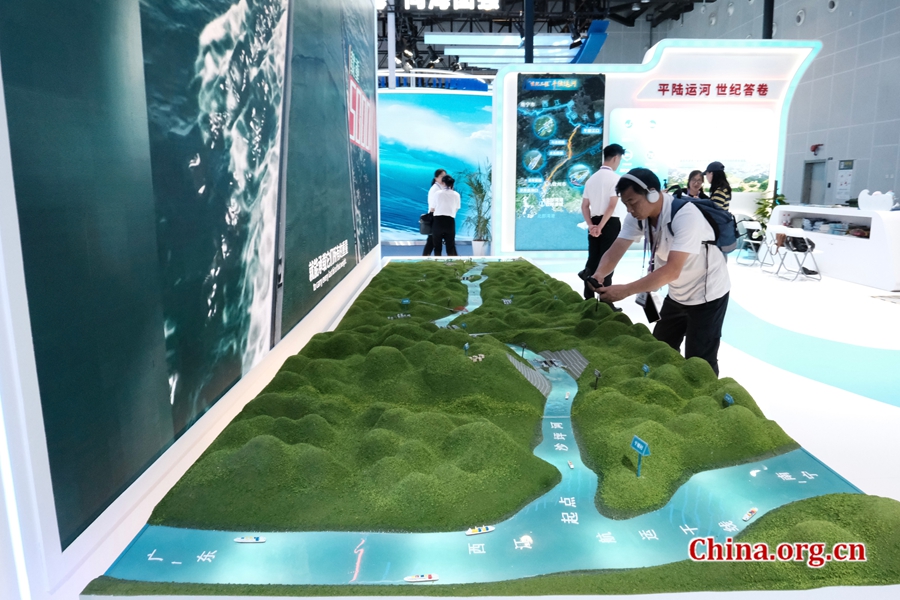
A visitor takes photos of a model of the Pinglu Canal at the 23rd China-ASEAN Expo in Nanning, Guangxi Zhuang Autonomous Region, Sept. 17, 2026. [Photo by Liao Jiaxin/China.org.cn]
While it will take time for the canal's full economic benefits to materialize, businesses at the expo are already recalculating their trade logistics.
The Pinglu Canal spans 134.2 kilometers, yet its strategic reach extends far beyond — linking China's southwestern inland regions with the Beibu Gulf, Southeast Asia, the Guangdong-Hong Kong-Macao Greater Bay Area and beyond.


 京公网安备 11010802027341号