Share:

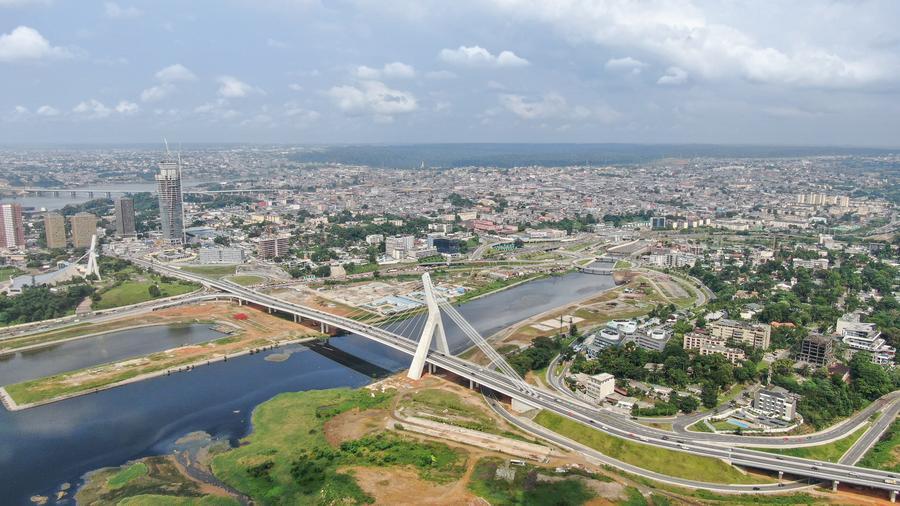
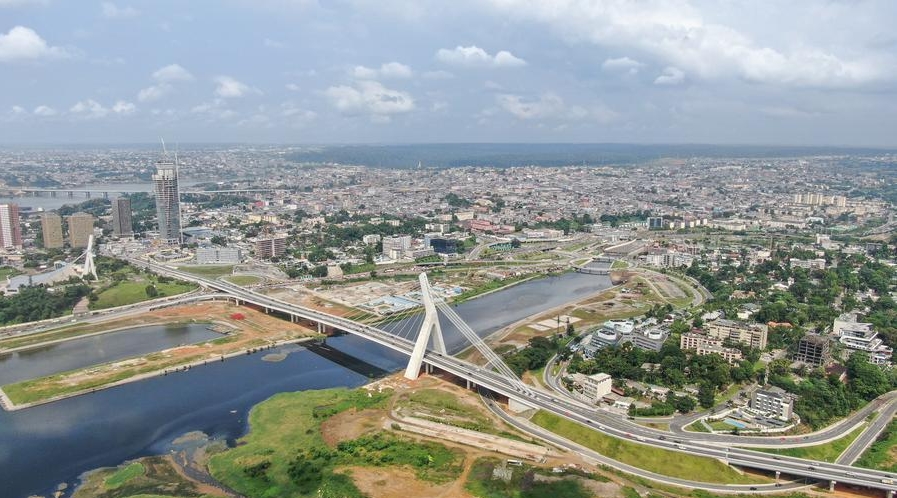
This aerial photo taken on Jan. 9, 2024 shows a view of Cocody Bridge in Abidjan, Cote d'Ivoire. The bridge, with a total length of approximately 1.63 kilometers, is constructed by China Road and Bridge Corporation. [Photo/Xinhua]
"Stay committed to putting development first, and open up the prospects for shared prosperity." At the Shanghai Cooperation Organization (SCO) summit in Bishkek this year, Chinese President Xi Jinping once again called on countries to make development a priority.
In September 2021, Xi proposed the Global Development Initiative (GDI) at the 76th session of the UN General Assembly, bringing a vision of shared development to the global agenda and calling for the benefits of development to be more widely shared.
Five years on, the initiative has evolved from a vision into concrete cooperation, with more and more countries joining forces in the pursuit of a better future for all.
From vision to shared aspiration
The GDI was put forward at a critical moment when the global development agenda was facing unprecedented challenges.
In the Sustainable Development Goals Report 2021, the United Nations underscored the scale of the setback: global extreme poverty rose for the first time in more than 20 years, with 119 million to 124 million people pushed back into extreme poverty in 2020, while 101 million children fell below the minimum reading proficiency level.
It was against this background that Xi proposed the development initiative, emphasizing the necessity to put development high on the global macro policy agenda.
The initiative calls for staying committed to development as a priority, to a people-centered approach, to benefits for all, to innovation-driven development, to harmony between man and nature and to results-oriented actions.
"It was both timely and strategically far-sighted. At a time when the international agenda is increasingly dominated by differences and dividing lines, the initiative brings a fundamental question back into focus: how to achieve development and stability and create a dignified future for people," said Serik Korzhumbayev, editor-in-chief of the Delovoy Kazakhstan newspaper.
In January 2022, when the Group of Friends of the GDI was launched at the UN Headquarters in New York, delegates from more than 100 countries attended the meeting, voicing support for the initiative and willingness to join the group.
"Development holds the key to people's well-being." Over the past five years, Xi has continued to promote the implementation of the initiative at the SCO, BRICS, the Forum on China-Africa Cooperation, the G20 and other multilateral platforms, calling for building political consensus to ensure everyone values development and all countries pursue cooperation together.
"This is where I see particular value in the GDI: it links development with people, and national needs with the shared responsibility of the international community," said Essam Sharaf, former Egyptian prime minister and founder and chairman of the Sharaf Foundation for Sustainable Development.
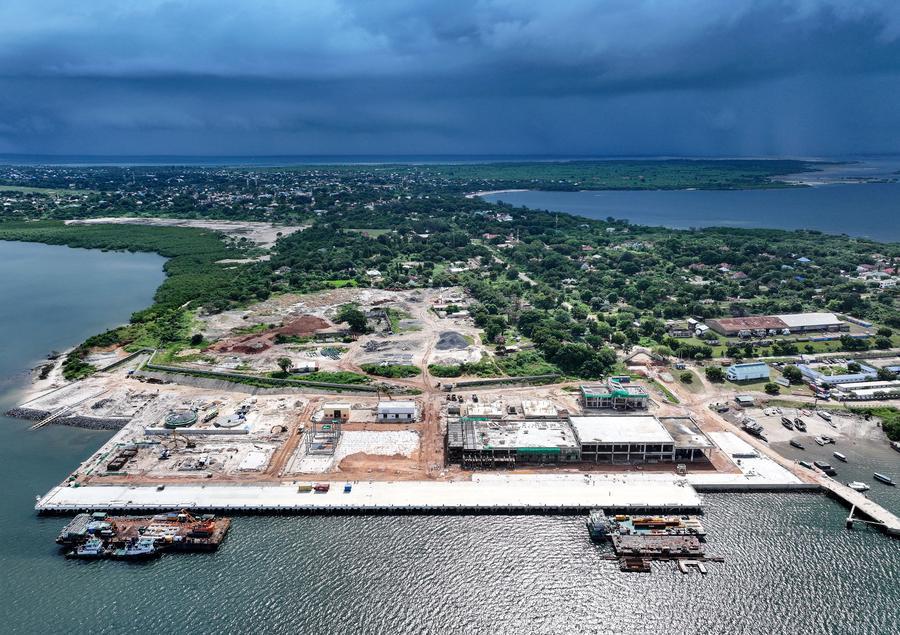
An aerial drone photo taken on April 23, 2025 shows the Kilwa Fishing Harbor under construction near Kilwa Kisiwani, Tanzania. The project, constructed by China Harbor Engineering Company Ltd, is Tanzania's first modern large-scale fishing harbor. [Photo/Xinhua]
As of now, nearly 100 countries and international and regional organizations have signed cooperation documents with China on the initiative, while the Group of Friends of the GDI has grown to 88 countries.
Reflecting on the GDI's progress over the past five years, Abdulaziz Alshaabani, a Saudi researcher at the Al Riyadh Center for Political and Strategic Studies, said the initiative "has evolved from a Chinese proposal into concrete mechanisms for international cooperation."
"One noticeable change since the launch of the GDI is that more and more countries have begun to place development and related issues higher on the international cooperation agenda," said Alshaabani.
Progress in action
In Rwinkwavu, a rural area in Kayonza district of Rwanda's drought-prone Eastern Province, a bank of solar panels enclosed by a blue fence stand among the hills. The solar-powered borehole is one of 200 drilled under a China-funded project benefiting about 110,000 people across the province.
Magnifique Habimana, head teacher of GS Rwinkwavu school, one of the beneficiaries, told Xinhua that "the project came at the right time to address a serious water problem."
Over the past five years, stories like this have unfolded in communities across the developing world. While projects involving infrastructure, energy and water have made everyday life easier, agricultural cooperation has expanded to more than 140 countries and regions, with over 1,000 agricultural technologies shared with developing countries and more than 14,000 technicians trained in hybrid rice technology.
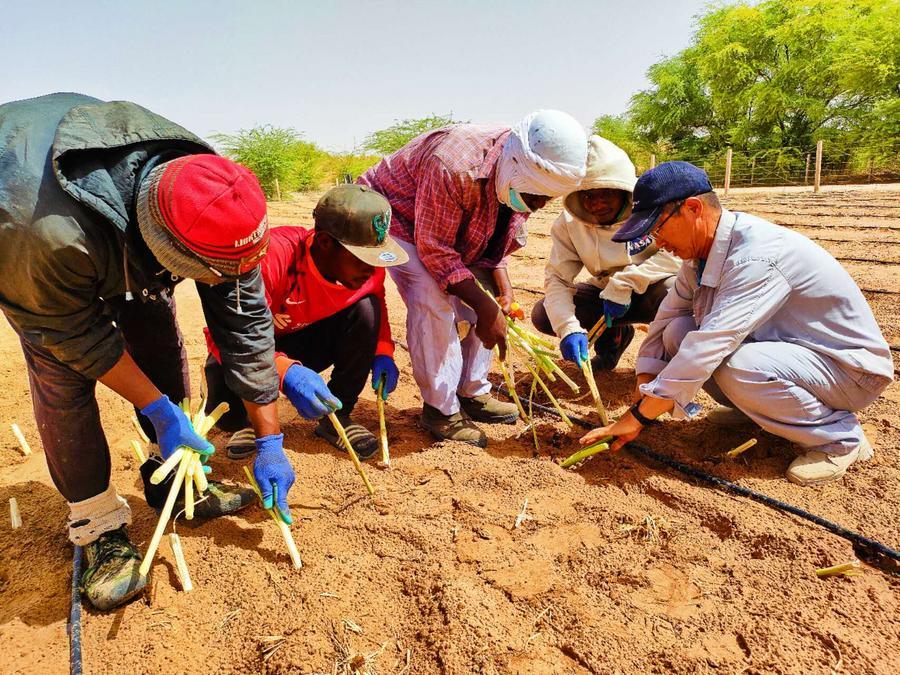
A Chinese expert instructs local staff members to plant Juncao seedlings at the animal husbandry technology demonstration center in Mauritania, May 27, 2024. [Photo/Xinhua]
"For developing countries, development is not an abstract political formula. It means new roads and railways, reliable energy supplies, modern enterprises, jobs, education, digital connectivity, food security, access to technology and better prospects for the younger generation," Korzhumbayev told Xinhua.
Backed by more than 23 billion U.S. dollars in funds it has mobilized, the initiative has implemented over 1,800 "small and beautiful" projects and trained more than 200,000 professionals, delivering concrete benefits to local communities in over 120 countries.
At the SCO Bishkek Summit, Xi announced plans to implement 100 technological cooperation projects with other SCO countries in the next three years and nurture more green industry talents through China-SCO cooperation, building on his pledge a year earlier at the SCO Tianjin Summit that "China plans to implement 100 'small and beautiful' livelihood projects in member states with such need."
A defining feature of the GDI is its emphasis on action and tangible results, said Hussein Askary, vice-chairman of the Belt and Road Institute in Sweden. "China not only discusses development issues, but also takes concrete action to advance common development."
A path forward
Five years on, development remains as an urgent priority as ever, as geopolitical conflicts, economic uncertainty and climate change compound the pressing challenges facing the international community.
The latest UN data show that only 36 percent of the Sustainable Development Goal (SDG) targets with available trend data are on track or making moderate progress, and 15 percent have even regressed below their 2015 baselines.
"This is precisely why, in my view, the significance of the GDI has actually increased over the past five years," said Emin Gasimov, director of Azerbaijan's Center for the Study of China's Global Initiatives, Development and Culture.
While emerging technologies, including artificial intelligence (AI), are creating new development opportunities, they also pose a risk of widening existing gaps.
Sharaf noted that the GDI presents a major opportunity to help shape an important principle for the next phase. "The future of technology should not be a future for a limited number of countries, but a shared future for humanity," he said.
Xi has described AI as "a new engine of world economic growth and an accelerator for the shift of growth drivers." As a new round of technological revolution and industrial transformation gathers pace, he has called for bridging the digital and AI divides, so that technological revolution and development achievements can benefit all nations.
In July, during the 2026 World Artificial Intelligence Conference (WAIC) and High-Level Meeting on Global AI Governance in Shanghai, an upgraded version of MAZU was officially handed over to Djibouti, marking a new step in China-Djibouti cooperation on AI-powered climate resilience.
MAZU, short for multi-hazard, alert, zero-gap and universal, is an AI-driven meteorological early warning platform developed by China and named after the Chinese guardian goddess of the sea.
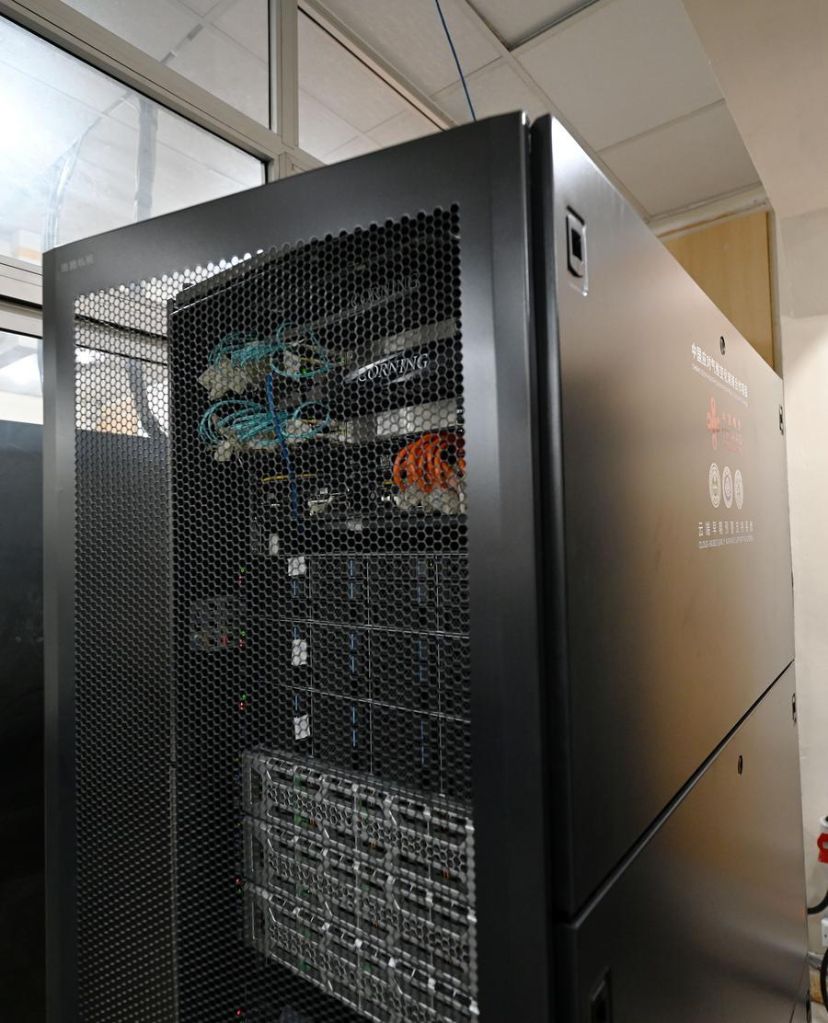
MAZU, China's homegrown AI-powered meteorological early warning system, is seen at the Pakistan Meteorological Department in Islamabad, Pakistan, on Aug. 17, 2026. [Photo/Xinhua]
Currently, MAZU has been deployed on the ground in seven countries and is providing cloud-based services in more than 40 countries, making it an important international public good serving countries across the Global South.
At the 2026 WAIC, Xi announced that China will provide developing countries with 5,000 opportunities in AI training and seminar programs in the next five years, and said that 30 countries can use the AI-powered meteorological warning system to safeguard homes around the world.
Projects such as MAZU offer a stellar example of how digital technologies can support the implementation of the GDI, said Alshaabani. "Its value lies not simply in providing a technology, but in helping countries strengthen their capacity for disaster early warning, risk management and emergency response."
Beyond MAZU, China has been building a broader framework for international AI cooperation, including establishing the World AI Cooperation Organization with 28 other countries and setting up international AI application cooperation centers with major regional and multilateral organizations.
If such emerging technologies can be made more accessible to the Global South, the role of the GDI will expand significantly, Alshaabani told Xinhua. "It will not only help developing countries address today's development challenges, but also help them build the capacity to adapt to future technological change."
"In my view, this is one of the most promising transformations of the GDI: from development assistance to jointly building the capacity to develop. For the Global South, this capacity could become one of the most important resources of the next decade," said Gasimov.


 京公网安备 11010802027341号