 Share:


What makes a skilled worker? For Austria, the answer begins in the workplace as much as in the classroom.
At the 48th WorldSkills Competition in Shanghai, members of the Austrian delegation shared their experience in vocational education and skills training during an interview on Sept. 24, offering a glimpse of a system built on close ties between schools and companies — and of what Austria sees in China's fast-changing skills landscape.
At the heart of Austria's vocational education is its dual training system, where apprentices spend about 80% of their time working in companies and 20% in vocational schools.
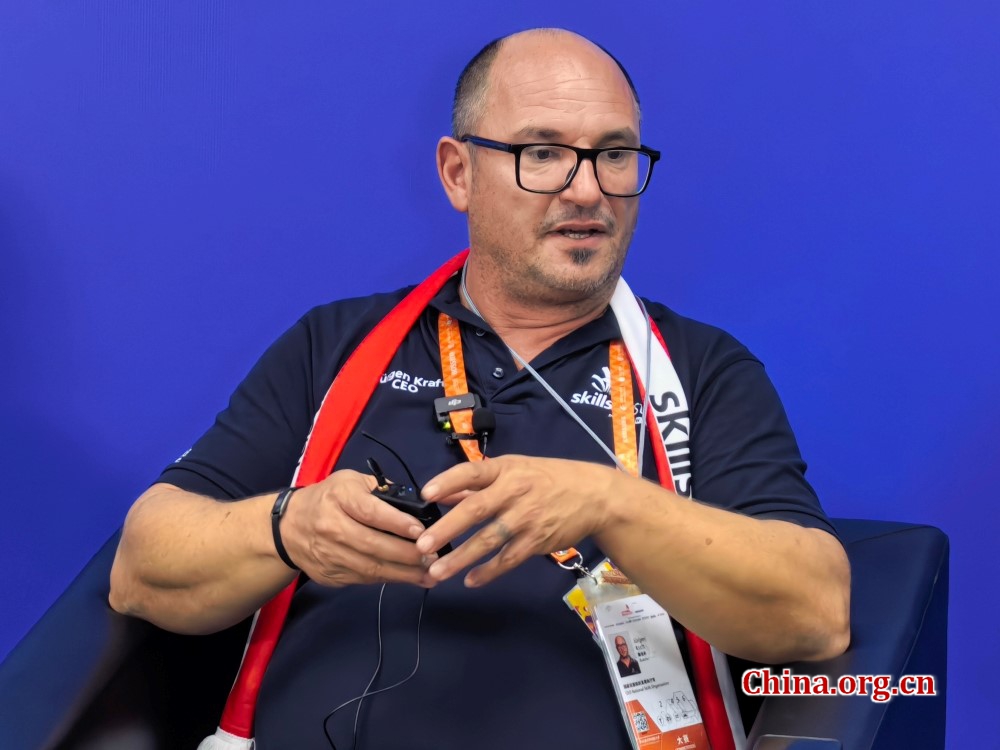
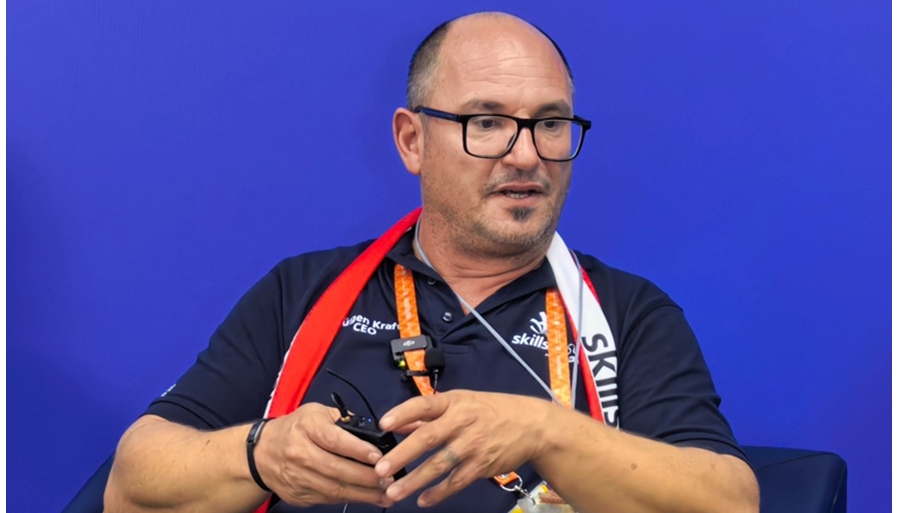
Austrian delegation member Jürgen Kraft speaks during an interview at the media center of the 48th WorldSkills Competition in Shanghai, Sept. 24, 2026. [Photo by Mi Xingang/China.org.cn]
"It is a very well-established system for us," said Jürgen Kraft, CEO of SkillsAustria. He noted that this approach enables companies to train workers according to their practical needs.
The model is reflected in Austria's WorldSkills team, where about 80% of competitors have completed dual training and are already employed.
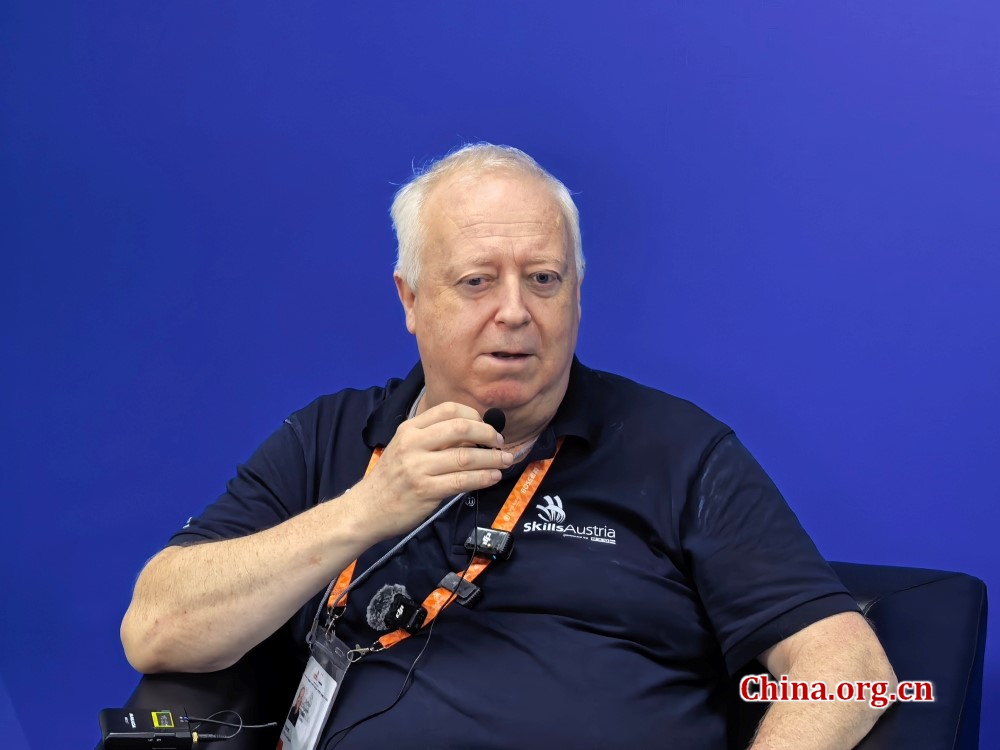
Austrian delegation member Stefan Praschl speaks during an interview at the media center of the 48th WorldSkills Competition in Shanghai, Sept. 24, 2026. [Photo by Mi Xingang/China.org.cn]
The delegation emphasized the value of international exchanges. Stefan Praschl, an official delegate for Austria at WorldSkills, said Austrian participants have twice taken part in technical training related to the railway sector as part of exchanges with China. While Austria maintains a flexible approach to railway maintenance, Praschl said experts were impressed by the precision of China's standardized procedures, adding that both countries could learn from each other.
Technology is another area where the two sides are looking ahead. Austria is incorporating AI into its training programs. Austrian delegates said AI may automate some tasks, but many jobs will still require human workers.
The delegates also expressed interest in China's use of virtual reality in vocational training, saying China has made significant progress in the field.
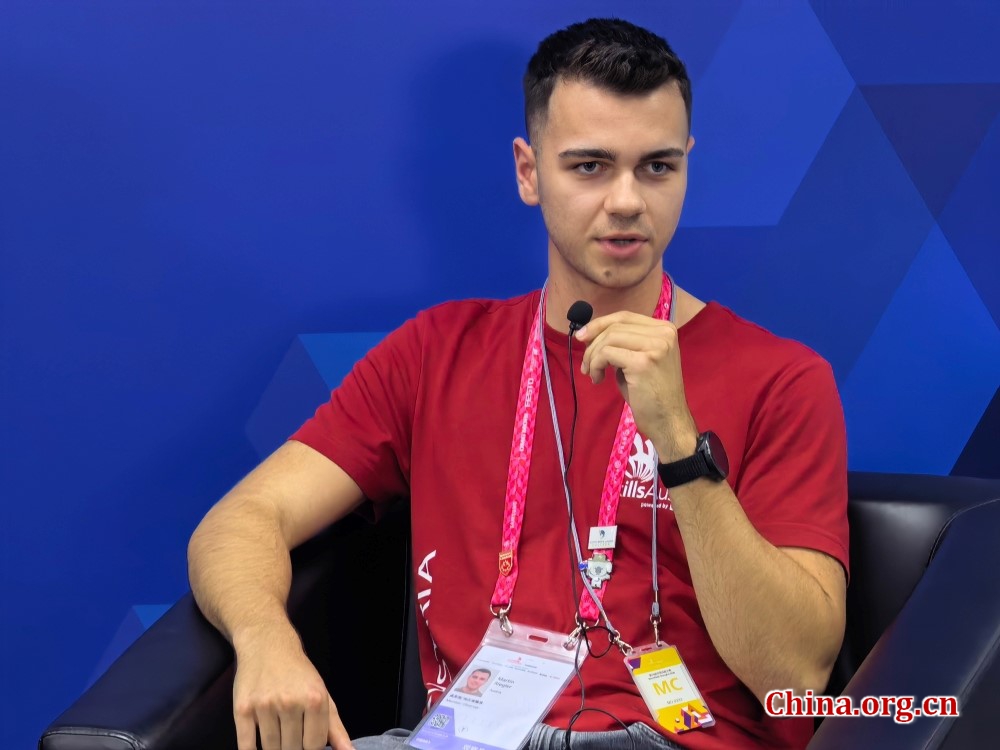
Austrian delegation member Martin Riegler speaks during an interview at the media center of the 48th WorldSkills Competition in Shanghai, Sept. 24, 2026. [Photo by Mi Xingang/China.org.cn]
Martin Riegler, a 2025 EuroSkills silver medalist in industrial control, said that skills competitions give young people a chance to challenge themselves, discover new possibilities and grow both professionally and personally.
That is also where the Austrian delegation sees room for deeper cooperation. Chinese and Austrian experts and competitors have already met through training programs in both countries. The delegation hopes such exchanges will continue beyond WorldSkills and extend to technical standards and long-term ties among young skilled workers as well.


 京公网安备 11010802027341号