 Share:


As Chinese companies seek growth opportunities amid shifting global trade patterns, German management scholar Hermann Simon says specialization, innovation and a long-term commitment to international expansion matter more than size in becoming a global leader.
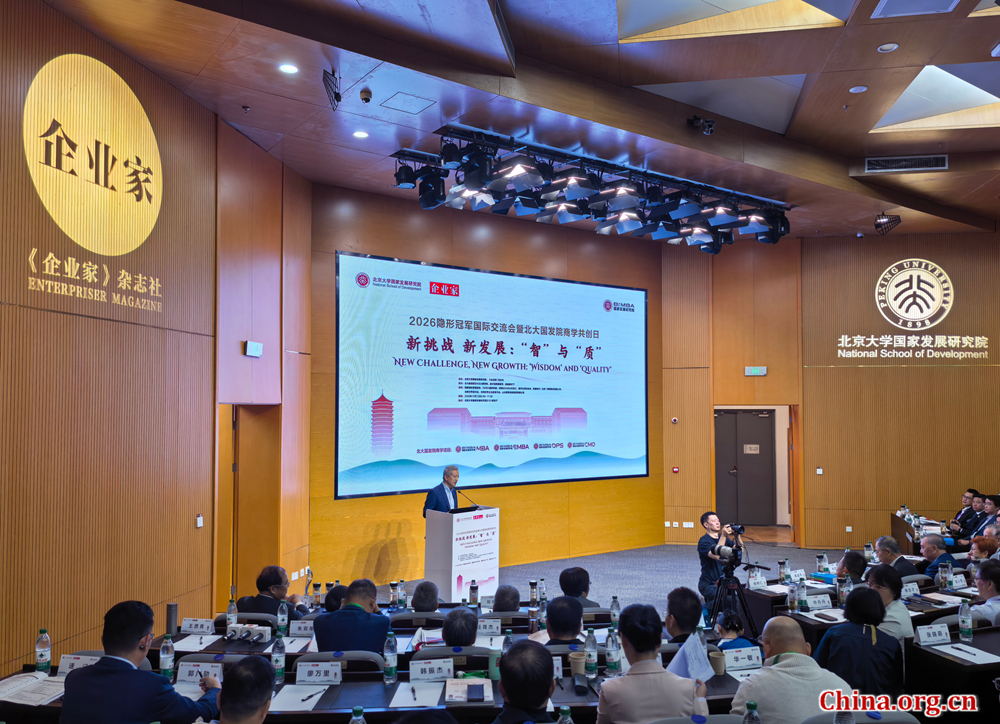
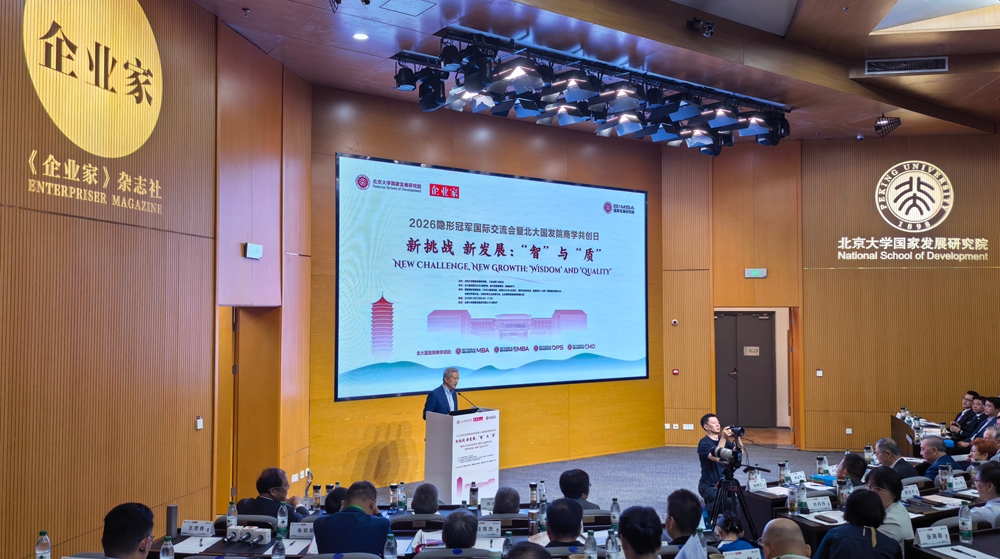
The 2026 Hidden Champions International Exchange Conference takes place at Peking University in Beijing, Oct. 12, 2026. [Photo by Mi Xingang/China.org.cn]
Simon, who coined the term "hidden champions" in 1990 to describe companies that have taken a leading position in their niche markets globally but are not well known to the public, shared these insights at the 2026 Hidden Champions International Exchange Conference, held on Oct. 12 at Peking University in Beijing. Co-hosted by the National School of Development at Peking University and Enterpriser Magazine, the event brought together nearly 500 entrepreneurs, experts and scholars to discuss business challenges and growth strategies under the theme "New Challenge, New Growth: 'Wisdom' and 'Quality.'"
In his keynote speech, Simon outlined seven pillars of success for hidden champions. The pillars are ambition to be the best, focus, innovation, globalization, digitalization, ecosystems and sustainability. Before his speech, Simon spoke with the media about the strategies behind the success of hidden champions.
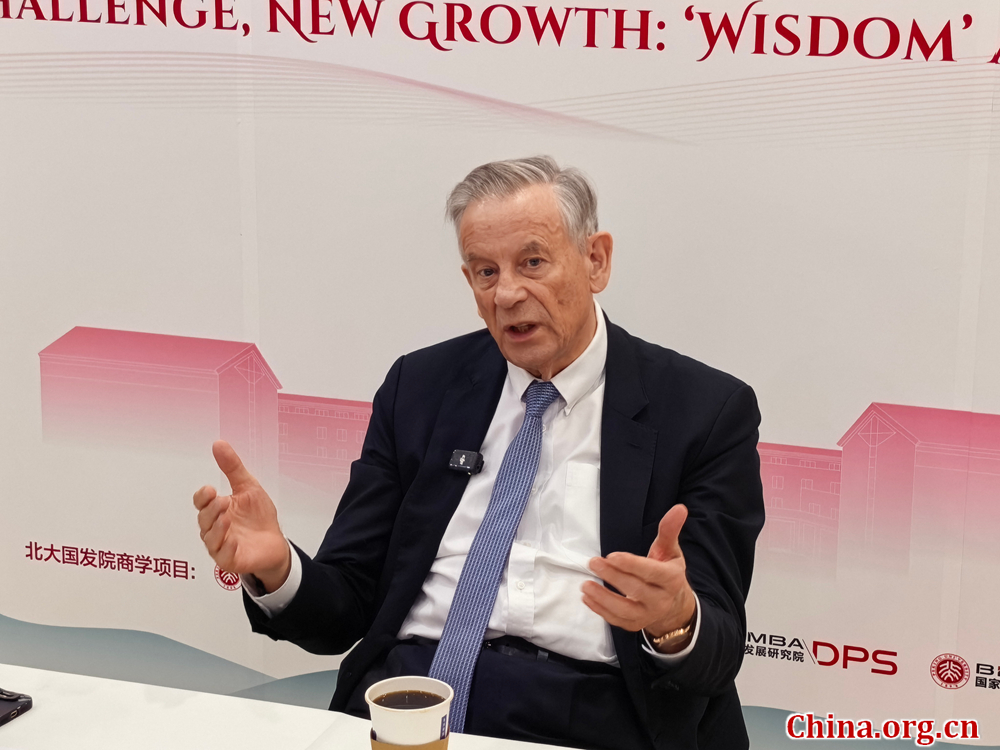
Hermann Simon speaks to the media during the 2026 Hidden Champions International Exchange Conference at Peking University in Beijing, Oct. 12, 2026. [Photo by Mi Xingang/China.org.cn]
"The core is the ambition to be the best in your market," Simon said. "Only focus leads to world class."
For Chinese small and medium-sized enterprises (SMEs), Simon said, the lesson is to resist chasing every emerging trend, identify a niche, compete on value rather than price and expand globally to turn specialized strengths into lasting competitive advantages.
Song Zhiping, president of the China Association for Public Companies, echoed this view in his conference speech, calling on enterprises to concentrate on their core businesses, pursue differentiated development and move toward higher-value products and stronger brands.
Li Wenbo, a partner at Simon-Kucher's Shanghai office, said during a roundtable discussion at the conference that Chinese companies still lag behind German hidden champions in business longevity, international market presence and brand strength. But Chinese enterprises also have advantages in supply chain integration, agile decision-making and access to capital, Li added.
Internationalization is another defining feature of hidden champions. But globalization is changing, and companies increasingly need to complement exports with overseas investment, local production and closer engagement with customers, Simon noted.
He emphasized that international expansion takes time, talent and sustained commitment. Establishing a presence in a foreign market requires more than capital; companies must understand local conditions, build relationships and develop teams capable of operating across cultures.
The experience of German companies in China illustrates the value of this approach. German companies have set up many factories in China, reflecting the importance of the Chinese market, its manufacturing ecosystem and the advantages of being close to customers, Simon said. Manufacturing efficiency, research and development capabilities, and the speed at which new products reach consumers also continue to make China attractive to German businesses, he added.
Beyond commercial factors, established German business communities in cities such as Taicang and Changzhou have helped create familiar social and cultural environments for German companies and employees, he said.
The hidden champions approach offers no shortcut to global leadership. During the conference, Zhu Hongren, executive vice president and secretary-general of the China Enterprise Confederation, also called on SMEs to strengthen their core competitiveness through intelligent transformation, closer integration of technological and industrial innovation, and greater participation in international markets.
As Simon put it, the formula is to be ambitious, stay focused, go global and innovate for customers. For China's SMEs, the challenge is to turn those principles into sustained action and grow from successful exporters into globally connected businesses capable of leading their chosen fields.


 京公网安备 11010802027341号