 Share:


As artificial intelligence advances, its value increasingly depends on how effectively it can be applied to real-world industrial challenges, from improving manufacturing processes to accelerating engineering simulations. At the 2026 World Science and Technology Development Forum (WSTDF) in the southwestern metropolis of Chongqing, being held from Oct. 21-23, experts highlighted both the opportunities AI creates for industry and the need for stronger engineering capabilities to turn technological potential into practical results.
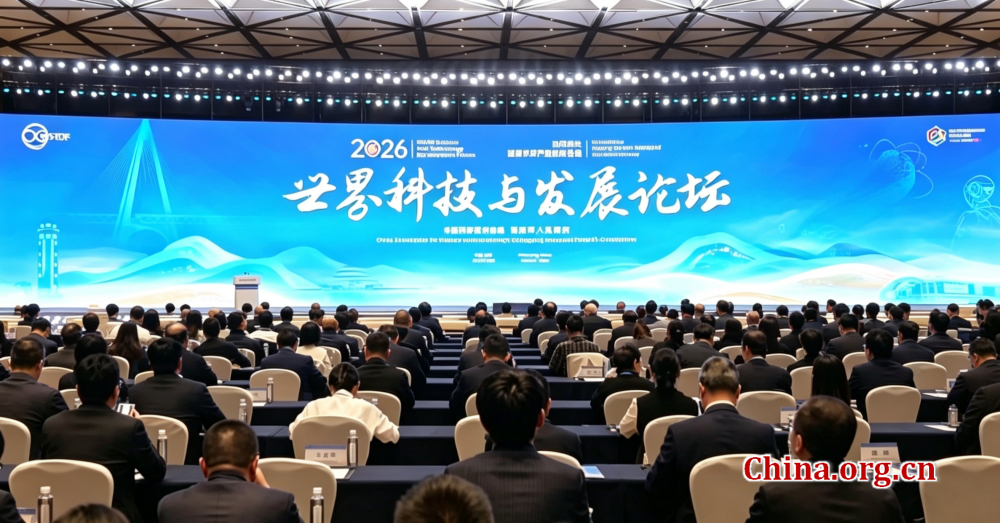
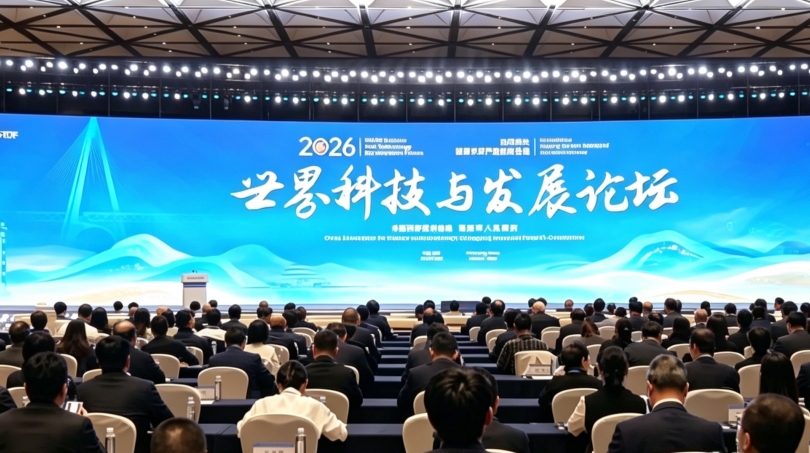
The 2026 World Science and Technology Development Forum (WSTDF) kicks off in Chongqing, Oct. 21, 2026. [Photo/China.org.cn]
The forum opened on Oct. 21, bringing together around 800 guests, including scientists, educators, economists, representatives of international sci-tech organizations, executives of high-tech enterprises and young researchers. Hosted by the China Association for Science and Technology (CAST) and the Chongqing Municipal People's Government, this year's event is themed "Co-evolution: Shaping the New Ecology of the Future Industry."
The 2026 WSTDF features four key topics: "Empowering the Future: Cutting-edge Perception and Digital Cornerstone," "Defining the Future: Smart Products and Advanced Manufacturing," "Reshaping the Future: Green Energy and Low-Carbon Systems," and "Guarding the Future: Global Challenges and Collaborative Governance."
Discussions under the second topic on defining the future focused on how emerging technologies can transform manufacturing and drive industrial development. Twelve parallel forums also took place during the event, covering fields like simulation technology, intelligent manufacturing and engineer capacity building.
In interviews with the forum's participants, several experts shared their perspectives on how these technologies are being developed and applied in practice.
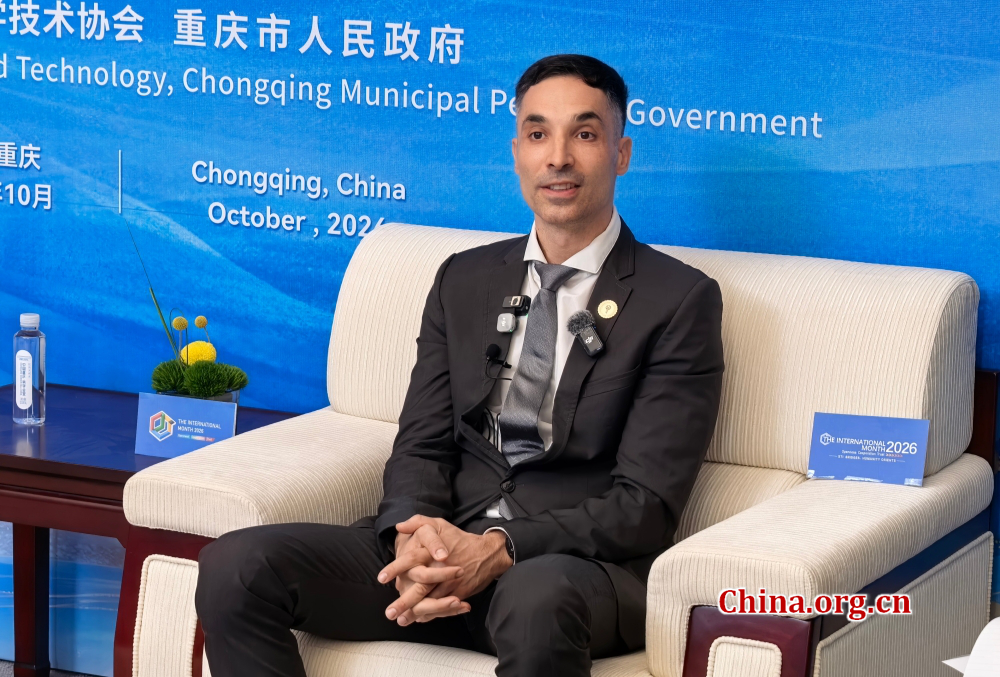
David López-Pérez, dean of the Beihang Valencia Polytechnic Institute, speaks to the media during the 2026 WSTDF in Chongqing, Oct. 21, 2026. [Photo by Mi Xingang/China.org.cn]
David López-Pérez, dean of the Beihang Valencia Polytechnic Institute, sees considerable potential for AI in automotive manufacturing, particularly on the production line. Intelligent systems, including camera-assisted technologies, can help monitor production processes and identify defects, potentially making manufacturing more efficient, he noted.
China's manufacturing base also offers important conditions for AI development, he said. A large number of manufacturers, extensive experience in vehicle production and data generated through industrial activity can provide opportunities to develop, test and improve AI models. Pilot projects can further help turn new ideas into practical applications, he added.
López-Pérez also sees opportunities for China and Spain to work together in areas such as new energy vehicles and robotics. Both countries have relevant industrial and technological capabilities, and their experiences can complement one another as they develop new solutions for manufacturing.
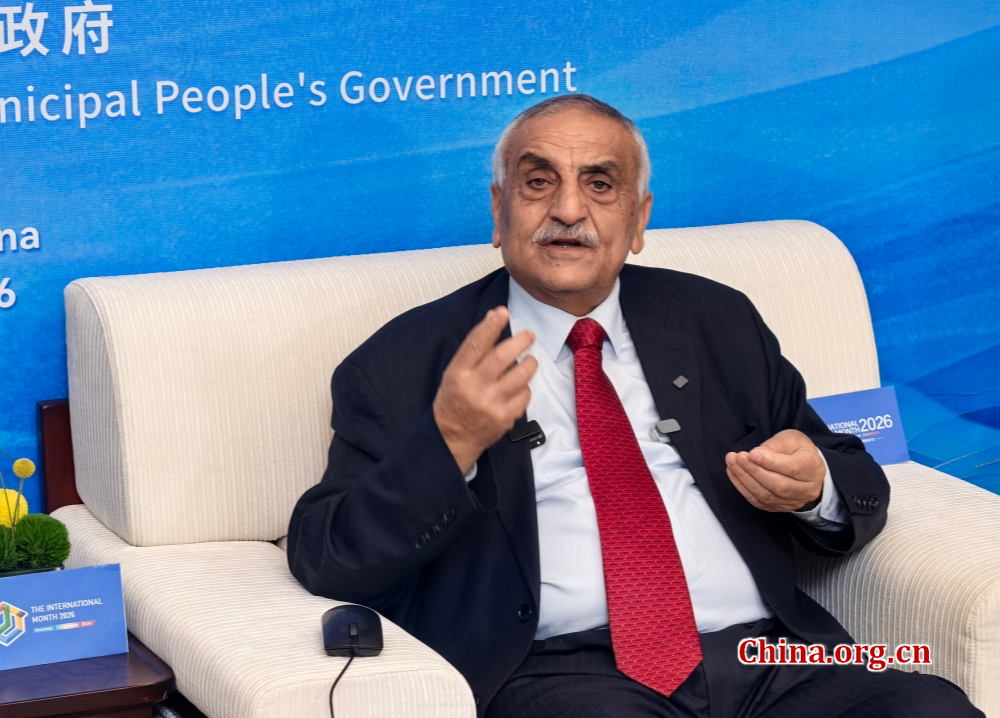
Mohammad S. Obaidat, professor at the University of Jordan and former president of the Society for Modeling and Simulation International, speaks to the media during the 2026 WSTDF in Chongqing, Oct. 22, 2026. [Photo by Mi Xingang/China.org.cn]
The potential of AI extends beyond production lines to the simulation technologies used in research and engineering. Mohammad S. Obaidat, a professor at the University of Jordan and former president of the Society for Modeling and Simulation International, said that AI tools are making simulation development more efficient. He noted that AI can now automatically generate a substantial share of the code used to develop simulators, significantly shortening development time.
AI and machine learning can also help provide data for testing simulation systems, he added. These capabilities could support research, engineering design and industrial applications in fields where testing is costly or complex.
But Obaidat cautioned that a plausible simulation does not necessarily produce scientifically accurate results. Large models still face difficulties in representing complex physical laws and geometries, making human supervision and verification essential, especially in high-risk applications.
Moving AI-driven simulation from laboratories to factories presents further challenges. Reliable, high-quality data is crucial, while computing capacity, common standards and interdisciplinary talent also affect whether the technology can be deployed at scale. Inaccurate or contaminated data can undermine simulation results, and inconsistent standards can make it difficult to use systems across different industrial environments.
This raises the question of how engineers should be educated and trained as AI becomes more widely used, Obaidat noted.
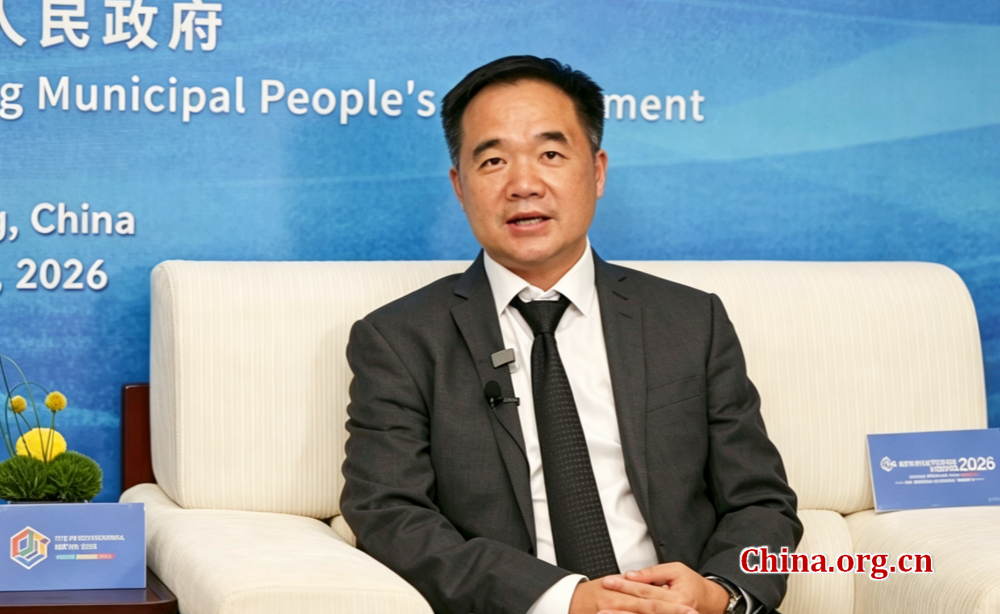
Luo Yuanxin, a mechanical engineering professor at Chongqing University, speaks to the media during the 2026 WSTDF in Chongqing, Oct. 21, 2026. [Photo/China.org.cn]
Luo Yuanxin, a mechanical engineering professor at Chongqing University, argued that engineers need to look beyond individual technical disciplines and understand how different parts of a system fit together. Developing a product such as a drone, for example, may require knowledge spanning mechanical and electrical engineering, materials, AI and communications, he noted.
Luo also emphasized the importance of critical thinking, warning against treating AI-generated answers as established conclusions. As AI makes information easier to obtain, the ability to question, evaluate and apply that information becomes even more important, he said.
This need for sound judgment is particularly important when AI moves from generating information to solving real-world engineering problems. The industrial impact of AI will depend not only on advances in algorithms and computing, but also on reliable data, suitable application scenarios and people capable of making sound engineering decisions.


 京公网安备 11010802027341号