 Share:


Ahead of the APEC summit, China Southern Power Grid took the lead in developing the "Recommended Solutions for Developing New-Type Power Systems Adapted to High Penetration of Variable Renewable Energy," one of the five host-economy voluntary contributions in the energy sector for the 2026 APEC "China Year."
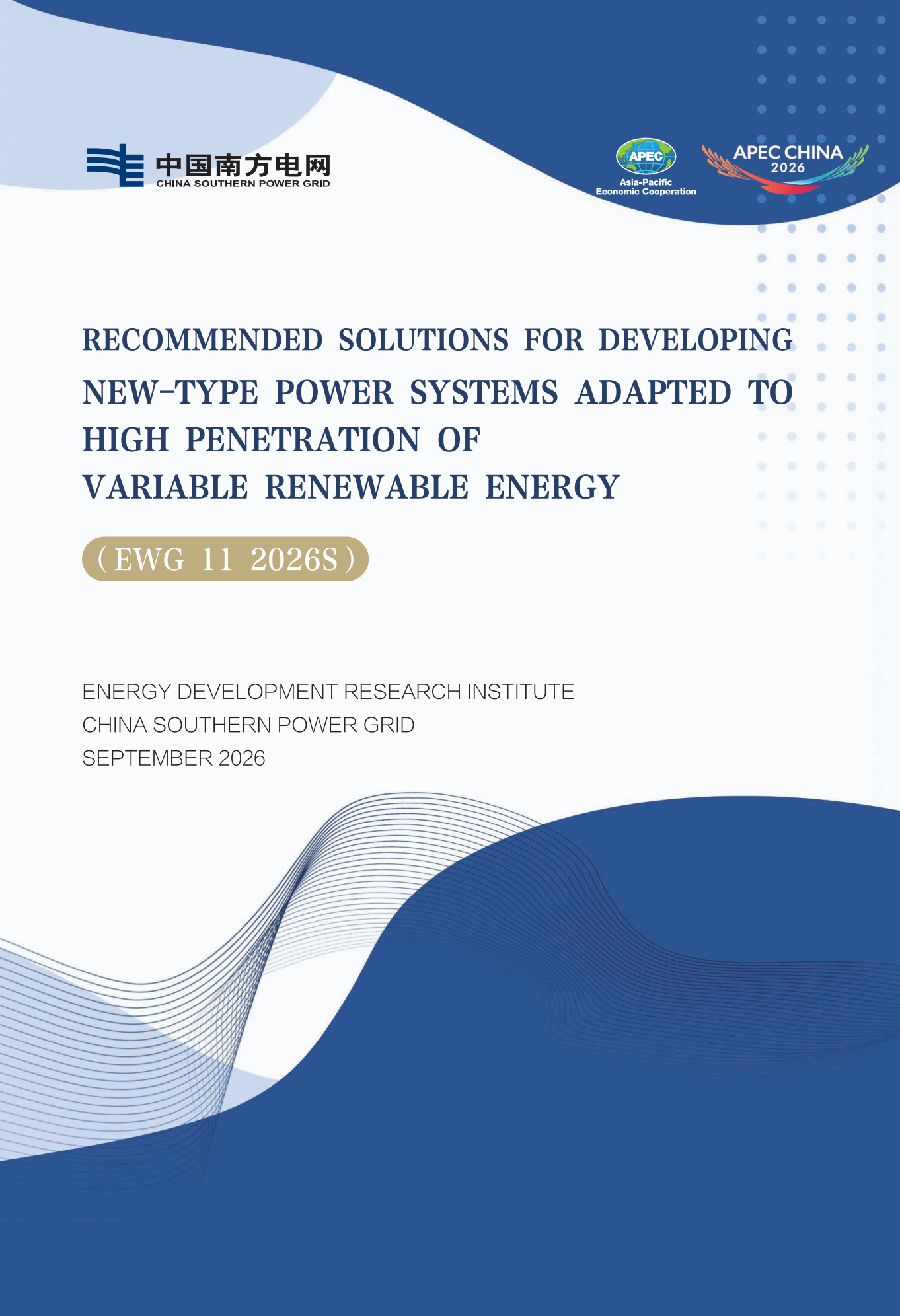
"Recommended Solutions for Developing New-Type Power Systems Adapted to High Penetration of Variable Renewable Energy." [Photo provided to China.org.cn]
Grounded in the realities of energy development across the APEC region, the recommended solutions set out a systematic framework of recommendations across three dimensions—technology, policy and cooperation. Focusing on key issues such as trends in renewable energy development, pathways for building new-type power systems, and coordinated regional energy development, they provide a flexible and scalable set of approaches to building new-type power systems that economies can draw on and combine as appropriate. The recommended solutions draw extensively on China's proven experience in integrating high levels of variable renewable energy into power systems, while taking into account differences among economies in their stages of development and resource endowments. They provide practical guidance for Asia-Pacific economies to advance their energy transitions in a steady and orderly manner and enhance the safe and stable operation of their power systems.
From a technical perspective, the solutions set out an integrated approach featuring "source-grid-load-storage coordination and digital-intelligence technological solutions," spanning five key areas: generation, grids, loads, energy storage, and digital intelligence.
On the generation side, the solutions focus on grid-friendly integration of variable renewable energy and active grid-support technologies. They promote the development and application of technologies such as grid-forming control, voltage and frequency support, and fault ride-through, enabling variable renewable generation to shift from "grid-following operation" to "actively supporting the grid." They also support the development of complementary energy systems integrating wind, solar, hydropower, thermal power and energy storage.
On the grid side, the solutions highlight the role of flexible DC transmission technology in supporting optimal resource allocation across wide areas. They call for strengthened research into key technologies for distribution networks and the deployment of smart microgrids, facilitating the transition from passive distribution networks to active, intelligent ones.
On the load side, the solutions focus on unlocking the potential of demand response, exploring standardized and replicable demand response operating models, and leveraging virtual power plant technologies to enhance capabilities for aggregating and controlling distributed energy resources.
On the energy storage side, the solutions promote the coordinated deployment of a diverse range of technologies, including electrochemical energy storage, pumped-storage hydropower and hydrogen storage, to build a flexible resource system spanning timescales from seconds to seasons. They also call for strengthening the technologies and systems for energy storage operation and management to ensure safe and stable operation.
In terms of digital intelligence, the solutions promote the coordinated planning and development of power infrastructure and digital-intelligence infrastructure, while promoting the deeper application of artificial intelligence in areas such as variable renewable generation forecasting, coordinated operation of source-grid-load-storage systems, and power system security assessment.
This technical approach emphasizes coordinated optimization across generation, grids, loads and energy storage, as well as system-wide empowerment through digital-intelligence technologies. It reflects systems thinking and a holistic perspective.
From a policy perspective, the solutions propose a policy pathway centered on "robust support and inclusive development," highlighting the fundamental role of policy guidance in the transformation of power systems.
On the one hand, the solutions call for research into energy policies tailored to practical needs in renewable energy development and for a more enabling environment for resource development, project investment and implementation, and technology deployment. They also encourage the use of market mechanisms to channel investment towards innovative technologies and promote the research, development and commercial deployment of key technologies.
On the other hand, the solutions identify universal access to electricity services as a key objective, promoting the flexible deployment of distributed energy resources and microgrids in remote areas to ensure that people across different regions and population groups have affordable access to safe, reliable and clean electricity services.
This policy pathway brings together the goals of efficiency and equity. It focuses not only on ensuring that new-type power systems can be successfully developed, but, more importantly, on enabling them to operate reliably and remain sustainable over the long term, so that the benefits of the energy transition are shared broadly across society.
From a cooperation perspective, the solutions propose a cross-regional cooperation approach centered on "mutual learning, mutual benefit and connectivity."
They call on APEC economies, while respecting differences in development stages and national circumstances, as well as each economy's right to make its own choices, to strengthen experience sharing and knowledge exchange in areas such as planning, operation and markets, thereby reducing the need for repeated trial and error.
At the same time, they explore potential pathways for cross-border power interconnection and cooperation on resource complementarity, while supporting economies that have both the necessary conditions and the need to cooperate in areas such as clean energy complementarity, mutual power support at different times, and reserve sharing.
This cooperation framework follows the principles of voluntary, flexible and non-binding cooperation. Rather than seeking a one-size-fits-all model or requiring binding commitments, it aims to translate the resource endowments, technological expertise and institutional strengths of individual economies into regional coordination capabilities, reflecting an open and inclusive approach to cooperation.
Under the guidance of China National Energy Administration, the Energy Development Research Institute, China Southern Power Grid, a member of China's network for participation in APEC energy cooperation, led the development of the solutions, which were implemented through an APEC self-funded project. They constitute one of the five host-economy voluntary contributions in the energy sector for the 2026 APEC "China Year."


 京公网安备 11010802027341号