 Share:


From using artificial intelligence to discover new antibiotics to applying big data to disease prevention, four young scientists recognized at the 2026 World Young Scientist Summit (WYSS) in Wenzhou, Zhejiang province, on Oct. 24, are exploring how research across disciplines can help address some of the challenges facing humanity.
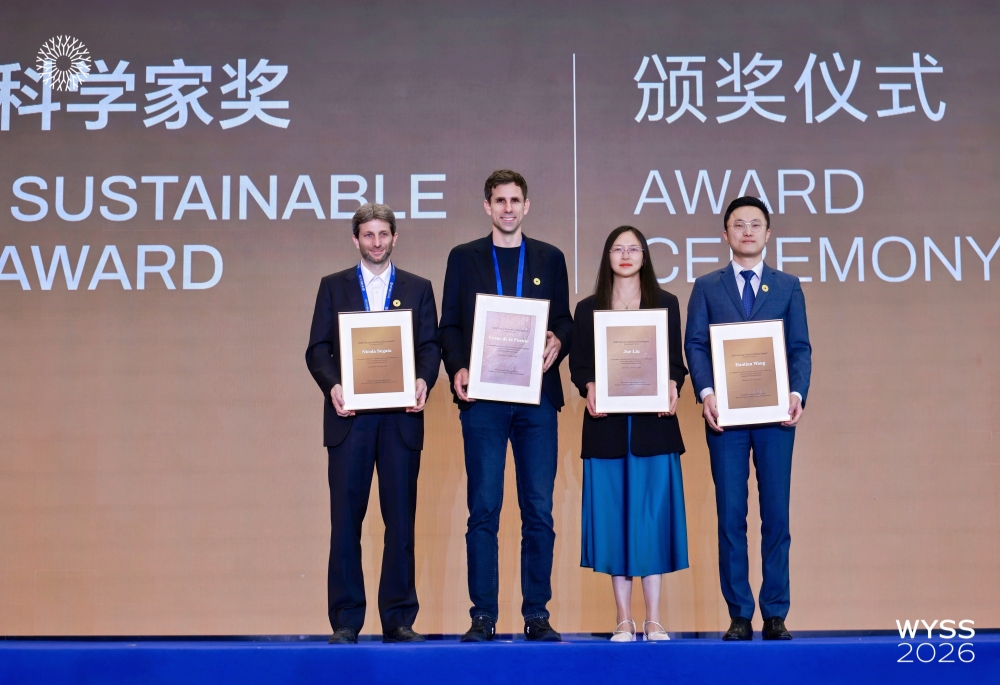
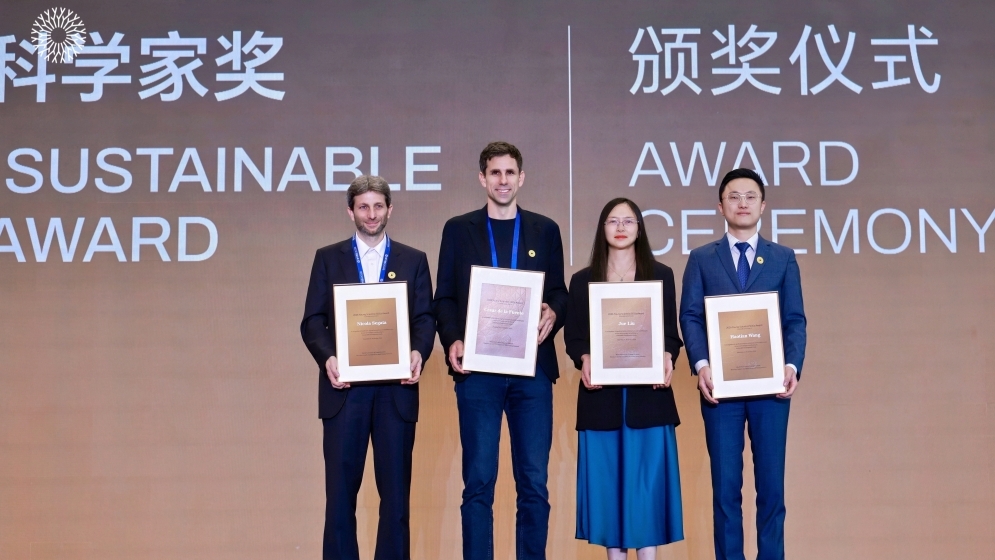
The winners of the 2026 Young Scientist Sustainable Development Goals Award pose on stage at the award ceremony held during the plenary session of the 2026 World Young Scientist Summit in Wenzhou, Zhejiang province, Oct. 24, 2026. [Photo courtesy of 2026 WYSS Organizing Committee]
The 2026 Young Scientist Sustainable Development Goals Award was presented to César de la Fuente, a presidential associate professor at the University of Pennsylvania in the United States; Wang Haotian, a distinguished professor at Tongji University; Liu Jue, a research professor and deputy director of the Department of Epidemiology and Biostatistics at Peking University's School of Public Health; and Nicola Segata, a full professor at the Cellular, Computational and Integrative Biology Department of the University of Trento in Italy.
Each recipient will receive 1 million yuan (about $150,000) in prize money for outstanding contributions in fields ranging from AI-driven biology and electrochemistry to public health data and computational microbiology.
Although their research addresses different problems, the four scientists share a focus on connecting scientific advances with practical needs and on working across disciplines to make that possible.
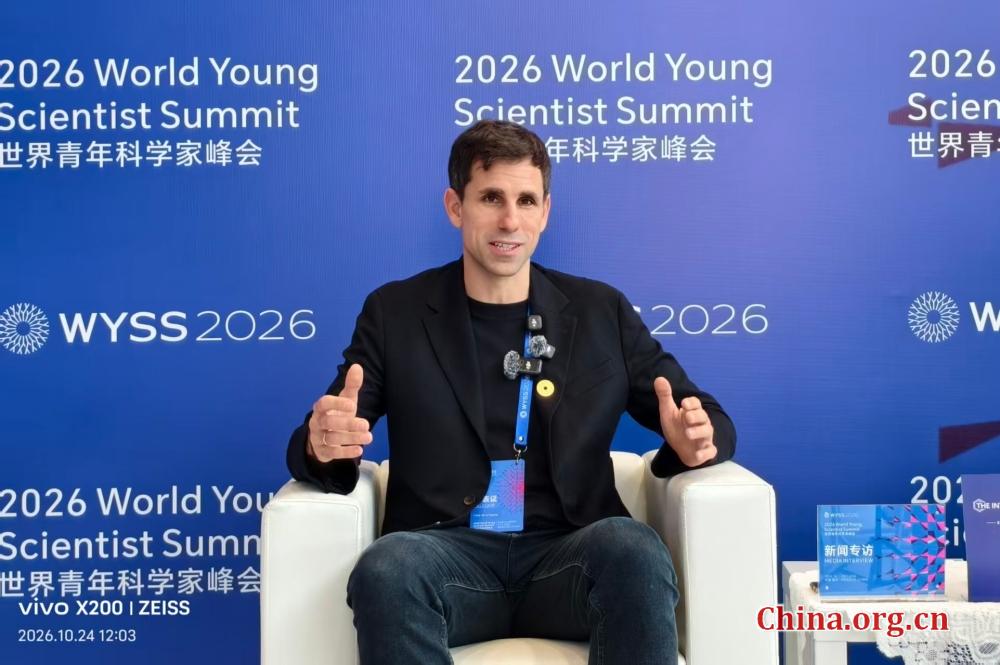
César de la Fuente, winner of the 2026 Young Scientist Sustainable Development Goals Award, speaks to the media during the plenary session of the 2026 World Young Scientist Summit in Wenzhou, Zhejiang province, Oct. 24, 2026. [Photo/China.org.cn]
For César de la Fuente, whose research combines artificial intelligence, engineering and biology, the challenge is finding new ways to combat bacterial infections. His team uses computational methods and machine learning to identify potential antimicrobial compounds and design novel antibiotics, seeking new options as antimicrobial resistance threatens public health.
"We use the power of machines to accelerate discovery in biology and medicine," he said in an interview during the plenary session of the WYSS, noting the urgent need for new antibiotics. His group brings together expertise in fields such as computer science, engineering, biology and chemistry.
"One of the critical goals in order to achieve sustainable development in technology is really integrating concepts from different disciplines," he said. "The greatest advances in science happen at the intersection between fields."
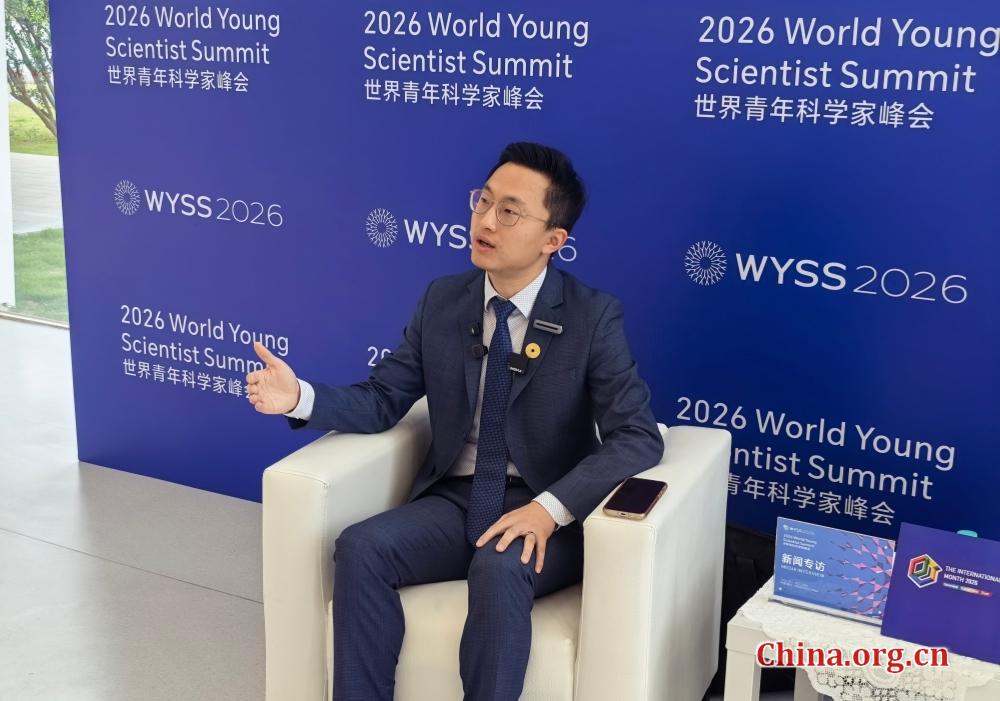
Wang Haotian, winner of the 2026 Young Scientist Sustainable Development Goals Award, speaks to the media during the plenary session of the 2026 World Young Scientist Summit in Wenzhou, Zhejiang province, Oct. 24, 2026. [Photo/China.org.cn]
Wang Haotian's work addresses another pressing challenge: developing cleaner approaches to energy and environmental protection. His research in electrochemistry and catalysis covers carbon capture and utilization, green hydrogen, sustainable fuels and water treatment. His team has explored technologies including electrochemical systems that capture carbon dioxide and convert nitrate pollutants into ammonia while purifying water.
For Wang, scientific discovery must also find a path beyond the laboratory. Research needs sustained support, he said in an interview during the plenary session, from early-stage funding to incubators, demonstration facilities and industrial applications. He is also planning an automated AI-powered electrocatalysis laboratory at Tongji University, reflecting his view that young scientists should engage with AI early and learn how it can advance their own fields.
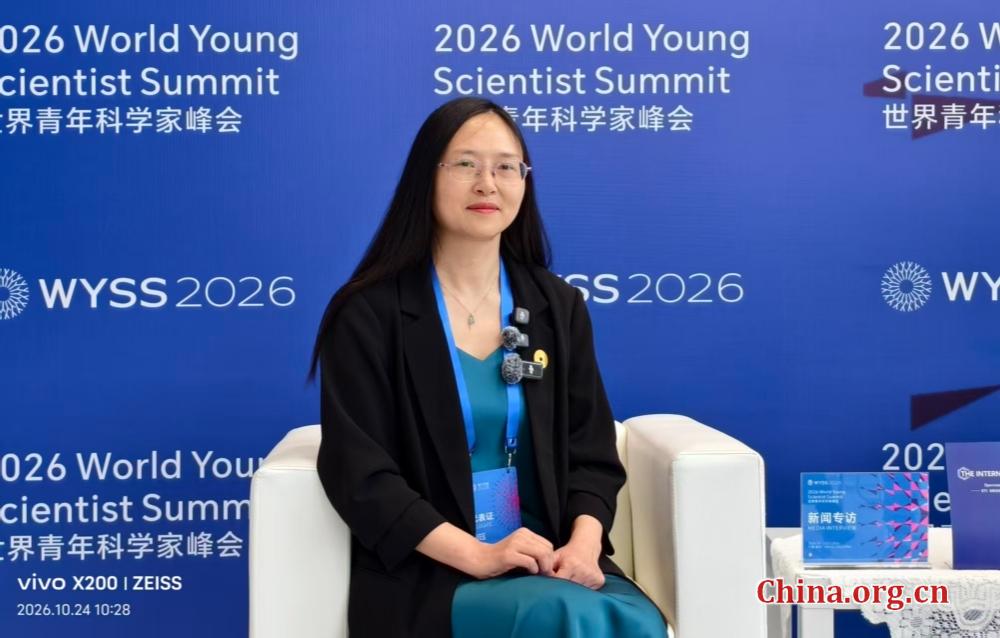
Liu Jue, winner of the 2026 Young Scientist Sustainable Development Goals Award, speaks to the media during the plenary session of the 2026 World Young Scientist Summit in Wenzhou, Zhejiang province, Oct. 24, 2026. [Photo/China.org.cn]
Liu Jue's research is focused on infectious disease epidemiology, public health policy and health data. By combining big-data analysis with AI algorithms, her team seeks to identify unusual signals that could warn of emerging outbreaks before they escalate.
Preventing the next pandemic is a major scientific challenge that requires generations of researchers to work together, Liu said in an interview during the plenary session. With modern transport and population mobility enabling pathogens to spread more rapidly across borders, she hopes to turn research findings into public health policies and practical tools that can reach communities in China and elsewhere, particularly in developing countries.
Her goal, she said, is to make effective public health solutions more accessible and help ensure that no one is left behind in the pursuit of better health.
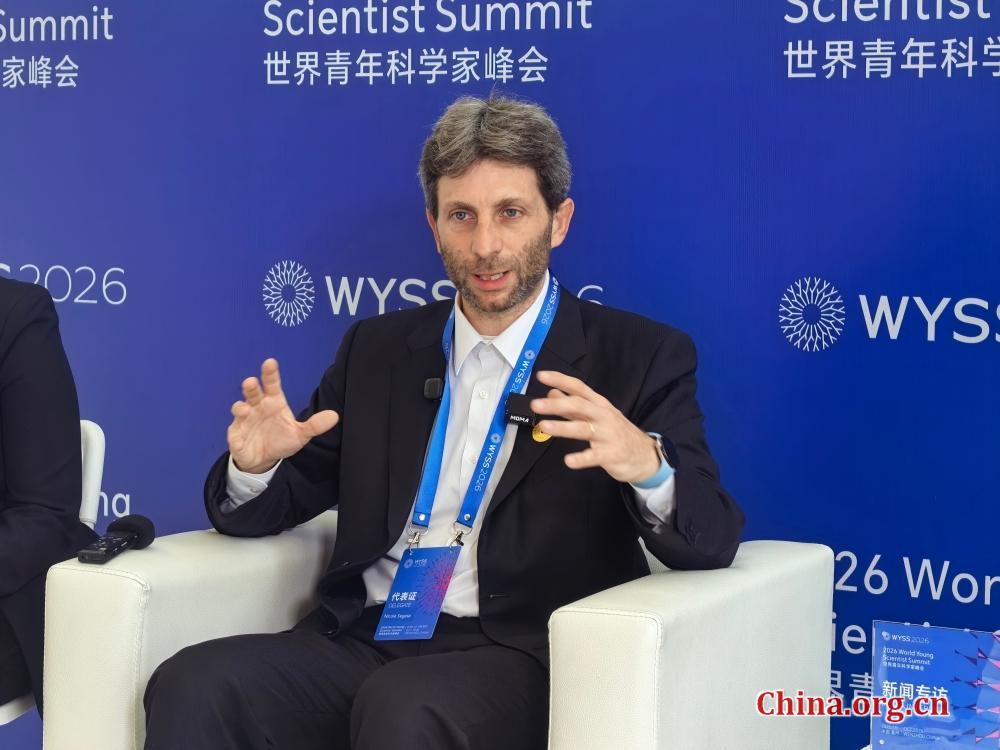
Nicola Segata, winner of the 2026 Young Scientist Sustainable Development Goals Award, speaks to the media during the plenary session of the 2026 World Young Scientist Summit in Wenzhou, Zhejiang province, Oct. 24, 2026. [Photo/China.org.cn]
Nicola Segata, meanwhile, uses computational metagenomics, machine learning and other quantitative approaches to study the human microbiome — the communities of microorganisms living in and on the human body. His research examines microbial diversity and transmission, as well as links between the microbiome and conditions including cancer, infections and metabolic diseases.
Biology increasingly depends on methods from statistics, computer science and AI, Segata said in an interview during the plenary session. Yet technology alone is not enough. Scientists from different fields must develop a shared language, exchange ideas and combine their expertise to tackle complex problems, he added.
As he put it, no one can know enough to tackle these challenges alone, and scientists need to come together, exchange ideas and work on the big problems collectively.
Established in 2023, the Young Scientist Sustainable Development Goals Award recognizes young researchers whose work contributes to achieving the United Nations sustainable development goals. This year, it received 347 valid applications, a 70% increase from the previous year.
The award's growing reach reflects the importance of supporting research that addresses shared challenges and helping promising discoveries move toward real-world applications. Together, the recipients' work highlights the value of interdisciplinary research and international collaboration in tackling complex global issues.


 京公网安备 11010802027341号