 Share:


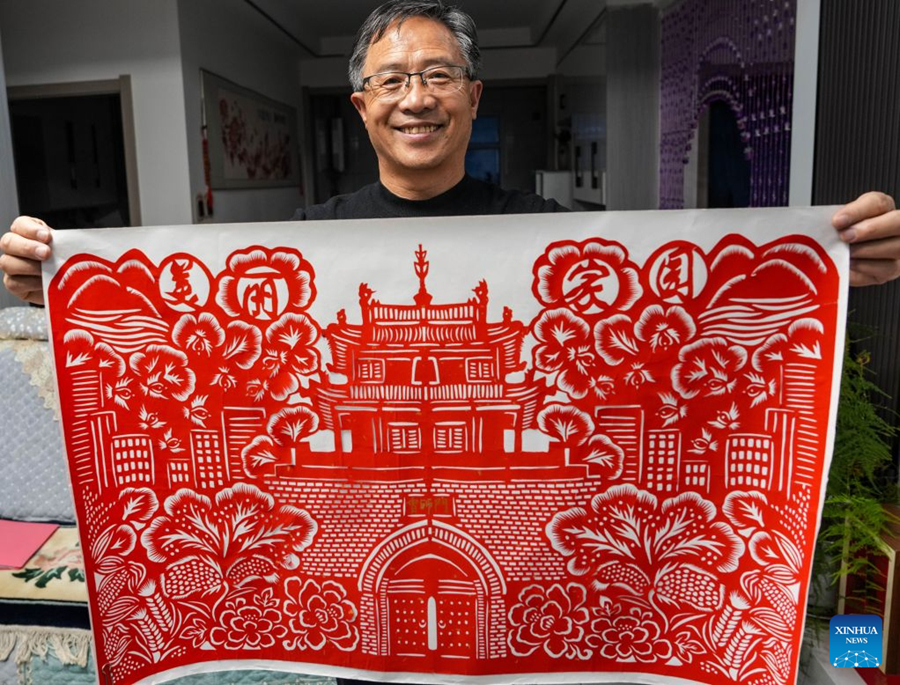
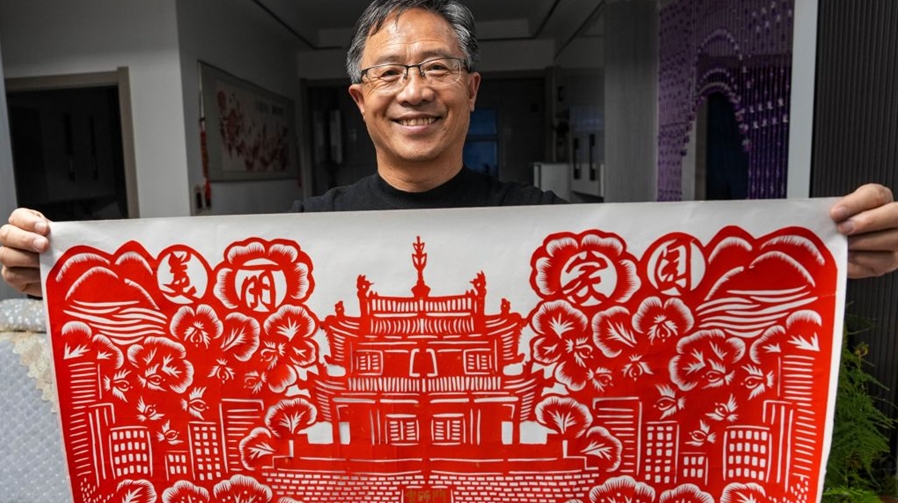
10月16日,在甘肃省白银市会宁县,王新胜展示自己创作的会师门剪纸作品。[新华社记者 郎兵兵 摄]
Wang Xinsheng shows his Long March-themed paper-cutting work in Huining County, northwest China's Gansu Province, Oct. 16, 2026. (Xinhua/Lang Bingbing)
56岁的王新胜是会宁剪纸的市级代表性传承人。多年来,他通过剪纸这门古老的手艺展现长征故事。会宁剪纸造型生动、内容丰富,2011年被列入第三批国家级非物质文化遗产扩展项目名录。
Wang Xinsheng, 56, a representative inheritor of Huining paper-cutting, has spent years using the traditional art form to tell stories of the Long March. Known for its vivid designs and diverse themes, Huining paper-cutting was listed as a national intangible cultural heritage in 2011.
王新胜自幼跟随母亲学习剪纸技艺,花卉草木、飞禽走兽、戏曲人物,都在他的指尖活灵活现。参加工作后,他的创作逐步转向现实题材,尤其倾心于红色故事。一段段发生在会师圣地会宁的长征记忆,被他用剪刀一一定格。
Wang learned paper-cutting from his mother at an early age, developing his skills through works featuring flowers, animals and traditional opera characters. After he began working, he gradually shifted his focus from traditional subjects to real-life themes, particularly stories of the Long March associated with Huining.
2025年,他历时数月完成15米剪纸长卷《长征》,将长征路上的大事件、长征诗词与传统花鸟纹样巧妙融合。这幅长卷被会宁县文化馆收藏,并作为纪念红军长征胜利90周年的展品展出。
In 2025, Wang spent several months creating a 15-meter-long paper-cutting scroll titled "The Long March." The artwork combines major events of the historic journey with poetry and traditional floral and bird patterns. It is now in the collection of the cultural center of Huining County, and has been exhibited to mark the 90th anniversary of the victory of the Red Army's Long March.
剪纸在王新胜的家族代代相传,现在他又把这门手艺教给子女和孙辈。“会宁剪纸是国家级非物质文化遗产保护项目,我们剪纸手艺人都有义务把它传下去。”王新胜说。
Today, Wang is passing the craft to his children and grandchildren. "As paper-cutting artisans, we have a responsibility to keep this tradition alive," he said.


 京公网安备 11010802027341号