 Share:


China will work to enhance small and medium-sized museums, upgrading their collections, exhibitions, educational programs and staffing to make museums key providers of cultural services at the community level during the 15th Five-Year Plan period (2026-2030), said Deng Chao, vice administrator of the National Cultural Heritage Administration (NCHA), at a press conference in Beijing on Oct. 20.
During the 14th Five-Year Plan period (2021-2025), the number of museums in China increased from 5,788 to 7,188, with museums nationwide receiving a total of more than 6.2 billion visits, according to Deng.
While traveling to a city for a museum exhibition has increasingly become a cultural phenomenon, highlighting the growing role of museums in people's lives, disparities in museum development have also become more apparent, Deng said.
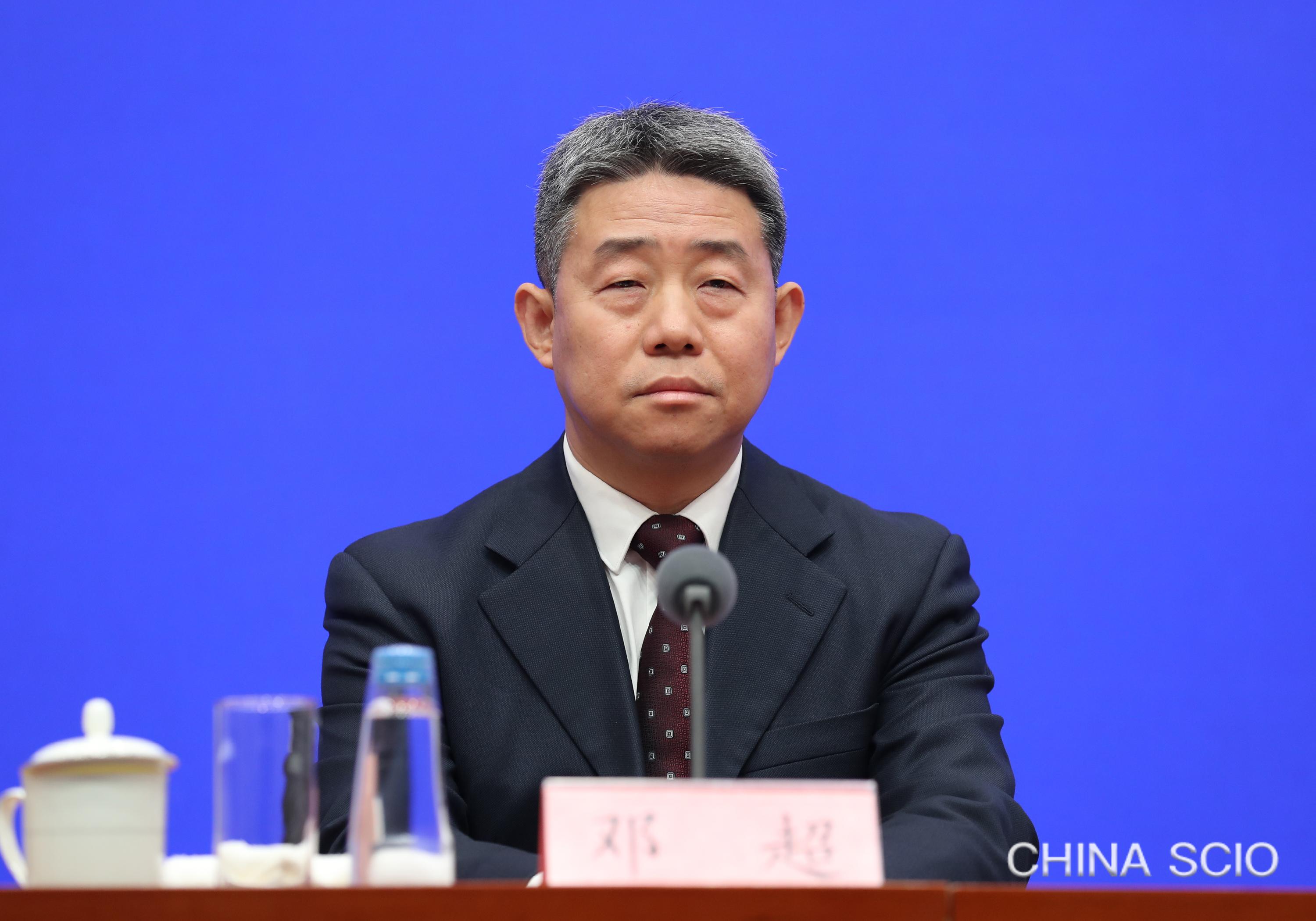
Deng Chao, vice administrator of the National Cultural Heritage Administration, attends a press conference in Beijing, Oct. 20, 2026. [Photo by Xu Xiang/China SCIO]
Experts said that museum collections are one key area where small and medium-sized museums still lag significantly behind larger institutions.
Zhu Bing, former director of the Culture Office of the Education, Science, Culture and Public Health Committee of the National People's Congress, said that small and medium-sized museums face gaps in several areas, including the registration and documentation, provenance checks and authentication, and digitization of their collections. Their day-to-day management systems also need improvement.
Making full use of their collections through exhibitions, research, cultural and creative products, and online services is another aspect where further progress is needed, Zhu said.
As collections are the foundation of a museum and the basis for all its activities, Deng said that the NCHA will launch the second national survey of movable cultural relics, and strengthen inventory-taking, documentation, and grading of collections in state-owned museums. It will also work to restore precious cultural relics in museum collections, directing more resources toward the conservation of the artifacts themselves.
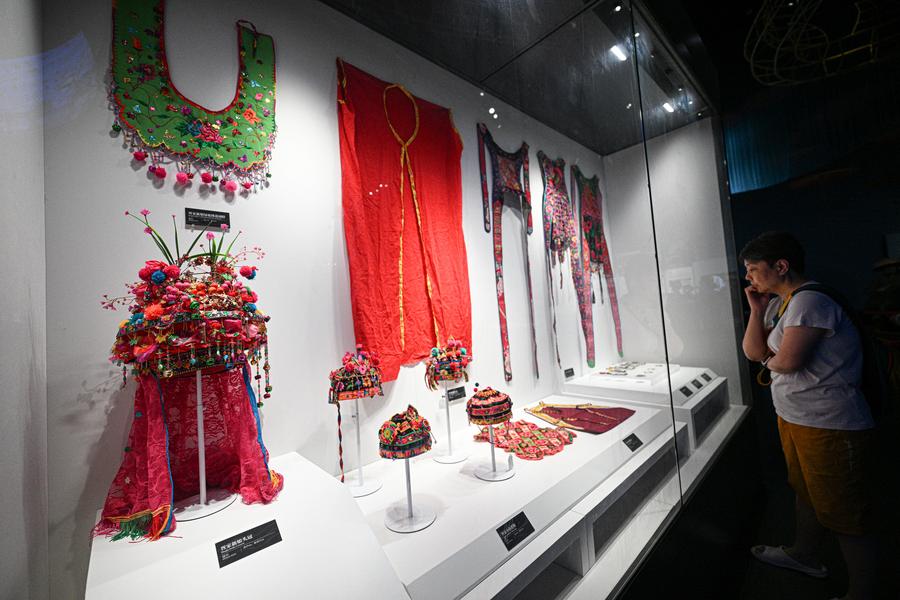
A visitor studies the wedding attire of the Tanka people at Hainan Tanka Museum in Lingshui, southern China's Hainan province, May 13, 2025. [Photo/Xinhua]
Lu Qiong, vice president and secretary-general of the Chinese Society of Cultural Relics, said that some museums may be small in scale, but their collections and exhibitions have distinctive features.
However, Lu said, due to their limited collections and influence, small and medium-sized museums often receive insufficient attention and policy support, lack professional staff, and face severe funding shortages for cultural relic conservation, scientific research, exhibitions and educational programs, as well as day-to-day management and operations.
In September, the Chinese Society of Cultural Relics held an academic seminar in Huangshi, Hubei province, on the protection and preservation of industrial heritage.
"At the seminar, we took note of Huangshi Museum, which showcases rich mineral resources and long history of mining and metallurgy, reflecting distinctive local cultural heritage," Lu said.
However, the museum's limited exhibition space makes it difficult to fully present research findings and physical evidence documenting the development of modern Chinese industry in Huangshi, she said.
In terms of collections, large-scale museums can support small and medium-sized ones by opening up their collections and fostering collaboration, said Ling Ming, curator of Beijing Lu Xun Museum.
Ling said that within the bounds of existing regulations, large specialized museums can share information about their collections and produce replicas for smaller museums, enriching their exhibitions and collections while supporting their research needs and meeting local demand for museum visits.
In this regard, Beijing Lu Xun Museum maintains close exchanges and cooperation with smaller museums of a similar type, Ling said, with support including providing digital images of its collections, assisting with the reproduction of artifacts for exhibitions, and sharing experience in the development and use of its smart collection management platform with museums conducting research visits.
In addition, exhibitions offer another avenue for cooperation among museums, Ling said. Large museums can select exhibitions from their established programs that are suitable for smaller museums and take them on tour, enriching the latter's exhibition offerings and attracting more visitors.
For example, Beijing Lu Xun Museum has provided a series of exhibitions, including "Lu Xun's Reading Life," free of charge to small and medium-sized museums across the country. This initiative has established a recognizable touring exhibition brand for the museum and extended the reach of famous Chinese writer Lu Xun's legacy and the spirit of the New Culture Movement.
For improving the museum development framework, as mentioned at the press conference, efforts will be made on promoting differentiated development by clarifying each museum's role and distinctive features, thus fostering a more comprehensive museum system.
To support the more than 6,000 small and medium-sized museums across China, the NCHA will also optimize resource allocation, pilot a museum support mechanism, and strengthen exchanges and cooperation among museums, bringing high-quality exhibitions directly to local communities, according to Deng.


 京公网安备 11010802027341号