 Share:


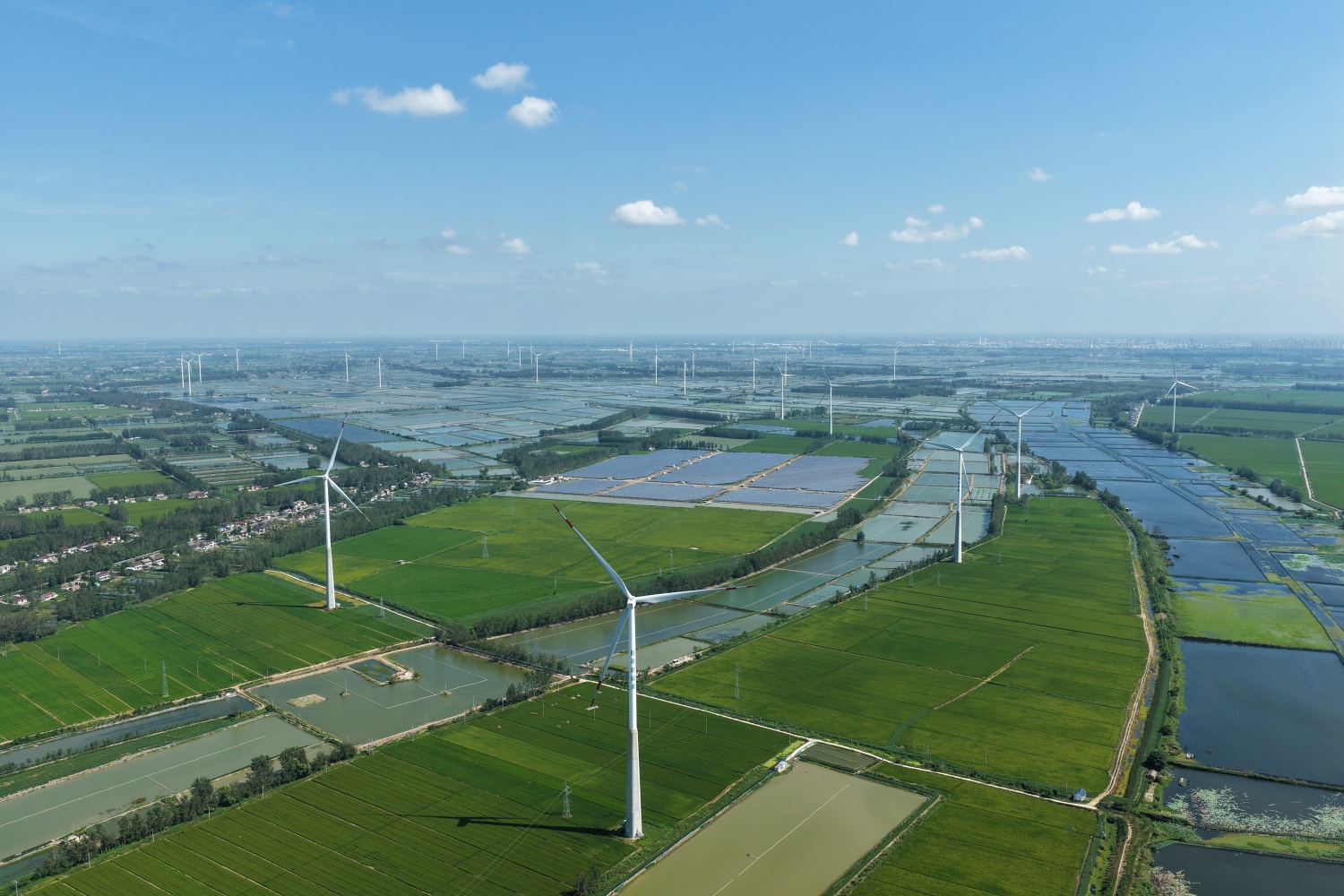
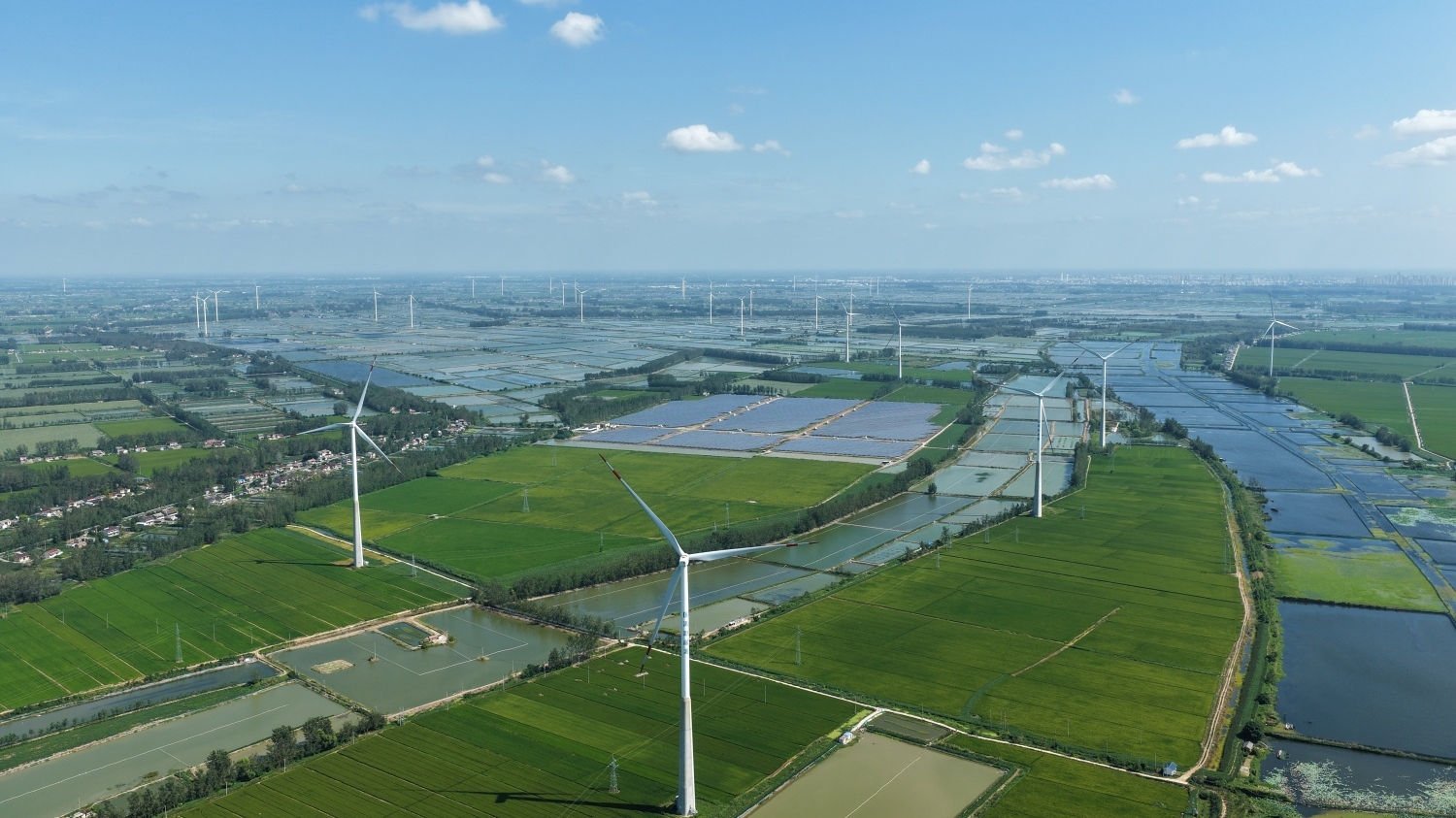
View of a wind farm in Huai'an city, Jiangsu province, Sept. 9, 2026. [Photo/Xinhua]
Following a notably warm year in China in 2025, marked by a record number of hot days, a new report launched at Tsinghua University on Oct. 29 highlights the country's dual strategy to combat climate-related health risks.
Building on last year's city-level analysis, the annual "China report of the Lancet Countdown on health and climate change," places individual health at center stage, showing that climate change has moved from an abstract threat to a direct burden on daily life.
The report also documented second-highest frequency of protracted extreme heat events, record precipitation and rain-season duration in the north and the wettest autumn on record in the west in 2025.
These conditions translated into tangible human costs, including an average of 47.7 lost working hours per worker last year and a cumulative average of 1,361 minutes of annual sleep loss per person from rising nighttime temperatures from 2015 to 2025, the report said.
"Heat no longer shows up as a national death toll — it shows up as a lost workday, a broken night's sleep, a vulnerable neighborhood," said Cai Wenjia, director of the Lancet Countdown Asia Centre at Tsinghua University.
To counter these threats, China is scaling up its defenses. According to the report, health-risk forecasting and early warning coverage for heatwaves expanded to 20 provinces and 141 cities across the country.
Simultaneously, China's mitigation efforts are paying off. According to the 2026 Ministry of Ecology and Environment report on China's policies and actions for addressing climate change, in 2025, carbon dioxide emissions per unit of GDP lowered by 17.7% compared to 2020.
Lower emissions have also improved air quality, preventing an estimated 185,374 premature deaths between 2015 and 2023, the Lancet report said.
"Adaptation protects people today; the first decline in carbon emissions shows positive momentum toward a long-term solution," Cai added.
"If extreme is becoming the new normal, protecting health must become the new normal of climate action," said Martin Taylor, the World Health Organization representative to China.
"China's experience and solutions can make an important contribution beyond its borders," he added.
The launch event also featured two multisector roundtables on turning research into practice. Participants discussed concrete measures to protect against emerging compound climate-health risks and new ways to drive sustainable investment into climate-resilient healthcare.
The report was released ahead of the U.N. climate change conference, COP31, which will be held in Antalya, Türkiye, this month. Health has been designated a top priority at the conference.


 京公网安备 11010802027341号