 Share:


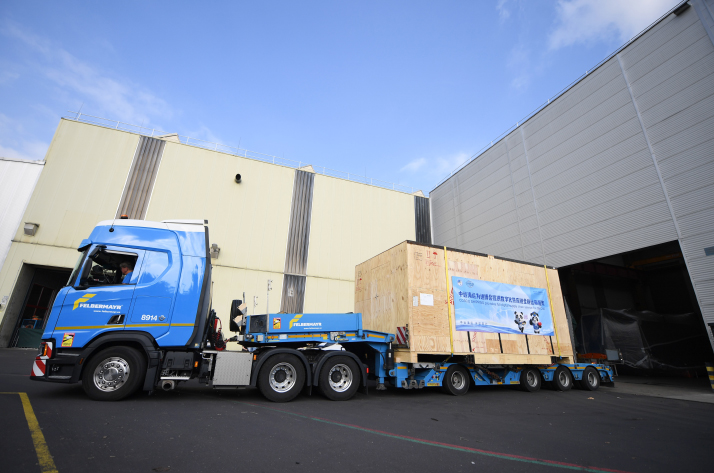
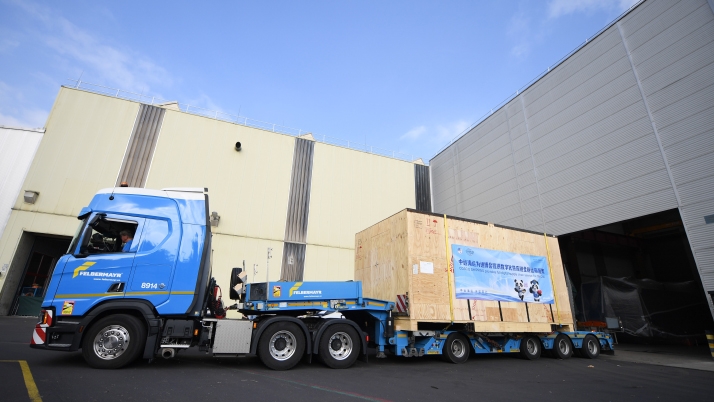
Equipment from Austrian machine tooling manufacturer WFL Millturn Technologies is loaded in Linz, Austria, on August 7, becoming the first exhibit to be shipped to the Ninth China International Import Expo, which takes place in Shanghai on November 5-10. [Photo/Xinhua]
For decades, international trade was largely designed by and for large multinational corporations. Equipped with massive capital, far-reaching supply chains and specialized legal and finance teams, they captured the vast majority of the value created by global commerce. Small and medium-sized enterprises, especially those in the Global South, found themselves locked out of this architecture, operating on the margins of global wealth creation.
China's economic engagement offers an alternative model: expanding the total volume of international trade by directly connecting more primary producers with consumers in other countries. At the center of this effort is the China International Import Expo (CIIE). By welcoming overseas businesses into China's vast domestic market, the expo creates an accessible entry point for smaller enterprises. The true long-term objective, however, extends beyond the exhibition floor. It is about turning initial connections into resilient businesses, better-paying jobs and sustainable prosperity across the Global South.
Launched in Shanghai in 2018, the CIIE is the world's first national-level exposition dedicated exclusively to imports. The expo serves as a structured gateway for foreign exporters to establish direct commercial ties with Chinese purchasers.
The expo's ninth edition, held on November 5-10 at Shanghai's National Exhibition and Convention Center, follows the launch of China's 15th Five-Year Plan (2026-30). Over the last eight years, the CIIE attracted participants from more than 180 countries, regions and international organizations, involving over 27,000 businesses, which have brought over 3,400 new products and services. Crucially, nearly 13,000 micro, small and medium-sized enterprises from around the globe have used the event to establish their presence in China.
The 2026 expo, themed New Era, Shared Future, continues to focus on inclusive growth through dedicated zones for developing economies and direct support for the least developed countries. Coupled with China's zero-tariff framework for the 53 African countries with which it has diplomatic ties, the expo lowers formal trade barriers, helping smaller producers overcome the initial hurdles of international market entry.
The landscape of international business is shifting dramatically. Where global expansion once required establishing local headquarters and securing heavy capital investment, a powerful triad of digital tools, physical infrastructure and modernized payments now enables smaller enterprises to operate globally with lean resources.
Digital platforms and targeted discovery
Digital tools, ranging from social networks and specialized e-commerce marketplaces to trade expos, allow small producers to identify niche affinity groups overseas without committing to expensive international marketing campaigns.
A clear illustration of this dynamic emerged at the inaugural 2018 CIIE, where Syrian entrepreneur Muhannad Shakally introduced traditional laurel and olive oil soap to Chinese consumers. The rapid rise in demand that followed showed how a distinct regional product could build a loyal customer base thousands of miles away without relying on a traditional corporate distribution footprint. The same pathway opens doors for African agricultural cooperatives, Asian craft makers and Latin American specialty food producers, allowing them to test international demand and scale directly based on real consumer interest.
Physical corridors and value addition
Finding buyers is only half the equation; goods must also reach their destination reliably and affordably. Over the past two decades, transport investments connected with the Belt and Road Initiative (BRI), including modernized ports, rail freight corridors and streamlined customs posts, have brought previously isolated areas of the Global South into international transit channels. (The BRI is a China-proposed initiative to boost connectivity along and beyond ancient Silk Road routes—Ed.)
Exporters in Côte d'Ivoire, for example, can leverage these logistics networks and preferential tariffs to move cocoa, coffee and cashews into East Asian markets far more efficiently. Transport links alone, however, are not enough to guarantee prosperity. To retain a greater share of value domestically, exporting nations must pair improved logistics with local processing, refined packaging and regional branding — ensuring that value creation remains within the communities that cultivate the goods.
Frictionless payments
Historically, international settlement was an expensive bottleneck for small enterprises, as currency conversion fees, bank delays and complex documentation continually eroded profit margins.
The growth of digital financial services, direct currency clearing systems, and flexible financial technology (fintech) platforms, like mBridge, has streamlined cross-border transactions. (Launched in 2021, mBridge is a central bank digital currency initiative for international trade—Ed.) By offering lower fees and faster settlement times, these tools allow smaller enterprises to conduct international business simply and without the overhead of traditional corporate trade financing.
While physical infrastructure and digital platforms provide the hardware for modern trade, sustaining long-term growth requires two essential soft capabilities: cultural adaptation and regulatory alignment.
Cultivating cultural resonance
Exporting successfully requires far more than basic translation. Consumer behavior is rooted in local history, aesthetic preferences, gifting customs and societal norms.
To establish lasting brand value in a market like China, foreign businesses must understand how their products fit into daily routines and seasonal traditions. Conversely, Chinese enterprises operating in Africa, Asia or Latin America face the exact same requirement. Companies that invest in understanding cultural nuance can differentiate their products on quality, identity and relevance rather than competing solely on price.
Conflicting national regulations often present the highest hurdle for small exporters, forcing them to undergo redundant testing and certification for every border they cross.
Governments can reduce this burden by establishing compatible product standards, recognizing equivalent testing procedures and simplifying trade documentation. Frameworks like the Regional Comprehensive Economic Partnership (RCEP) and the African Continental Free Trade Area (AfCFTA) demonstrate how shared trade rules build regional integration. (The RCEP is the world's largest free trade deal to date, comprising 10 Association of Southeast Asian Nations (ASEAN) member states — Brunei, Cambodia, Indonesia, Laos, Malaysia, Myanmar, the Philippines, Singapore, Thailand and Viet Nam, and their five major trading partners, namely, China, Japan, the Republic of Korea, Australia and New Zealand; the AfCFTA pact aims to create a single continental market to expand trade in goods and services across Africa—Ed.) Expanding these mutual-recognition models across South-South trade corridors will allow small producers to "test once and export everywhere," cutting compliance costs while preserving public safety and quality standards.
Opportunities for the Global South
The CIIE demonstrates how access to a large domestic market can serve as an engine for international development. But, the expo's larger value lies in the productive capacity, business networks and regional capabilities that remain long after the event concludes.
China offers expansive consumer demand, manufacturing capacity, logistics investment and digital architecture. In turn, other developing economies bring rich agricultural heritage, natural resources, specialized goods and emerging consumer markets.
When international trade moves away from zero-sum competition toward shared infrastructure, lower transaction costs and mutual market access, the overall economic pie expands. The ultimate measure of success will be how these interconnected platforms allow small businesses across the Global South to build sustainable enterprises, generate fulfilling jobs and secure long-term prosperity.
The author is a U.S. commentator and senior fellow with the Center for International Governance Innovation.


 京公网安备 11010802027341号