 Share:


There are films about mountains, and then there is "Everest: The Other Side," a film about the grandeur of the world's highest mountain and a human story about love and loss, as well as the dedication and courage to get back up from the darkest time in one's life.
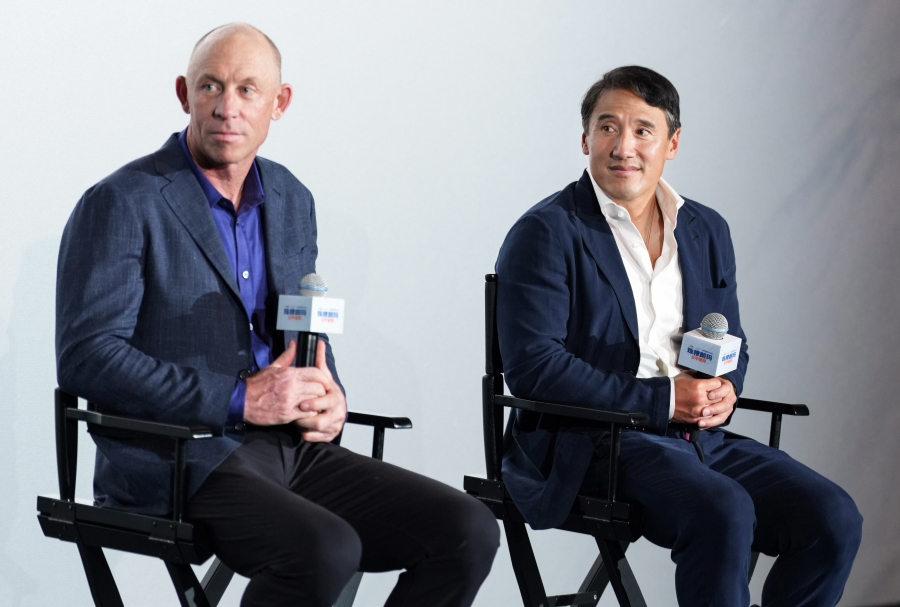
Jim Morrison and Jimmy Chin attend the China premiere of "Everest: The Other Side" in Shanghai on Nov. 5, 2026. [Photo courtesy of National Geographic]
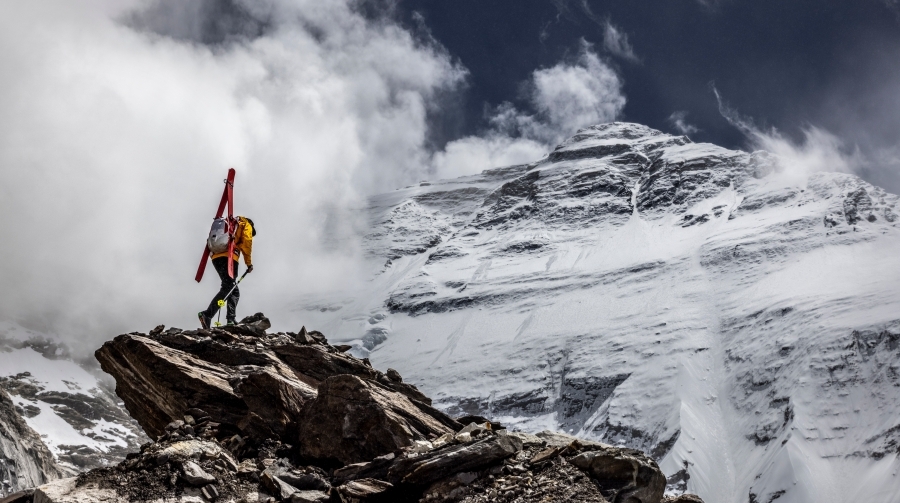
For elite ski mountaineers Jim Morrison and Hilaree Nelson, skiing down the direct north face of Mount Qomolangma, also known as Mount Everest, was their shared dream. The route is a narrow, 2,743-meter vertical corridor of steep snow, rock and ice on the Chinese side of the mountain. It is what ski mountaineers call "the last great problem," or a "no-fall zone," in Oscar-winning director Jimmy Chin's words, "where you cannot make a single mistake." Thousands have summited via Nepal's southeast ridge, but no one had ever skied down this route.
Then, in September 2022, as they prepared for the attempt, Nelson died in an avalanche near the summit of Manaslu. Grief-stricken, Morrison was left with a choice: abandon the dream, or carry it forward alone.
He went forward, but in 2023, severe weather forced the team back. In 2024, another team member was caught in an avalanche and suffered a broken femur requiring a complex high-altitude rescue. By October 2025, with the permits set to expire the following day and temperatures dropping to -26°C, Morrison left Camp 3 with a team of 11, including Chin, before dawn. By 12:45 p.m., he stood on the summit. Four hours and five minutes later, he completed what many consider the greatest ski descent ever achieved.
The historic feat was recorded in the acclaimed Disney and National Geographic documentary "Everest: The Other Side," directed and produced by Elizabeth Chai Vasarhelyi and Chin. The two filmmakers previously won an Oscar for Best Documentary "Free Solo." This time Chin had to balance his responsibilities and roles, serving as both director and producer, but also Morrison's partner on the mountain.
He told China.org.cn that he was more focused on just being a friend, thinking about Nelson's family and her boys and what was exactly at stake. Deeply affected by what happened to both Morrison and the late Nelson, Chin took on a more serious role: "I was always planning to climb with them, but now I was kind of his sole climbing partner, really."
Chin framed the film as a reckoning with mortality. "This film is a meditation on our mortality. It's about life and death. It's about the fact that sometimes we need to be reminded that we're all going to meet the inevitable end," he said. Constantly confronting the possibility of death, he added, changes how you make decisions: "Okay, we don't have that much time here. What kind of life do you want to live? And what are you willing to risk for it?"
Morrison's answer to why he kept returning, three years in a row, was equally direct. "I kept coming back because I was drawn to the enormity of the challenge of it, but mostly I wanted to complete this idea of this dream of Hilaree's and mine, just sort of keep living my life in her honor and help this story highlight who she was, and memorialize who she was to her family and her community."
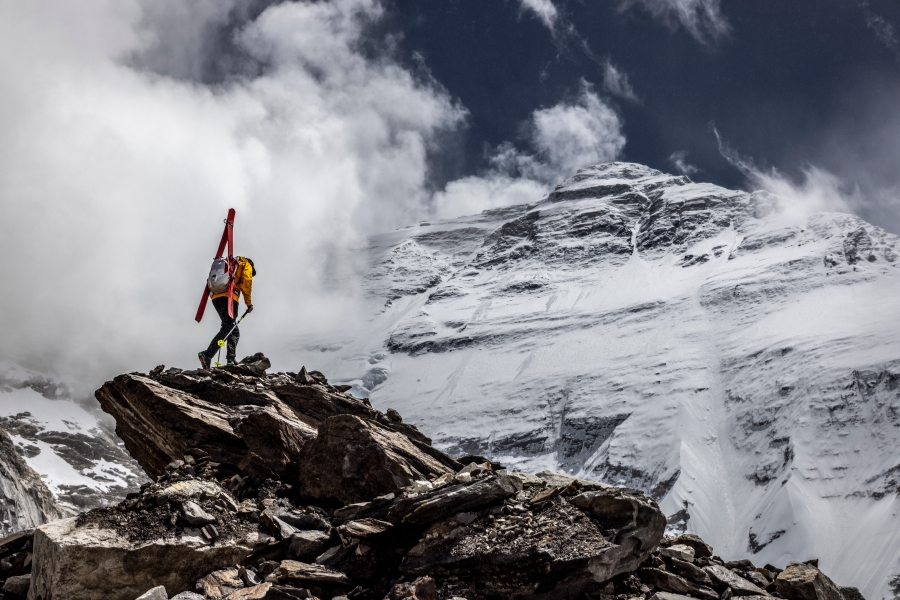
A still from "Everest: The Other Side." [Photo courtesy of National Geographic]
When the worst happened, the film became an exploration of the questions that emerge after tragedy, and Morrison's story became a parable of how to live through it. What was meant to be about one of the most ambitious adventures became a personal and touching story of resilience and promises to the people they love.
Nelson's death was not the only heart wrenching blow Morrison had suffered. Before her, Morrison endured a family tragedy, losing his wife and two children in an air crash in 2011. It is hard to imagine how anyone could survive such heavy blows twice in a lifetime. In awe of nature and drawn to the enormity of the challenge, he has fulfilled the legacy of Nelson, and honored his late wife and his children.
Morrison recalled that as he stood on the summit and looked towards the mountains in Nepal where he had climbed with Nelson, he felt a sense of overwhelming support and energy from her, as if she was there with them. After crossing the bergschrund at the foot of the mountain, he was flooded with emotion. He talked to her, screamed, fell into the snow, cried, laughed, and truly felt Nelson was there helping both he and the team achieve their dream.
Morrison has put it as a choice about how to live: "I would like to think that we're going to do this for another 50 years. And I'm only halfway through this one wondrous life that I'm living. But I want to live it fully."
As the interview came to an end, China.org.cn asked Morrison and Chin whether they still had other dreams to accomplish. "A lot of them," Chin said. "Lots of dreams." Morrison added, "We're just getting started, actually."


 京公网安备 11010802027341号