 Share:


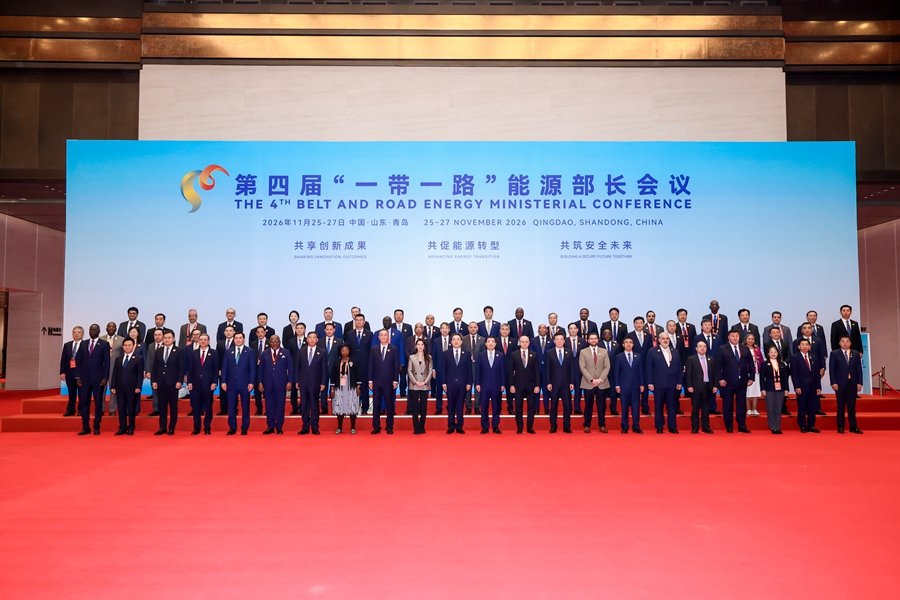
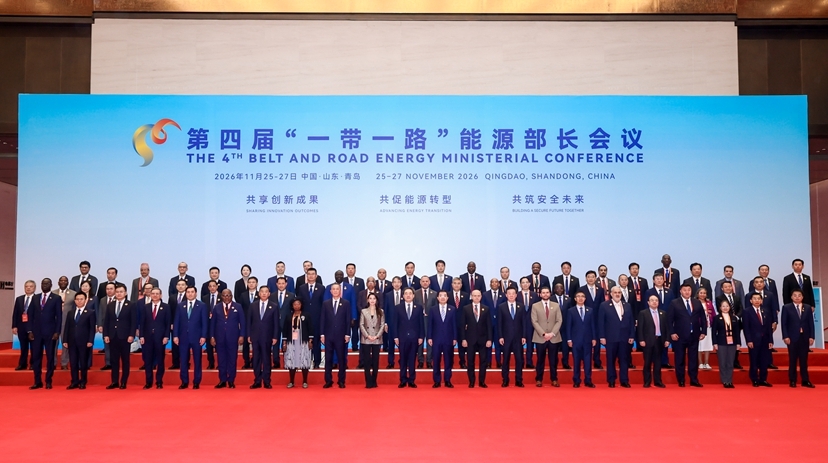
The Fourth Belt and Road Energy Ministerial Conference opens in Qingdao, Shandong province, Nov. 26, 2026. [Photo provided to China.org.cn]
The Fourth Belt and Road Energy Ministerial Conference opened Thursday in Qingdao, Shandong province. Wang Hongzhi, administrator of China's National Energy Administration (NEA), Zhou Naixiang, governor of the People's Government of Shandong province, and Zeng Zanrong, secretary of the CPC Qingdao Municipal Committee, attended the opening ceremony and delivered opening remarks. Mariam Kvrivishvili, vice prime minister and minister of Economy and Sustainable Development of Georgia, and other energy ministers and heads of international organizations attending the conference delivered keynote speeches. About 400 representatives attended, including energy ministers and diplomatic envoys in China from more than 30 countries, senior representatives of international organizations, and representatives of Chinese and foreign energy enterprises, research institutions and universities.
Wang Hongzhi noted that since the Belt and Road Initiative (BRI) was proposed, cooperation mechanisms in the energy sector have been continuously improved, connectivity networks have been steadily deepened, the green development has been further highlighted, and a large number of practical cooperation outcomes have been achieved. The Belt and Road Energy Partnership (BREP) has grown to 35 member countries; coordination on key oil, gas and power interconnection projects has been strengthened; China has carried out cooperation on green energy projects with more than 100 countries and regions; and over the past decade, the cumulative installed capacity of new energy in BRI partner countries has exceeded 600 GW, a fourfold increase. As major changes unseen in a century accelerate and geopolitical conflicts and energy competition intertwine, countries need to strengthen confidence and work together more than ever amid a complex and volatile international landscape. To this end, he put forward six proposals: jointly enhancing energy security, jointly advancing the upgrading of power interconnection, jointly exploring pathways for green energy transition, jointly fostering new drivers for energy innovation and development, jointly promoting coordination in energy governance cooperation, and jointly keeping green financing channels unimpeded.
Zhou Naixiang said that energy cooperation is a key area of the Belt and Road cooperation. Shandong is a major province in China in terms of population, culture, resources and economy. Shandong will keep firmly in mind its major mission of "leading the way and shouldering heavy responsibilities," further deepen reform in an all-around way as a driving force, accelerate the building of a pilot zone for green, low-carbon and high-quality development, create a new pacesetter for high-standard opening up, and strive to become an important economic growth pole in northern China.
Zeng Zanrong said that Qingdao is a major coastal central city of China and one of the country's first batch of carbon-peaking pilot cities. Going forward, Qingdao will thoroughly implement the new energy security strategy of "Four Revolutions and One Cooperation," and coordinate efforts in energy supply security, structural transformation and technological innovation to promote high-quality energy development.
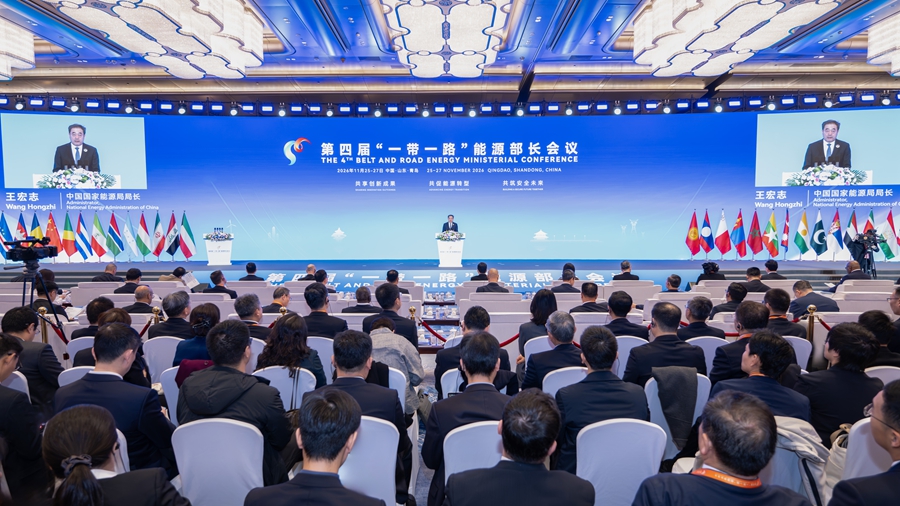
The Fourth Belt and Road Energy Ministerial Conference opens in Qingdao, Shandong province, Nov. 26, 2026. [Photo provided to China.org.cn]
Under the theme "Sharing Innovation Outcomes, Advancing Energy Transition and Building a Secure Future Together," participants held extensive and in-depth exchanges on topics including scientific and technological innovation driving the energy transition, energy security safeguards and enhancement of system resilience, and green and low-carbon transition with coordinated development of industrial and supply chains. Participants spoke highly of the BRI, holding that the Belt and Road Energy Ministerial Conference has developed into a high-level dialogue platform, an outcome-sharing platform and an international cooperation matching platform with global influence in the energy field, and has provided developing countries with mutually beneficial energy cooperation opportunities suited to their national conditions.
The conference announced the official establishment of the Governing Board of the Belt and Road Energy Partnership; released the Joint Ministerial Statement on Strengthening Energy Security and Green Transition of the Belt and Road Countries and six supporting outcome documents; officially established the Think Tank Working Group and the "AI+Energy" Working Group; and released the best practices of "Innovation Empowerment" in international energy cooperation and the think tank report Blue Book on Green Energy Transition and Security Resilience in Developing Countries. These outcomes demonstrated the major achievements of the Belt and Road energy cooperation, demonstrated the firm determination of all countries to work together to tackle energy security and energy transition challenges, and effectively enhanced the influence and cohesion of Belt and Road energy cooperation.
According to the agenda, 12 parallel forums were held alongside the conference, covering green energy, access to electricity, energy security, green certificates and green electricity, connectivity and other fields.
Wang Jianbo, deputy administrator of the NEA, along with the chief engineer, the chief economist and heads of relevant departments of the NEA, attended the conference.


 京公网安备 11010802027341号