 Share:

Ordos is advancing large-scale desertification control in the Kubuqi Desert and the Maowusu Sandy Land, two major ecological zones near the Yellow River's great northern bend.
By building four lines of ecological defense in the Kubuqi Desert and carrying out four major restoration programs in the Maowusu Sandy Land, the city is working to stabilize shifting dunes, reduce soil erosion, and protect the Yellow River, surrounding communities and farmland.
Four lines of defense in the Kubuqi Desert
Covering 14,100 square kilometers, the Kubuqi Desert once expanded northward toward the Yellow River. Large amounts of sediment were carried into the river through seasonal waterways, posing a long-term risk to water and soil conservation in the region.
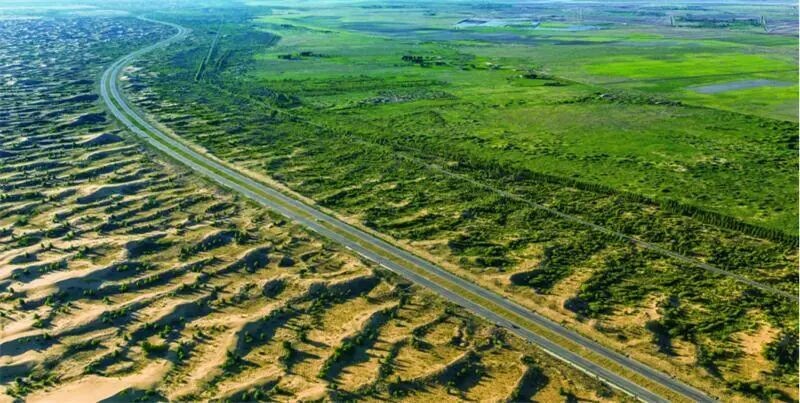
Since the 1980s, Ordos has developed a layered protection system extending from the desert interior to the southern bank of the Yellow River.
A 420-kilometer forest and grass belt now runs along the northern edge of the desert, with an average width of 3 kilometers. Native, drought-resistant trees, shrubs and grasses have been planted to stabilize the sand and prevent it from moving toward the river. Straw-grid barriers, mechanized planting and drone seeding are also used to improve vegetation survival in the dry environment.
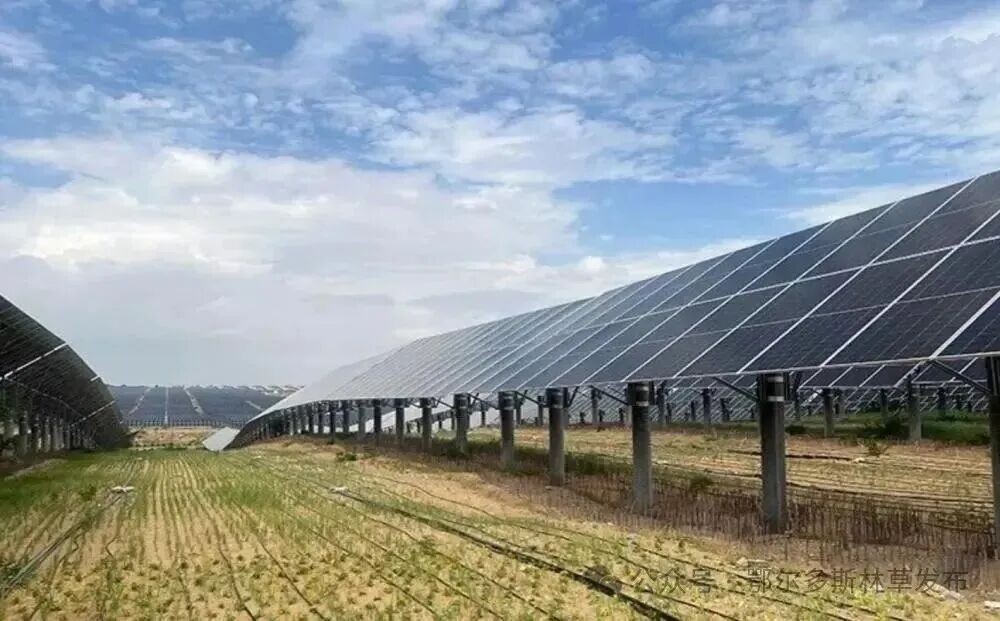
Alongside the shelterbelt, Ordos is developing a 400-kilometer solar energy and desert restoration belt. The city has received approval for 39.79 gigawatts of solar projects, with 12.84 gigawatts of capacity already installed.
Solar panels provide shade and reduce surface-water evaporation, creating better conditions for vegetation beneath and between them. Around 53,000 hectares of sandy land have been restored through this approach, which combines clean energy generation with ecological planting and, in some areas, livestock farming.
The city has also built 509 sediment-retention dams and 1,268 smaller check dams across 10 seasonal tributary basins flowing into the Yellow River. These structures capture sediment before it reaches the river while creating land that can support agriculture and grazing.
In upstream hills and gullies, more than 327,000 hectares of trees and grass have been restored. The new vegetation improves water retention, reduces erosion and helps control sediment at its source.
Together, the shelterbelt, solar restoration projects, sediment-control dams and upstream vegetation form four connected lines of defense. They have significantly slowed the northward movement of the Kubuqi Desert and reduced the amount of sand entering the Yellow River.
Coordinated restoration in the Maowusu Sandy Land
The Maowusu Sandy Land covers about 42,200 square kilometers across Inner Mongolia, Shaanxi and Ningxia. In the past, mobile dunes and wind-eroded valleys contributed to cross-regional sandstorms and soil loss, making cooperation across administrative boundaries essential.
Ordos is carrying out four major restoration programs in its section of the sandy land.
The first focuses on seven large mobile dune belts and six wind-eroded river valleys. Around 24,000 hectares have been treated using sand barriers, shrub and grass planting, and protected natural regeneration. The work is designed to stabilize dunes while improving water retention in low-lying areas.
The second program promotes cooperation across regional borders. Ordos has helped establish a joint desert-control mechanism involving five cities and 14 county-level areas across Inner Mongolia, Shaanxi, Ningxia and Gansu. More than 23,600 hectares of demonstration projects have been completed along regional boundaries, allowing neighboring areas to coordinate planning and restoration work.
The other two programs focus on controlling sand movement at key entry and exit points.
In the northwest, a 130-kilometer windbreak is being developed to reduce wind speed and intercept sand entering the Maowusu area. Nearly 19,000 hectares of the planned 25,800 hectares have been treated.
In the southeast, a 145-kilometer sand-control belt is being built along a major route of outward sand movement. Around 37,600 hectares of the planned 50,200 hectares have been restored, providing greater protection for nearby towns, farmland and grassland.
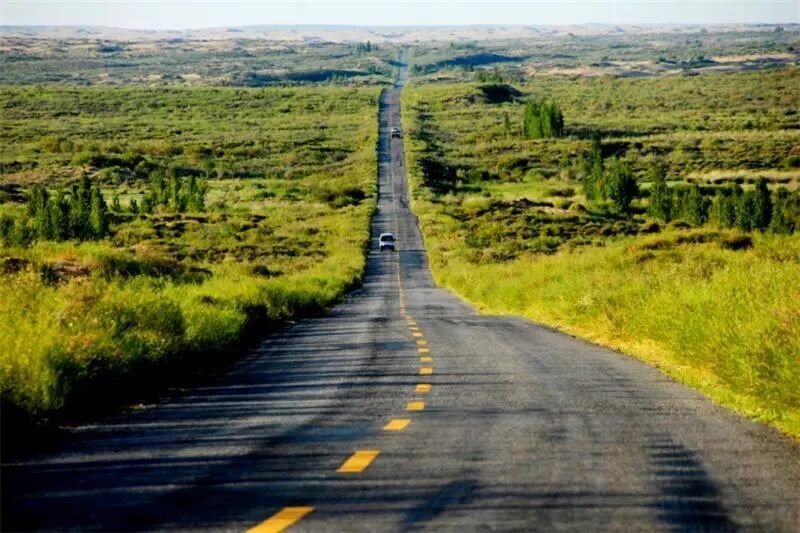
Through these coordinated measures, 85% of the Maowusu Sandy Land has been brought under ecological management and restoration. Areas once dominated by shifting sand are gradually being converted into stable grassland, farmland and ecological forest.
A long-term approach to ecological restoration
Supported by the Kubuqi and Maowusu programs, Ordos has completed more than 3.07 million hectares of work under the sixth phase of China's Three-North Shelterbelt Program.
The city's approach combines sand control, vegetation restoration, renewable energy development, water and soil conservation, and cooperation with neighboring regions. Solar projects in the Kubuqi Desert also demonstrate how ecological restoration can be linked with clean energy and local economic development.
Along the Yellow River's northern bend, desert landscapes, solar installations and restored vegetation now form part of an increasingly connected ecological protection system.
Ordos will continue its long-term restoration work to control desertification, strengthen regional ecological resilience and protect the Yellow River.


 京公网安备 11010802027341号