| Videos | • Latest |
|
• Feature | • Sports | • Your Videos |

Chinese to mark Qingming Festival
 0 Comment(s)
 Print
Print E-mail CNTV, April 3, 2012


On Wednesday, Chinese will mark the Qingming Festival, when it’s traditional to pay tributes to their ancestors and the heroes who died serving their country. CCTV reporter Meng Qingsheng introduces the origin of the festival and the customs.
Every spring, Chinese remember and honor their ancestors and the nation’s heroes.
Qingming, or the Tomb Sweeping Festival falls on the first day of the fifth solar term, named Qingming.
Chinese sweep the tombs and offer flowers, food, tea, wine, or paper money and possessions.
|
|
|
Every spring, Chinese remember and honor their ancestors and the nation’s heroes. |
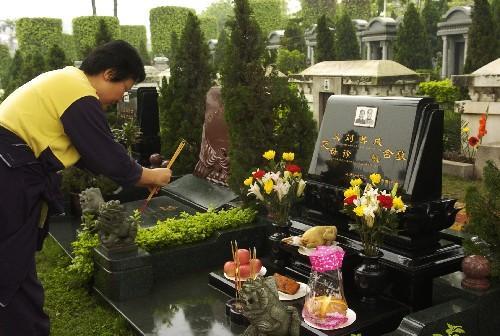
This is one of the many ways to demonstrate filial piety and respect.
The festival originated from Hanshi Day, a day when only cold food was eaten.
It commemorates the death of Jie Zitui, a loyal servant of the emperor, in 636 BC.
After giving up his post, he and his mother retreated to the forest.
Tragedy ensued when the emperor tried to get him to come out by setting fire to the forest.
After that, the day was set aside to remember him, and fires to heat food were banned.
As Jie Zitui died embracing a willow tree, the willow became a good luck charm.
Willow branches are hung on door fronts and used to sweep the tombs.
The name Qingming means Pure Brightness, a time to enjoy the greenery of springtime.
Chinese go on family outings, farmers start the spring plowing, and there’s singing and dancing.
It’s also popular to fly kites in the shapes of animals or characters from Chinese opera.


Go to Forum >>0 Comment(s)