 Share:

Reuters:
March saw the first positive growth in producer prices for industrial products in over three years. The market generally believes this was driven by rising costs from higher oil prices rather than an increase in demand. Given this context, do you think this will affect corporate profits? Additionally, regarding the situation in the Middle East and its effect on the Chinese economy, we already observed some effects on exports in March. Do you expect this to exert downward pressure on the economy going forward? Thank you.
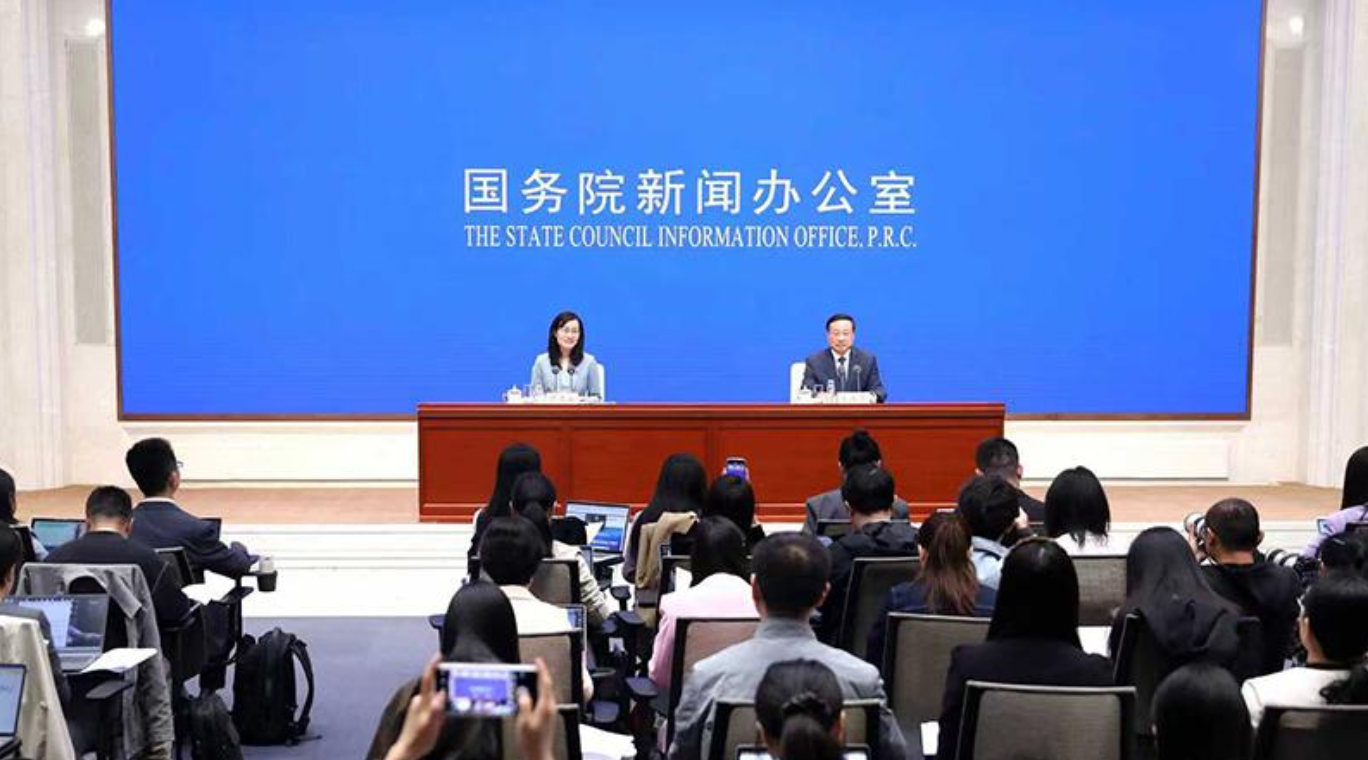
Mao Shengyong:
Thank you for your questions. Your questions touch upon three aspects: first, how to view the changes in Producer Price Index (PPI) and its return to positive territory; second, how these PPI changes might affect corporate profits; and third, how changes in PPI alongside external changes could impact China's future exports. I will address them in my briefing.
In March, the PPI for industrial products rose by 0.5% year-on-year. This is an important positive signal, ending 41 consecutive months of year-on-year declines following a 0.9% drop last month. It rose by 1% month-on-month, marking six consecutive months of growth. What exactly drove the PPI to turn positive? I think we can approach it from two perspectives.
First, the supply and demand dynamics in the domestic market has further improved, which is the primary reason. In particular, the upgrading of industries towards intelligent and green development has expanded demand and pushed up prices for related products. In recent years, the accelerated application of "Artificial Intelligence Plus" has led to surging demand for computing power, driving up both demand and prices for related products. In March, prices in industries such as the manufacturing of optical fiber, external storage devices and components, and electronic special materials rose by 76.1%, 21.1%, and 18.7% year-on-year, respectively. Meanwhile, the steady progress of green transition as well as the steady expansion of demand for green products have driven and allowed for the rebound in prices of some products and sectors. In March, prices for biomass fuel processing and waste resource utilization rose by 6.1% and 0.9%, respectively, which actually reflects changes in the supply and demand. Since prices are the result and manifestation of market supply and demand, this rebound indicates a further positive change in the supply and demand for industrial products.
Second, the market competition landscape has been gradually optimized. The production capacity management in key industries has been carried out in a solid and orderly manner, and the efforts to thoroughly address rat race competition has achieved positive results, which has helped balance supply and demand in several sectors and driven the price recoveries. In March, prices of photovoltaic equipment and components manufacturing, as well as lithium-ion battery manufacturing, increased by 5.2% and 2.5% year-on-year, respectively.
Third, the influence of international factors has become apparent. Driven by rising global prices for energy and non-ferrous metals, March saw year-on-year price increases of 5.2% in the oil and gas extraction industry and 36.4% in the non-ferrous metal mining and dressing industry. Meanwhile, price declines narrowed in two sectors compared with the previous month: the petroleum, coal, and other fuel processing industry (by 7.5 percentage points) and the chemical raw materials and chemical products manufacturing industry (by 3.4 percentage points). The PPI is influenced by three factors. Changes in domestic market supply and demand, along with the optimization of domestic market order, play a more dominant role, while international factors, especially international energy prices, also exert certain impact. For China, the price increases in relevant domestic industries are significantly lower than those in international market. China enjoys a complete industrial system, robust supply capacity, strong economic resilience, and a relatively stable energy supply. Overall, this positive change in PPI will help smooth the economic circulation, further improve corporate performance and consolidate the microeconomic foundation for economic recovery.
Regarding your second question concerns corporate profits: judging from the performance of industrial enterprises above designated size in January and February, profits increased by 15.2% in the first two months. This was due to both the accelerated growth of industrial output and the price recoveries. The rebound in the PPI has had a positive effect on corporate profits. In the next stage, there are still many uncertainties in the external environment and the trend of international energy prices. The impact on domestic prices and corporate profits will require further observation.
Regarding the changing situation in the Middle East and its impact on China's foreign trade and broader economy: overall, the diversification of China's foreign trade continues to yield tangible results, and international economic and trade cooperation based on mutual benefit remains robust. Given its stable foundation, numerous strengths, strong resilience, and vast potential, the Chinese economy is fully capable of coping with external risks and challenges. Therefore, regarding the impact on exports, while external uncertainties may increase, there are also many certainties, such as strong competitiveness of Chinese enterprises, cost-effective products, and substantial policy support. These certainties can effectively offset external uncertainties and help open up new avenues for China's foreign trade. Thank you.


 京公网安备 11010802027341号