Academicians become new privileged class in China
- By Chen Boyuan
 0 Comment(s)
 Print
Print E-mail China.org.cn, October 8, 2013


The public have recently started to question the election process for academicians in China, in the run up to the elections of the Chinese Academy of Science and the Chinese Academy of Engineering later this year.
Academicians in China have been linked with excessive non-academic privileges, such as economic gains and sudden elevation of social status, among financial and administrative powers, whereas in essence, the honorary title is supposed to represent the highest of academic achievements.
|
|
|
Shi Yigong [File photo] |
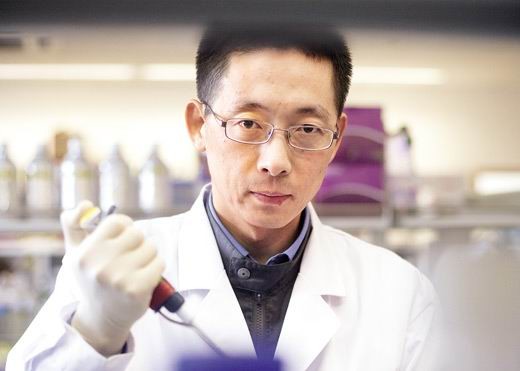
Shi Yigong, a Tsinghua University professor and world renowned structural biologist is an example of this. Even though he is a full member of both the National Academy of Sciences of the United States and the American Academy of Arts & Sciences, Shi failed to get elected to CAS in a by-election two years ago, according to media reports at the time.
In response, CAS officials said that the Chinese state academy and U.S. research institutes are independent of each other and follow their own protocols in selecting new members.
In 2003, at the age of 36, Professor Shi became the youngest professor at the molecular biology department at Princeton University. He could have continued with his research at Princeton but he chose to return to Tsinghua in late 2008 because the university was "in urgent need of talents."
Princeton tried to keep Shi by offering him the largest lab and highest research fund, in addition to a 500-square meter garden villa, which the university bought for him. Some of Shi's friends advised him to just work for Tsinghua part-time during the summer vacations each year or on sabbatical.
In 2010, Shi and Rao Yi, two professors who failed to be elected to the CAS in 2011, wrote a commentary entitled the "Academic Research Atmosphere in China" in the American magazine Science.
"In China, many researchers focus on maintaining social relationships, but not attending academic meetings, issues or educating students...Policymakers and field scientists are both aware of the problems in China's scientific atmosphere: wasted resources, corrupted spirits and a lack of innovation....," read the article.
CAS replied by saying that the two professors had failed to prove to the panel that their U.S. citizenship had been revoked.
Rao was vocal at the comment. He urged the CAS to "have more tolerance, and encourage more Chinese professors to come to China." Rao added Shi's return to homeland was a good example.
Suspicions and criticism also emerged from within academic circles. In 2000, the Department of Engineering Administration was established in the CAE. Former vice president Pan Jiazheng admitted his concern in an interview. "Many CAE members suspected that the department would only host senior company managers and entrepreneurs."
His suspicions proved accurate. There were many senior officials from government central state-owned enterprises past and present on the candidate list. Later, under pressure, the CAE eventually let through only one of the candidates -- former Sinopec vice president Hu Wenrui.
Privileges that academicians in China enjoy include airport VIP passes and special hospital care. CAS researcher Wang Zongyang said,"there are unwritten regulations for academicians' promotions, fund applications, job arrangements and even social honours."
According to Chinese academies' rules, members or candidates who lobby for personal gains risk being disqualified.
CAE used to be a 96-member institution when it was established in 1994. But the number of academicians expanded to 663 in 2003. "Although there were more academicians, high-level scientific innovation did not increase," said Prof. Gu Haibing of Renmin University of China.
According to official definitions, being an academician is the "highest academic title and honor," a description which Prof. Gu says has brought "endless difficulties."
"An ordinary professor cannot compete fairly with a 'high level' academician, which is contrary to academic liberty and innovation. There are no checks and balances regulating academicians, resulting in frequent fraud. The pursuit of the title has become a sport," Gu said.
In comparison with other countries, Gu concluded that academicians in most advanced countries at most only enjoyed the title itself, with affixing economic or administrative implications to it.
On the eve of this year's academician by-election, the usually vocal Shi suddenly fell silent. He regained his Chinese citizenship long ago, making him a "qualifying candidate."
Whether or not Shi's name is among the finalists, the debate about China's academician system will continue.


Go to Forum >>0 Comment(s)