Law aims to better protect domestic abuse victims
 0 Comment(s)
 Print
 E-mail Xinhua, December 22, 2015


China's first domestic violence law might include emotional or psychological abuse and cover cohabitation in order to protect traditionally silent abuse victims, according to a new draft.
 |
|
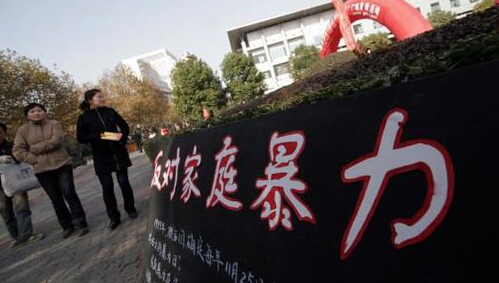
A new domestic violence law being worked in China may include provisions covering both emotional or psychological abuse. [Photo: hz1188.com] |
The document, up for a second reading at the Standing Committee of the National People's Congress's bimonthly session, says "the country prohibits any form of domestic violence."
Domestic violence is defined as physical or psychological harm inflicted by family members, including beatings, restraint or forcible limits on physical liberty, verbal threats and abuse.
An earlier draft, submitted in August, included only physical abuse, but many lawmakers have since argued that the definition was too narrow, said Su Zelin, deputy director with the Commission for Legislative Affairs of the NPC Standing Committee.
They also argued that the law should cover cohabitation, Su said, hence the second draft stipulated that those who are not related but live together are also subject to the new law.
China does not have a specialized law on family abuse, and the issue has remained in the shadows for a long time in a country where family conflicts are considered embarrassing private matters. Victims are often afraid to speak out.
Attitudes to domestic violence changed in 2011, when Kim Lee, wife of celebrity entrepreneur Li Yang, posted pictures of her bruised face on Sina Weibo and accused Li of beating her up. In 2013, Kim was granted a divorce, alimony and compensation on the grounds of domestic violence.
Marital violence
The All-China Women's Federation claims nearly 25 percent of women have suffered violence in their marriage, but said it receives only 40,000 to 50,000 complaints a year.
Victims who approach the federation for help are mainly women, children and the elderly, and 88 percent of cases in 2014 involved abuse by husbands of their wives.
According to the draft, victims and those in immediate danger can file for a personal protection order that the court must grant or deny within 72 hours. In urgent cases, decisions are made the same day.
Police, women's federations and social service organs, in addition to close relatives, will all be able to apply for orders for those with no or limited civil capacity or those who cannot do so themselves as a result of physical force or threats.
Once the order is granted, courts can prohibit the abuser from harassing, stalking or contacting the applicant, order the abuser to move out of the home or adopt various other measures to protect the applicant.
Should the abuser violate the protection order, they may be fined up to 1,000 yuan (US$154), detained for up to 15 days or face criminal charges.
The draft also aims to enhance protection for particularly vulnerable groups: children, the elderly and the disabled.
Police must notify civil affairs departments should they find that those with no or limited civil capacity have been harmed, and escort them to shelters or welfare centers.
The draft also requires social workers, doctors and teachers to report suspected abuse cases. Should they fail to do so, they will be held liable in cases with serious consequences together with those in charge of the institutions concerned. Police will protect the privacy of whistleblowers.


Go to Forum >>0 Comment(s)