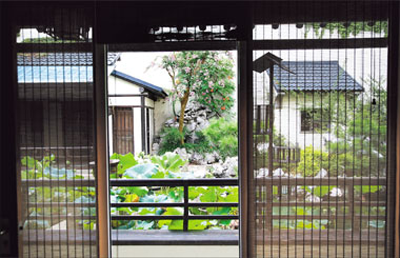
The private garden built by artist Ye Fang in Suzhou has become a new must-see for garden fanciers from around the world, especially those interested in traditional Chinese gardens.
The life of Ye Fang has been dominated by gardens from childhood and through his paintings but it has come full circle in recent years with the creation and subsequent international acclaim for the garden he built in Suzhou.
The garden is so celebrated that the producers of a Japanese TV documentary about the classic gardens of Suzhou, one of China's World Heritage-listed sites, picked it among 10 magnificent local gardens to focus on.
Nine of the 10 were public gardens dating from bygone dynasties. The other belonged to Ye Fang, a 46-year-old artist, whose garden is "living" in that it serves the homes of five families.
Unlike the other nine gardens that are centuries old, Ye's garden is only five years old yet it has won acclaim from scholars and artists around the world for its exquisite design and rich expression of Chinese culture.
Ye Fang Garden has become a new must-see for celebrities and garden aficionados visiting Suzhou, especially those interested in traditional Chinese gardens.
Lu Bingjie, professor of Shanghai Tongji University and one of the most famous architects in China, said: "Ye Fang Garden created a new style in Chinese garden design."
Ye's garden has become an elegant venue for tea parties and high fashion salons. Ye invites friends - writers, poets, columnists, painters, musicians, foreign diplomats and museum curators - to his garden, where they discuss culture, savor tea and food, admire seasonal flowers, and listen to Kunqu, one of the oldest forms of Chinese opera.
"The garden has been a unique place for Chinese writers and artists since ancient times. You can feel the soul of Chinese culture in the classical gardens," said Ye at his home in Suzhou, west of Shanghai.
Suzhou has a dozen old gardens that are listed as UNESCO world heritages and owning a private garden has become fashionable among the rich elite in the city.
"While many want their own classical garden as a symbol of good taste, few realize that a Chinese garden is more than architecture and landscape. It's a vessel of culture," said Ye, noting that some new gardens look like a film set.
Ye said his life is intertwined with Chinese gardens. "I was born and brought up in a classical garden; I studied and worked in a Chinese garden; my career is to paint and write about Chinese gardens; and now I have built and am living in my own garden."
Ye graduated from the painting department of Suzhou Art and Design College in 1983 and now works as a senior painter and associate professor at Suzhou Academy of Chinese Painting. Both institutions are located in Chinese gardens.
His artworks, focusing on Suzhou gardens and rockery scenery made of limestones from the nearby Taihu Lake, have been exhibited in more than 10 countries and regions and have been collected by several domestic and overseas museums.