Meteorologists say moisture has become a luxury in Lhasa,
capital city of Tibet Autonomous Region, as hygrometers
have registered record low humidity since October.
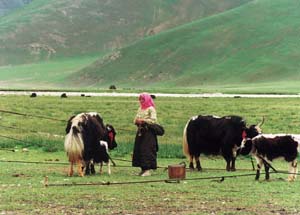
The dry autumn weather has also caused many Tibetans to wake up
to nosebleeds in the morning.
According to the Lhasa observatory, the average daily "relative
humidity," the water vapor percentage in the air at a certain
temperature, has stood at around 10 percent since last month when
most of the country's southern provinces experienced rainfall.
As it stands, there is little water component in the air in the
"Sunlight City" which sits at 3,700 meters above sea level, making
the weather "extremely dry" and things "flammable," says the
observatory.
Experts attributed the desiccation to a weak cold air front from
the north and poor moisture conditions around the Indian Peninsula
and the Bay of Bengal in the south.
Rainfall in most parts of Tibet last month was more than half of
normal years. In some of southwestern areas of the Autonomous
Region, no precipitation was reported for the entire month, experts
said. Locals and visitors alike were recommended to drink abundant
amounts of water and apply efficient sun cream.
Tibet's average October temperature in most parts of the plateau
region was one to three degrees Celsius higher than normal
years.
Meteorologists, however, expected the region's temperatures to
drop three to four degrees in some places this week with rainfall
and snow in some places.
Tibet, with its glaciers and high altitude, is regarded as a
region sensitive to the effects of global warming.
Its average annual temperature is rising at a rate of 0.3 degree
Celsius every 10 years, higher than the growth rate of the rest of
China and the world, according to recent research.
(Xinhua News Agency November 6, 2007)




