Distinguishing features of Cantonese opera
 0
0 


Cantonese opera has much in common with other Chinese opera genres. It has its distinct features, however. Commentators often take pride in the idea that all Chinese theatre styles are but minor variations on a pan-Chinese music-theater tradition, and that the basic features or principles are consistent from one local performance form to another.
Most of the plots in Cantonese opera are based on Chinese history and famous Chinese classics and myths. The culture and philosophies of the Chinese people can be seen in the plays. Virtues like loyalty, moral, love, patriotism and faithfulness are often reflected by the operas.
Skills and methods
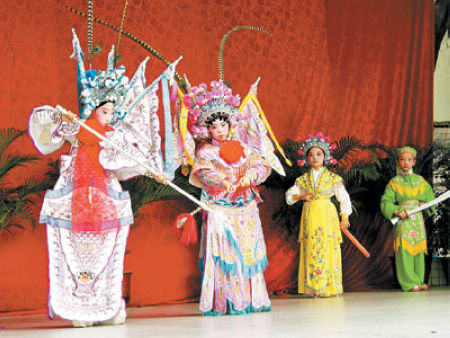
The four skills and the five methods (四功五法), a simple codification of the basic skills and techniques of acting and singing used in Cantonese opera:
The "four skills" and "five methods" are a simple codification of the areas of special training for theatre performers, and also stand as something of a metaphor for the most well-rounded and thoroughly trained performers.
The "four skills" apply to the whole spectrum of vocal and dramatic training: singing, acting and movement, delivery of the "speech-types" and martial and "gymnastic skills," while the five methods are categories of techniques associated with specific body parts: hands, eyes, body, hair, feet or walking techniques.
Types of Cantonese opera
There are two types of Cantonese opera plays: Wu (武, "martial arts") and Wen (文, "highly educated", especially in poetry and culture) plays. Wu plays emphasize war, the characters usually being generals or warriors. These works contain action scenes and involve a lot of weaponry and armour.
Wen plays tend to be gentler and more elegant. Scholars are the main characters in these plays. Water sleeves are used extensively in man plays to produce movements reflecting the elegance and tenderness of the characters; all female characters wear them.
In man plays, characters put a lot of effort into creating distinctive facial expressions and gestures to express their underlying emotions.


Go to Forum >>0 Comments