 Share:

Reuters:
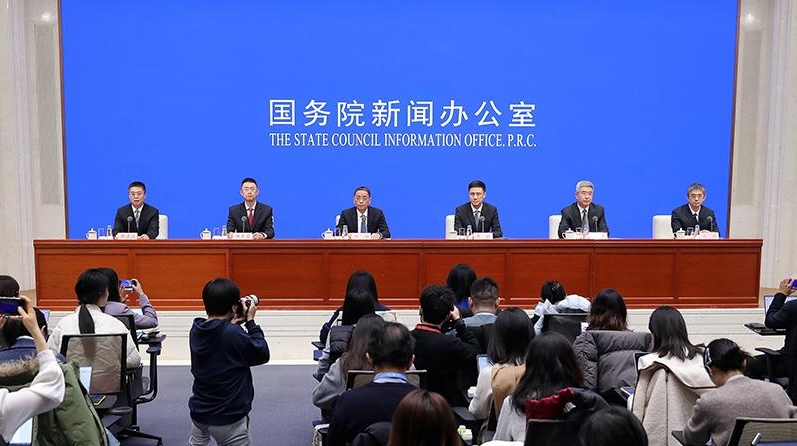
What new measures will the central bank take next to support consumption, especially service consumption? In addition, I would also like to ask about monetary policy. What considerations will guide the next steps, and how much room remains for further interest rate cuts and reserve requirement ratio reductions? Thank you.
Zou Lan:
Thank you for your questions. You have, in fact, raised two issues. I will first address the question about monetary policy.
As I mentioned earlier, in 2026, the PBC will implement the decisions and arrangements of the Central Economic Work Conference and continue to pursue an appropriately accommodative monetary policy. We will leverage the combined effects of existing and new policy measures and step up counter- and cross-cyclical adjustments, creating an appropriate monetary and financial environment for stable economic growth and high-quality development. Specifically:
First, in light of domestic and international economic and financial conditions as well as developments in financial markets, we will take promoting stable economic growth and a reasonable rebound in prices as key considerations of monetary policy. We will flexibly and efficiently employ a range of policy tools, including reductions in the reserve requirement ratio and interest rate cuts, to maintain ample liquidity and relatively accommodative financing conditions. We will guide the reasonable growth of financial aggregates and the balanced extension of credit, ensuring that aggregate financing and money supply stay in step with the projected economic growth and CPI increase.
Second, we will fully leverage the role of monetary policies in adjusting both the monetary aggregate and structure, and accelerate the implementation of recently introduced structural monetary policy tools. We will guide financial institutions to step up support for key areas such as expanding domestic demand, sci-tech innovation, and micro, small- and medium-sized enterprises. We will encourage them to make solid progress in the five key areas of financial work. At the same time, we will strengthen coordination with fiscal policy to amplify policy incentives and effectiveness.
Third, we will better leverage the guiding role of policy interest rates and strengthen implementation and oversight of interest rate policies. We will give full play to the self-regulatory mechanism for market interest rate pricing, enhance banks' capacity for rational pricing, maintain an orderly competitive environment, and promote the overall financing costs to remain at a low level. At the same time, we will maintain exchange rate flexibility, keep the RMB exchange rate basically stable at a reasonable and balanced level, and guard against the risk of excessive exchange rate fluctuations.
Fourth, we will strengthen expectations management and continue to improve credible, regularized and institutionalized policy communication mechanisms. We will diversify channels for policy interpretation and information disclosure, and steadily enhance the transparency of monetary policy.
Regarding your question on further reductions in the reserve requirement ratio and interest rates, there remains some room this year. From the perspective of the statutory reserve requirement ratio, the current average ratio for financial institutions stands at 6.3%, indicating that there is still room for further reductions. From the perspective of policy interest rates, on the external front, the RMB exchange rate is relatively stable, and the U.S. dollar is on an interest rate easing path, meaning that exchange rate considerations do not pose a strong constraint overall. On the domestic front, banks' net interest margins have shown signs of stabilization since 2025, remaining at 1.42% for two consecutive quarters. In 2026, a relatively large volume of long-term deposits, including three-year and five-year deposits, will mature and be repriced. In addition, the PBC has lowered various relending rates. All these factors will help reduce banks' interest expenses, stabilize net interest margins, and create some room for interest rate cuts.
We will also continue to take comprehensive measures to keep the overall financing costs at a low level. For example, we will clearly disclose the overall financing costs of loans, organizing banks and enterprises to fill in a detailed form of expenses in interest and non-interest costs for enterprises to obtain loans. By doing so, we will lower appraisal and guarantee fees and other financing fees, reducing enterprise expenses and optimizing the financing environment. We will also strengthen the implementation and supervision of interest rate policies, leverage the interest rate self-regulatory mechanism, and improve the interest rate policy transmission. All of these help keep the overall financing costs at a low level.
As for your question about consumption, I'd like to invite Mr. Xie to answer it.
Xie Guangqi:
I'll answer the reporter's question about boosting consumption. In recent years, the PBC has implemented systematic measures to support for enhancing consumption capacity, increasing financial supply, and unleashing consumption potential, thereby meeting the diverse financing needs in the consumption sector. These measures include establishing a 500-billion-yuan relending facility for service consumption and elderly care, guiding financial institutions to innovate consumer financial products, and continuously facilitating payment services. Regarding service consumption and elderly care relending, as of the end of 2025, the PBC had received two batches of applications from financial institutions and provided relending funds of 118.4 billion yuan. In terms of bank loans, as of the end of November 2025, the outstanding balance of consumer loans (excluding individual housing loans) had reached 21.2 trillion yuan.
In the next stage, the PBC will continue to implement an appropriately accommodative monetary policy to create a favorable monetary and financial environment for boosting consumption and expanding domestic demand. On this basis, the central bank will further leverage the guiding role of structural monetary and credit policies and continuously improve the suitability and effectiveness of financial support for consumption.
First, we will enhance the efficacy of financial support for key areas of service consumption. As Mr. Zou mentioned in his opening remarks, the PBC will further expand the scope of support for service consumption and elderly care relending. After the criteria for accrediting the health care services are clearly defined by competent authorities, they will be included in the support scope for service consumption and elderly care relending in due course. By offering appropriately preferential interest rates for relending, financial institutions can be incentivized and guided to increase credit supply in the consumer sector in accordance with market-oriented and law-based principles. We will continue to guide financial institutions to innovate products and services in conjunction with consumption scenarios, with a focus on supporting industries that are highly relevant to people's livelihoods, such as accommodation and catering, culture, tourism, sports and entertainment, elderly care and child care, and housekeeping services.
Second, we will help increase people's spending power and support genuine financing needs for consumption. We will continue to implement the guarantee loan policy for business startups to support employment and entrepreneurship for key groups and to help eligible micro and small enterprises create jobs. We will support the healthy and stable development of China's capital market and expand investment channels for residents. We will regulate the development of consumer finance to meet people's diverse and personalized consumption needs. We will also strengthen the coordination of financial and fiscal policies to implement consumer loan interest subsidy programs and other policies, reducing financing costs in the consumer sector.
Third, we will optimize basic consumer finance services. We will continue to improve the diversified payment service system, enhance the payment experience in key consumption scenarios, effectively implement the one-time credit repair policy, and improve the consumer financial environment.
That's all for my answer. Thank you.


 京公网安备 11010802027341号