 Share:


Bloomberg News:
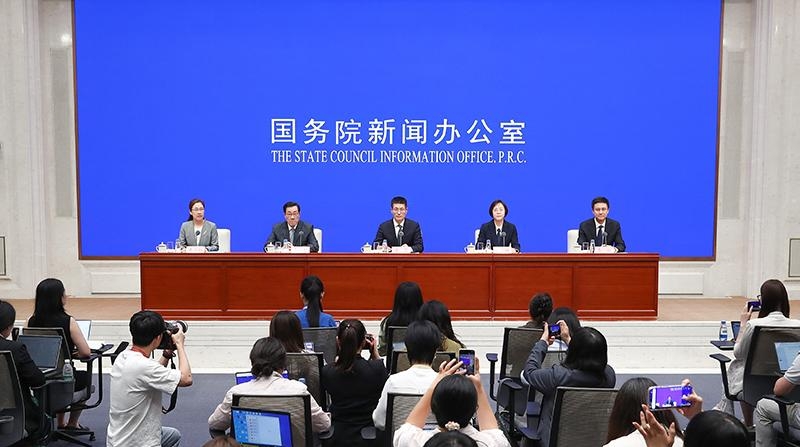
Can we ask the PBOC: What are the PBOC's objectives with its monetary policy framework reform in the five-year plan period? And what impact will the reforms bring on the economy?
Lu Lei:
Thank you for your questions. Monetary policy is the primary responsibility of the PBOC, and promoting the reform and improvement of the monetary policy framework is also a key task the PBOC has been continuously advancing. During the 15th Five-Year Plan period, the PBOC will further refine the modern monetary policy framework with Chinese characteristics, making its objectives, tools and transmission more well-calibrated and forward-looking. This will help improve the central bank system and build China into a financial powerhouse. I will address the specifics in the following areas.
In terms of objectives, we will firmly maintain the stability of the currency's value, thereby promoting economic growth and effectively support the high-quality development of the real economy. At the same time, we will gradually downplay quantity-based intermediate targets and place greater emphasis on the role of interest rate adjustment.
In terms of tools, we will continue to improve the base money injection mechanism, refine the reserve requirement system, and conduct open market operations in a more flexible and precise manner. We will continuously improve the market-based mechanisms for interest rate formation, regulation, and transmission, enhance the guiding role of policy interest rates, guide short-term money market interest rates to operate more smoothly around policy interest rates, and further smooth the transmission from the central bank's policy interest rates to market benchmark interest rates and then to various financial market interest rates. We will optimize the system of structural monetary policy tools, improve the design and management of policy tools, and enhance the quality and efficiency of financial services for the real economy.
On the exchange rate, China implements a managed floating exchange rate system, upholds the decisive role of the market in exchange rate formation, and at the same time guards against herd behavior in the market and self-reinforcing irrational expectations. China has neither the need nor the intention to gain a competitive advantage in trade through currency devaluation. In recent years, we have also noticed that with the transformation and upgrading of the export mix, enterprises' bargaining power and exchange rate risk management capabilities have been continuously enhanced, and the sensitivity of China's trade to exchange rates has decreased significantly. At the same time, foreign trade enterprises are using more exchange rate hedging tools, and the RMB's share in trade settlement has continued to rise, further reducing the sensitivity of trade to exchange rate fluctuations.
In terms of communication and transmission, we will further improve monetary policy communication and expectation management. We will build a credible, regular and institutionalized communication mechanism, and keep making our monetary policy communication clearer and more authoritative. We will strengthen macroeconomic policy coordination, enhance the consistency of macroeconomic policy orientation, and promote the dynamic balance of multiple macroeconomic control objectives.
In short, during the 15th Five-Year Plan period, China's monetary policy framework will be gradually transformed and refined so that it better adapts to profound changes in the economic and financial structure. This will make macroeconomic regulation more effective, support the real economy and create a favorable monetary and financial environment for high-quality development.
That's all from me for this question. Thank you.


 京公网安备 11010802027341号