60 years of China's translation industry
 0 Comments


 |
|
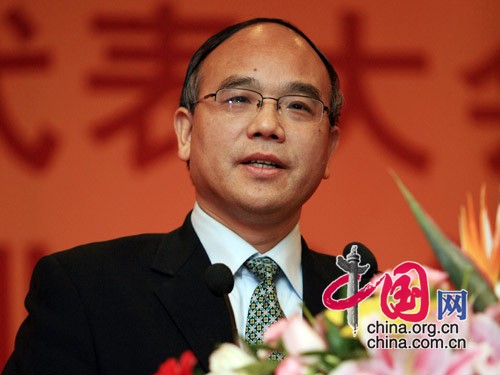
"Translation must safeguard cultural diversity; support the country's strategic development, and the country's diplomacy and soft power."
-- Xu Jun, translator of French literature, vice president of the graduate school of Nanjing University |
Since the founding of the People's Republic of China in 1949, the work of Chinese translators has been indispensable for the country's access to world culture, science and technology, former foreign minister and state councilor Tang Jiaxuan said Thursday at the opening ceremony of the sixth congress of the TAC.
Translation has helped modernize the country – and allowed people overseas to gain an understanding of China's traditional culture, he said.
 |
|
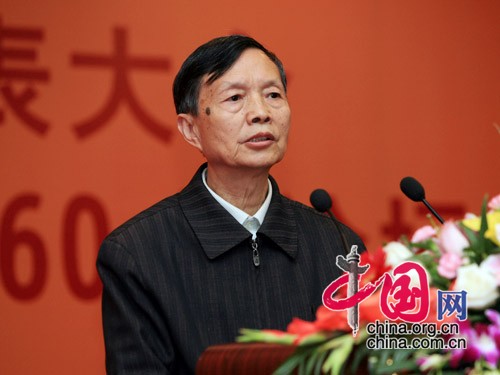
"The number of science and technology works translated over the past three years was over 5,000, more than the total number translated in 37 years of Old China (1911-1949). Since 1978, over 4,000 treatises on science and technology translation have been read or circulated at various symposiums. The number before 1978 was less than 100."
-- Li Nanqiu, technical translation researcher, former curator of the library of University of Science and Technology of China at Hefei |
He urged Chinese translators to constantly improve their professional skills to help boost China's "soft power", to match that of the U.S., as exemplified by President Barack Obama's foreign policy.
"As China's international status rises, the rest of the world wants to know more about the country; in particular, China's stances on major global issues like the financial crisis, climate change and energy security. Translators should waste no time in promoting China's policies on such issues for international audiences," Tang said.
Wang Chen, minister of the State Council Information Office, said that the lack of top-rate translators was one of the reasons for China's huge "deficit" in international cultural communication.
He said that, to tackle this problem, translation resources should be better managed and authorities should invest more in training translators, especially those who translate from Chinese into other languages.
At the congress, scholars gave keynote speeches and held discussions on the development of China's translation industry over the past 60 years.
 |
|
 |
|
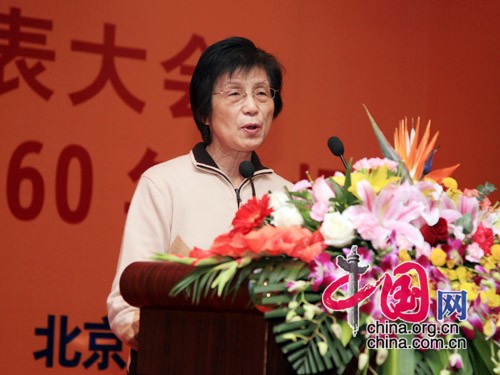
"Premier Zhou Enlai asked translators and interpreters of the foreign ministry to practice foreign languages for three hours each day. He also ordered that the ministry's translation department be equipped with radios that could receive so-called "enemy radio stations" like the VOA. Today's diplomatic translators should, when doing translation and interpretation, take the occasions where officials' speeches are given as well as the psychology of the audiences into consideration, using the language that they can easily understand."
-- Shi Yanhua, vice-president of TAC, former interpreter of Deng Xiaoping and Chinese ambassador to Belgium |
|
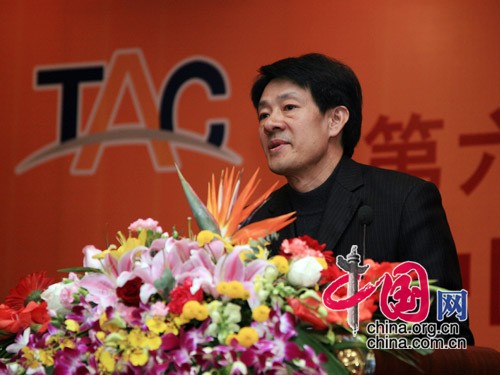
"It's extremely harmful for developing countries to open the door and take in (cultural products from developed countries) without choice. China's translation and publishing of foreign literature is in a state of chaos. We have abandoned fundamental principles. The market and foreigners have the final say. Today we are here to review and reflect on translation and seek a more diversified (cultural perception) and consensus, rather than blindly follow capitalist perceptions and values." -- Chen Zhongyi, standing member of TAC, director of the Foreign Literature Institute of The Chinese Academy of Social Sciences (CASS) and president of China Foreign Literature Association |
The TAC was founded in 1982. It functions as an academic as well as professional association. It is made up of institutions, enterprises, associations and individuals engaged in translation and interpretation.


Comments