Veteran artist Zhang Ding honored
 0
0 


|
|
|
Artist Zhang Ding [Global Times] |
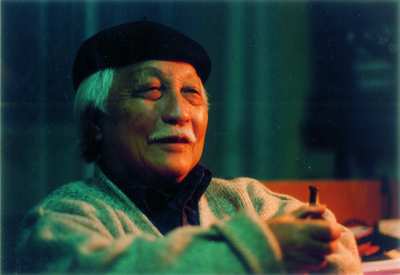
Zhang Ding, considered by many as China's answer to Picasso and one of the most influential Chinese artists of the 20th century, has been honored at possibly the highest level in China, with the Center for Zhang Ding Art Research unveiled at Tsinghua University last month.
Zhang, now 93, has witnessed some of the most important changes in modern art history and the center will ensure that his accomplishments will continue to be acknowledged, Lu Xinhua, head of the center, said.
With his artistic career spanning over 70 years, Zhang's creativity manifested itself in numerous mediums, including caricatures, cartoons, murals, abstracts and traditional Chinese painting and calligraphy. He advocated and researched Chinese contemporary folk art and his artistic achievements helped to break boundaries between East and West and classic and avant-garde genres.
"The establishment of the center will play a prominent role in preserving the significance of the artist, as well encouraging study of his creative path and Chinese art history," Lu said.
According to Lu, the institution will house a collection of Zhang's works and documentation of his artistic and educational theories as well essays and articles based on subsequent research.
Born in Liaoning in 1917, Zhang's earlest interest in art began when as a child he painted on a steamed bun of his mothers during Chinese New Year, according to the artist's autobiography Zhang Ding Talks About Art published in 1995.
The young prodigy taught himself traditional Chinese painting at age 5. He left his hometown for Beijing Art School when he was 15 and caught the attention of masters Qi Baishi and Zhang Henshui, according to website zgddhj.cn.
Choosing to depict the country's harsh realities instead of idyllic leisure, Zhang created a strong backlash at both the school and in the art community during the school's two-year anniversary exhibition, according to website china.org.cn.
He moved to the Luxun Art School in Yan'an and began his cartoon production there in 1938 when he was 21.
"His caricature images, precise, provocative and appealing, borrowed extensively from traditional Chinese painting and folk art, yet were heavily influenced by Mexico caricaturist Miguel Covarrubias and enjoyed great popularity in various publications," commented art critic Li Zhaozhong in his article Zhang Ding and Picasso.
"Caricaturist Hua Junwu once described Zhang Ding's work as 'a combination of Picasso and chenghuangmiao (a traditional Chinese town god temple) in the 1960s.' The description vividly captured the essence of Zhang's artistic style that penetrates his creations," commented Lu Xinhua.


Go to Forum >>0 Comments