A weekend is just enough time for a 150-kilometer drive out the Beijing-Zhangjiakou Expressway to experience something ancient and very different to the modern amenities of Beijing. Jimingyi, the Rooster Crowing Posthouse lies on an ancient messenger relay route, along which the orders of the emperor were carried by messengers on horseback, day and night, through rain, hail and shine.
The posthouse, in what is now Huailai County, Hebei Province, was established during the Yuan Dynasty when Kublai Khan went on a western expedition. It was refurbished and expanded in 1420 during the reign of Emperor Yongle of the Ming Dynasty, and has played a major role in the history of Chinese posts and communications. When the northern warlord government decided in 1913 to eliminate the ancient posthouse system and set up a modern post office system, Jimingyi went into decline. However, it remains today the biggest and best preserved ancient posthouse in China.
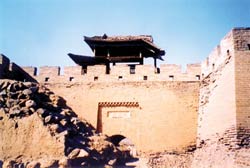
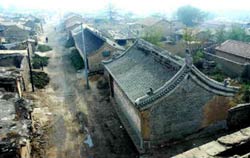
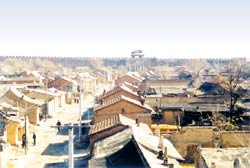
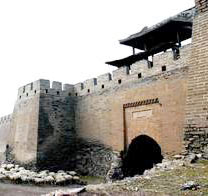
A small city in itself, the posthouse was built on a north-south axis. The eastern and northern city walls are still almost intact, while sections of the western and southern walls are broken.
The eastern and western gates are built in a double-arched brick structure, and are connected by a thoroughfare covered with grit. There are only remains of the outer city defensive walls, the once high and magnificent gate towers now little more than wooden skeletons pointing to the sky, presenting a desolate picture of the storms and stresses of history.
There are eight ancient temples, such as the Confucian Temple, the Temple of the Dragon King, and the Temple of Fortune, all in very poor shape in the town. The Temple of Eternal Tranquility is the oldest, with a history of more than 800 years. Visitors can see wall paintings from the Ming Dynasty that are still surprisingly complete and fresh in color. From the sizes of the temples, you may see the influence of Buddhism, Taoism and Christianity in the city.
Empress Dowager Cixi passed through this strategically important posthouse fleeing the Western allied forces that were attacking Beijing in the late 19th century. The house where she dwelt is still standing.
The posthouse city at the crossroads was also a business hub in ancient times. According to inscriptions on a stone slab, it boasted six pawnshops, nine general stores, four oil shops and a number of tea houses and inns where animals and men might rest.
The richly historical flavor of the city has provided backdrops for a number of movies. In one film version of the Chinese classic, Journey to the West, the first kiss between the hero and heroine takes place on the city wall.
There are no modern hotels. Family inns provide board and lodging for only 10 yuan.
From Jimingyi, it is just a short drive to another ancient city, Xuanhua. When the first emperor of the Qin Dynasty unified China, he set up 36 prefectures. Xuanhua, called Shanggu then, was one of them. It is north of Jimingyi, on the Beijing-Zhajiakou railway line. During the Ming Dynasty, it was one of the nine major defence cities on the northern border, charged with repulsing attacks from the northern Tartars. The Ming city walls remain, complete with a whole system of defence capacities.
Getting there: Take the train at Yongdingmen Railway Station in the south of Beijing and get off at Shacheng. Take a bus bound for Xiahuayuan at the square near the statue of Dong Chengrui, a martyr of the liberation war, and get off at Jimingyi. Alternatively, drive directly to Xuanhua via the Beijing-Zhangjiakou Expressway.
(Beijing Today October 10, 2004)
|