Green tech war would cripple ailing globe
 0
0 


 |
|
[By Liu Rui/Global Times] |
It has been decades since economic globalization began in earnest. Much of the US manufacturing sector, along with the pollution it caused, was long ago outsourced to China, making the nation both an economic powerhouse and the world's top carbon emitter.
As the US transformed its economy into one based on knowledge, innovation and services, its cities became cleaner. Meanwhile, the skies of China were darkened with smog and soot from the growing number of factories and the power plants that fueled them.
Though manufacturing jobs were lost, low-cost Chinese products contributed to the improvement of Americans' quality of life, and trade with China grew US-based firms like Wal-Mart into massive economies that could rival a small country. All the while, an ocean separated US from the pollution involved in producing the goods it enjoyed every day.
But a rude awakening came in 2007, when researchers from California determined that on any given day, nearly one-third of pollution in Los Angeles comes from China. The findings were just another demonstration of how pollution is a problem that has no respect for borders and therefore requires a global solution.
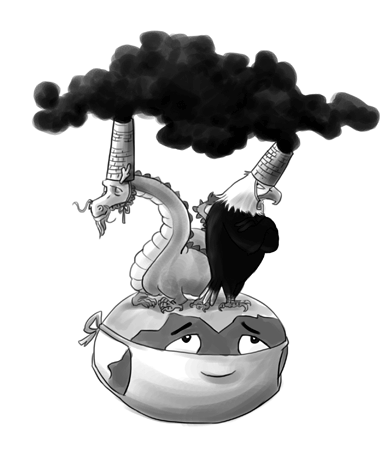
Nevertheless, any attempts to form a solution are hampered by a US that feels threatened by China's rise, or efforts take a back seat to other interests, especially trade. The US and China have been cast in the antagonistic narrative of a "green technology race," which conjures up images of the Cold War. The New York Times columnist Thomas Friedman, one of the main perpetuators of this narrative, described green technology as the "New Sputnik."


Go to Forum >>0 Comments