The quest to demonize China
- By Dan Steinbock
 0 Comment(s)
 Print
Print E-mail chinausfocus.com, August 20, 2013


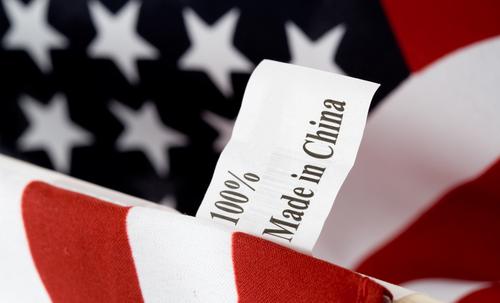
In a recent op-ed, business professor Peter Navarro concluded that “buying ‘Made in China’ — whether steel for our bridges or dolls for our children — entails large costs… [which are] hurting our country — and killing our economy.”
The harsh content of the commentary was not new. But the venue – the editorial page of the New York Times – was. Such voices do not represent majority views in America. But nor are they any longer marginal.
While they reflect the concerns of a fragmented minority, they do share a common denominator: the quest to demonize China.
China as a “deadly” scapegoat
Navarro’s commentaries on China build on his The Coming China Wars (2008) and the more extreme Death by China (2011), which was co-authored with Greg Autry, who represents Coalition for a Prosperous America and the American Jobs Alliance, which advocate a hard line against China.
Ultimately, these treatises are less about facts and more about political persuasion. In San Diego, Navarro was known for great political ambitions and repeated political failures in the 1990s (e.g., for mayor, city council, county supervisor, congress). Failing to appeal to American voters, he wrote books on business until the great recession. Afterwards, demonizing China offered a way to exploit the national malaise and the politics of resentment – as evidenced by the anti-China campaign ads in the elections of 2010 and 2012.
“Americans are being injured or killed by the Dragon’s dangerous exports: poisoned food, spiked drugs, toxic toys,” Navarro says. “Meanwhile, huge U.S. corporations have allied with China’s state-owned enterprises to destroy American manufacturing...”
Such statements are fatally misguided. In reality, quality issues are not just a Chinese challenge. More than half of Chinese exports are products that are manufactured by foreign multinationals operating in China. For years, many have been cutting corners for cost-efficiencies. The problems extend from quality to fraud, including multinationals that have tried to boost their market share through corruption; from Big Pharma and the French GlaxoSmithKline, which allegedly bribed hundreds of Chinese physicians, to J.P. Morgan which is said to have hired children of influential Chinese officials to win lucrative business.
Furthermore, the argument that Chinese companies have “destroyed American manufacturing” is plain silly. According to U.S. data, some $900 billion of the manufacturing fixed assets of the U.S. companies remain in America, and over $100 billion in major European locations, as opposed to $21 billion in China. The “hollowing out” of U.S. manufacturing originates from the 1970s. In turn, Asian companies have shifted their export manufacturing base to China over the past two decades, which is reflected in the U.S. trade deficit.
China is now the third largest export market for U.S. goods, while currency policies have not had much of an impact on the U.S. trade balance or jobs, as U.S.-China Business Council has argued.


Go to Forum >>0 Comment(s)