What 'occupiers' don't understand…
- By Sumantra Maitra
 0 Comment(s)
 Print
Print E-mail China.org.cn, November 30, 2014


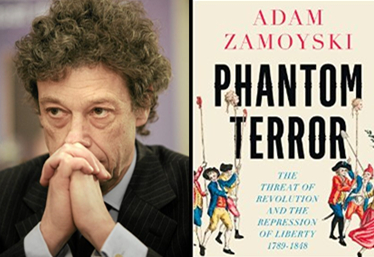
In his recent book, "Phantom Terror: The Threat of Revolution and the Repression of Liberty 1789-1848," historian Adam Zamoyski makes the case that Europe after Napoleon paved the way for the modern repressive state. Zamoyski says that initially, the revolution in France was widely welcomed as a liberating force against conservatism and old world order. But then, after the massacres during the revolution, the bloody reign of terror, and the rise of Napoleon, the illusion was over. Russia and Britain actively backed Klemens Von Metternich of Austria, working to protect and, in some cases, increase state power and undermine any form of civil discord. During and after the Congress of Vienna in 1814, the conservative European leaders suppressed dissent and opted for measures that discouraged and punished any type of anti-state actions. Zamoyski then mentions how modern policing started as a reaction to the French revolution, correlating how that is happening today with increasing internal espionage and state policing powers in the hands of governments.
|
|
|
In his recent book, "Phantom Terror: The Threat of Revolution and the Repression of Liberty 1789-1848," historian Adam Zamoyski makes the case that Europe after Napoleon paved the way for the modern repressive state. |
Watching the coverage of the simmering Occupy Hong Kong protests and the smoldering wreckage of the aftereffects of the Arab Spring, there's a pattern to be observed. One can argue why mass movements such as these are faulty at best and dangerous at worst, and why there should be a renewed case to be made for stability across the world.
The Arab Spring started with the toppling of the Tunisian government and quickly spread throughout the Maghreb and the Levant. The world was enthralled with the prospect of freedom and democracy spreading through a region which has been historically belligerent and has never ceased to have conflict for over four thousand years. The cultural bend of the region was always mono-linear and dictatorial, and even though the Middle East as a region has given birth to some exceptional individual scholars, somehow the entire region seemed to have missed the Renaissance. The Arab Spring was seen as the final hinge point for a reformation of the world, in region that has been infamous for the religious extremism it exports for most of the first decade of this century.
Sadly, the hopes proved fleeting as the reality of geo-politics, religious sectarianism and economics proved to be much harsher than anticipated. A region ruled by Baathist socialist autocrats was not perfect, but it was nonetheless in sync with the cultural and societal peculiarities of the region. It was a region ruled with iron hands in velvet gloves…that would make Talleyrand-Perigord proud. Egypt and Syria had the best healthcare and education in the entire Arab world, while Tunisia had the most open society with regards to gender equality. Libya actually proved to be a strong ally against Islamism in the curiously named "War on Terror," as did Syria. Now the entire region has been engulfed by flames of hatred and growing Islamic extremism, influencing jihadis from Kashmir to Indonesia, from Chechnya to Xinjiang, and the black flags of ISIS continue to flutter, spreading medieval barbarism and defying modernity throughout Mesopotamia.


Go to Forum >>0 Comment(s)